


The classic image of Indian trains, in many Western minds, is the one from films like Slumdog Millionaire. Crowded, dirty trains, often delayed, idling for hours with no explanation. People leaning out of open doors, perched between the carriages, or even sitting on the roof. Narrow, uncomfortable sleeper berths. Putrid toilets.
It’s a somewhat alarming prospect for those more used to the comfort of a sleek intercity express.
So when I booked a tour of Southern India, and was told we’d be spending a night on the sleeper train in India, I wasn’t entirely sure what to expect.
I’ve been on some fairly rancid transport in my time, like the 48-hour bus journey I took from Accra in Ghana to Ouagadougou, capital of Burkina Faso (it was only supposed to take 24 hours, but that’s a story for another day!).
So I wasn’t nervous about taking an India long distance train, but I was a little wary.
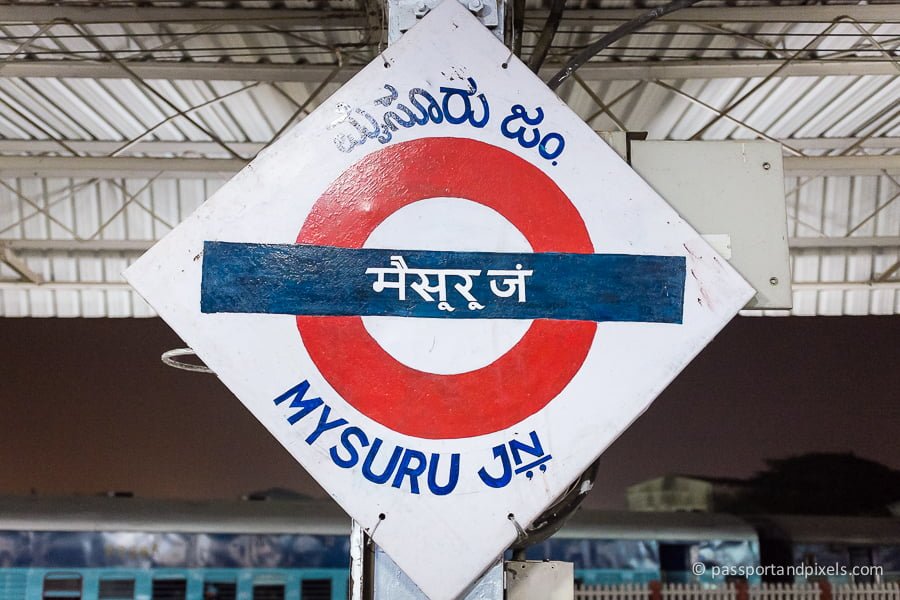
Boarding the sleeper train in India
We took the Indian sleeper train from Mysuru (Mysore) in the southwest to Chennai in the South East, a journey of around 300 miles. We were due to leave at 9 pm and arrive at around 8 o’clock the next morning – so 11 hours travelling.
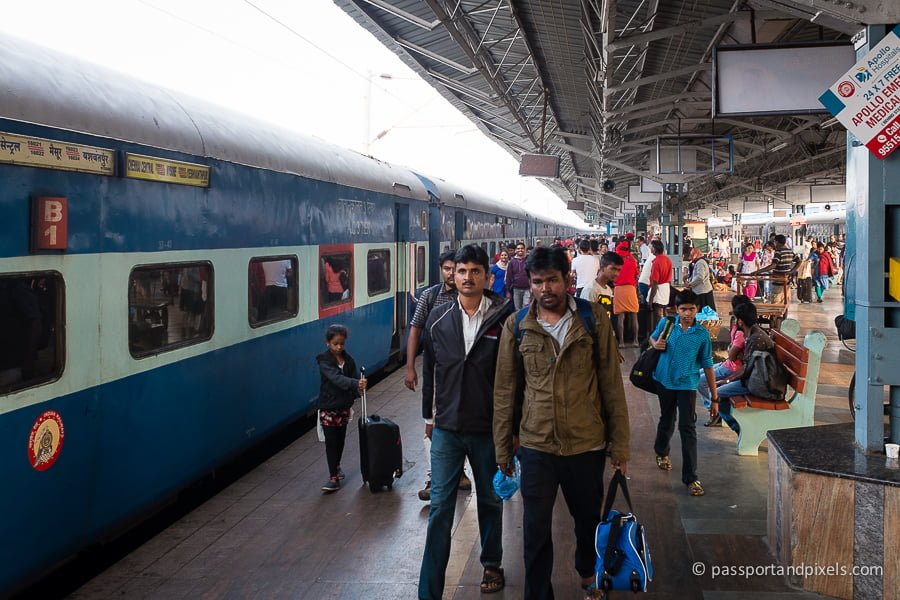
Mysuru is the start of the line. When we arrived at the station, the train was already waiting, and the platform was bustling with passengers looking for their carriage or saying goodbye, and traders selling drinks and snacks.
We had plenty of time before departure, so I took a walk along the platform. The train was huge! Twenty-four, 23.5m-long carriages is standard for most long-distance services, so this train was well over half a kilometre long!

What are the different classes on Indian Sleeper Trains?
There’s a slightly bewildering array of classes on Indian night trains, but the main ones are as follows:
- Air-Conditioned 2-tier (2AC), which has air-con and two tiers of bunks. Bedding is provided. This is the most expensive class.
- Air-Conditioned 3-tier (3AC), which has air-con and three tiers of bunks. Bedding is provided.
- Sleeper Class, which has three tiers of bunks and open windows instead of air-con. You’ll get plenty of fresh air in Sleeper Class, and a great view in the morning through the open windows, but it’s more crowded, noisy, and bedding isn’t provided.
But because I was travelling with an organised tour group, we were allocated the middle class: AC Three Tier. Bedding supplied and air-conditioning. Luxury!

What are Indian sleeper trains like?
The picture in my head was of one of those sleeper trains you see in historical dramas or Bond films: a wood-panelled corridor down one side of the carriage, with doors leading to private compartments with bunk beds inside.
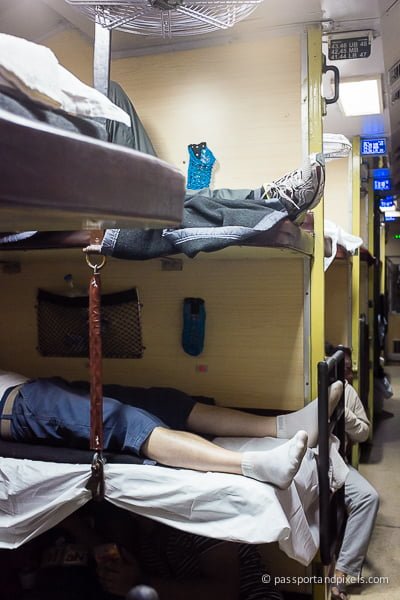
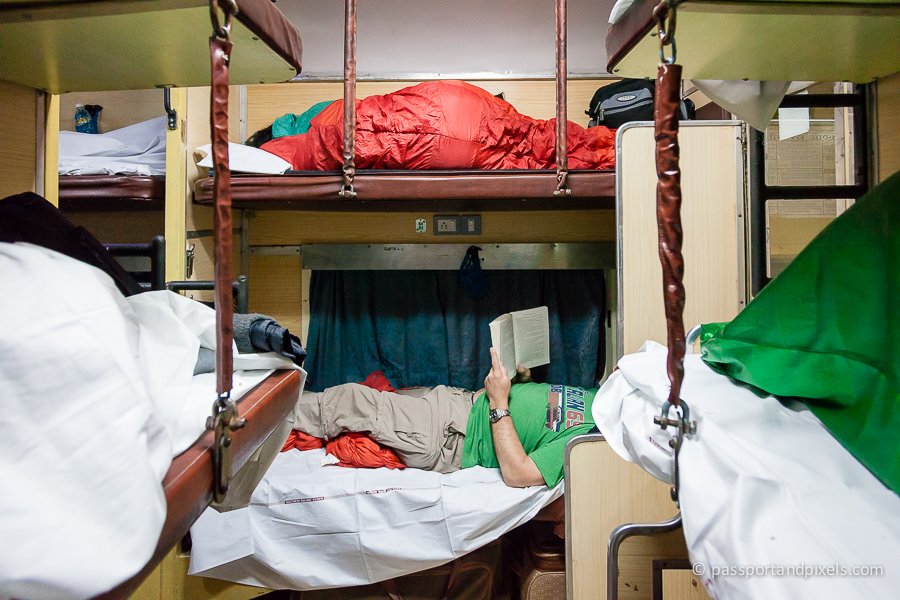
But as you can see from these images, I was somewhat mistaken…
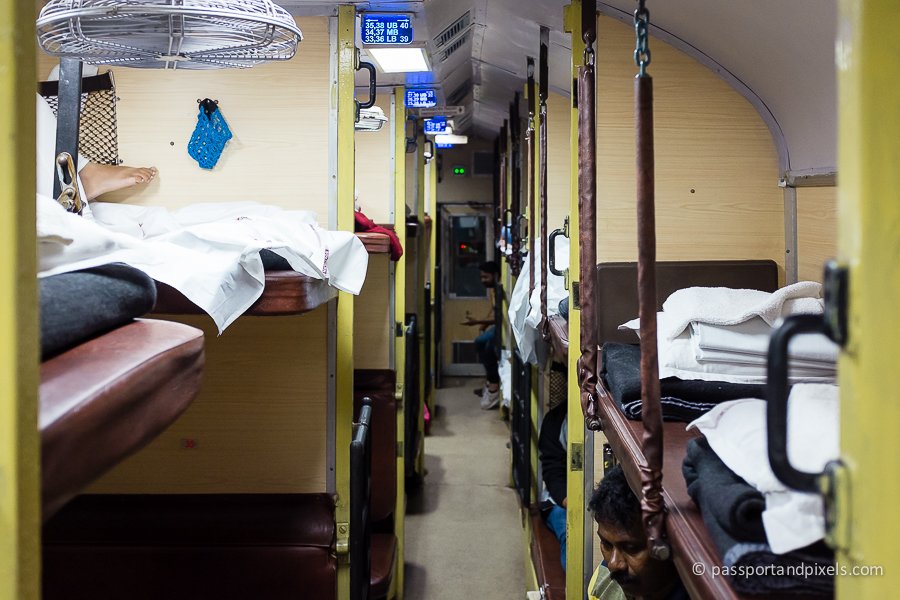
You can forget the cute compartments – and indeed the privacy. The carriage is open-plan, with eight berths in each section: two rows of three bunks facing opposite each other, and two more across the aisle, in the area where I’d imagined the corridor would be.
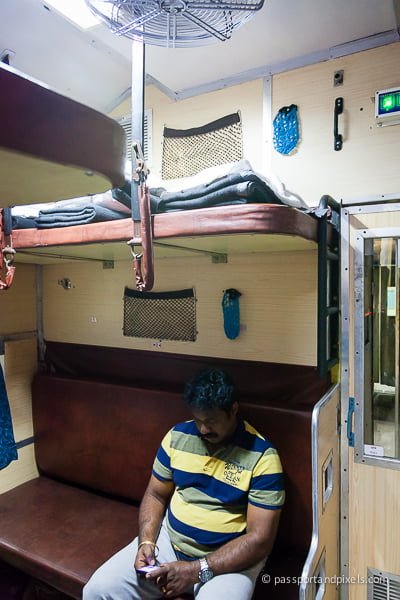
When you first board, the middle bunk is folded up so there’s room to sit at the bottom, but if that’s your spot it’s a good idea to fold it down fairly quickly and claim your space. Stories abound of people pinching each other’s berths, and arguing with someone who’s sitting in your seat is never fun at the best of times – even less so when you don’t speak the same language!
Of course if you do find yourself in this situation, don’t worry. The ticket inspector will soon be along to sort everything out.
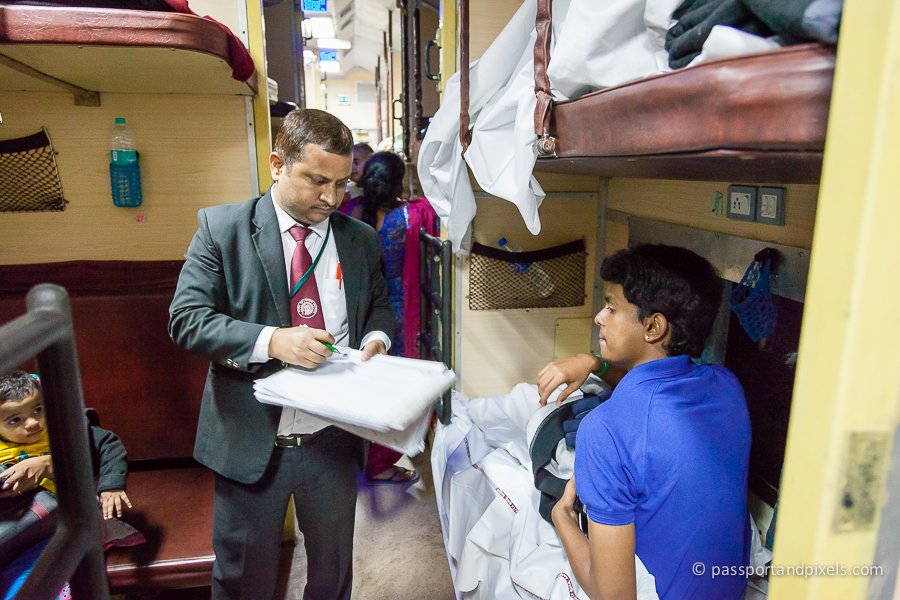
Mine was the top bunk, which I was quite happy about. It was a little tricky to climb up to, but once installed, I was well clear of the people passing backwards and forward, and being above everyone’s heads meant I felt I had a bit more privacy than the lower bunks. You don’t get much space, and not enough headroom to sit up properly – but I thought it was rather cosy. Though possibly slightly too cosy if you’re on the taller or larger side.
Are sleeper trains in India safe?
Because the carriages are open-plan, and anyone can wander through the train, you’ll need to think about security. We all cuddled up to our valuables like they were a fluffy teddy-bear (or cute partner!), but you’ll have to put your luggage on the floor under the bottom berth. A top tip is to bring a travel padlock that comes with a cable, so you can lock your bag to the bunk. This will deter any opportunists or professional thieves – who have been known to go through the carriages when everyone is asleep.
Though I was told this is rare, so don’t panic. Certainly we all reached the end of our journey with no dramas – so yes, I think sleeper trains are pretty safe as long as you take sensible precautions.

How crowded is the Indian night train?
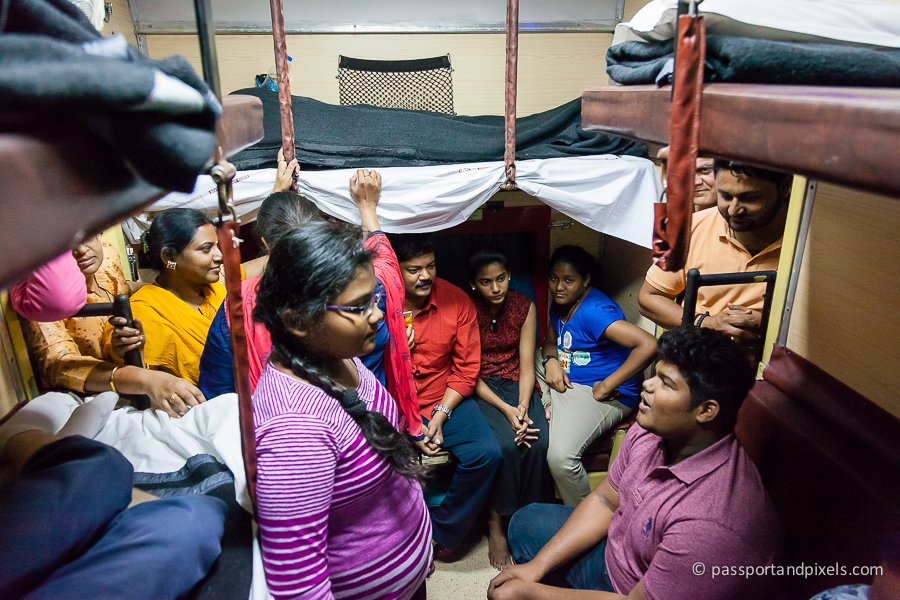
Once I had settled in and made up my bunk, I went for a wander through the carriage to take some photos. I soon attracted the attention of the other passengers, many of whom were in groups or large families. They’ll often book up a whole section so they can sit together, bringing home-cooked food to share around – so it won’t be long before the entire carriage smells of curry.
Somehow they manage to eat their meal with their hands on a moving train and still not make a mess – something I was unable to master even when stationary!
The carriage was full but not overly crowded. I’m not sure what the lowest Sleeper class is like, but in our carriage everyone had a ticket and a berth. For someone who is used to travelling on the London Underground in rush hour, it really didn’t feel that crowded at all!
This family thought I was fascinating, so I stopped to chat to them. They were on their way home from spending the Christmas holiday in Mysuru. The oldest son fancied himself as a future pop star, so serenaded us with a bit of Backstreet Boys and One Direction. I’m not sure his sisters were terribly impressed, but I thought he was pretty good!
What food is there on the night train India?
If you don’t fancy bringing your own curry, there’s a wide range of snacks and meals available on the platform and on board the train.
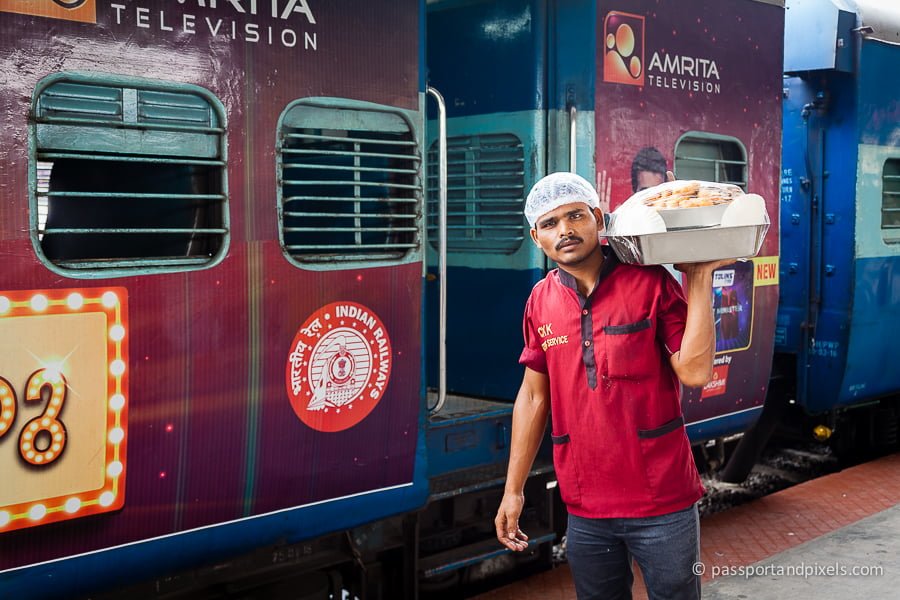
There’s no buffet car, but there is a kitchen carriage, where cooks rustle up everything from foil containers full of biryani, to deep-fried samosas, to canteens full of hot, sweet milk, from which they serve sickly chai or coffee.
These are then brought through the train at regular intervals by vendors, chanting ‘samosa samosa’ or ‘coffee chai’ in gruff, bored voices.
I didn’t want to run the risk of something disagreeing with me, so I’d brought fruit, crisps and biscuits to stave off any hunger pangs.
This is definitely not the place you want to get sick – in fact the aim of the game on the India sleeper train is to minimise the number of times you need to use the toilet!
What are the toilets like on Indian sleeper trains?
Our carriage had just two toilets, one Asian-style toilet, and one Western-style one, with a small basin for washing your hands just outside.
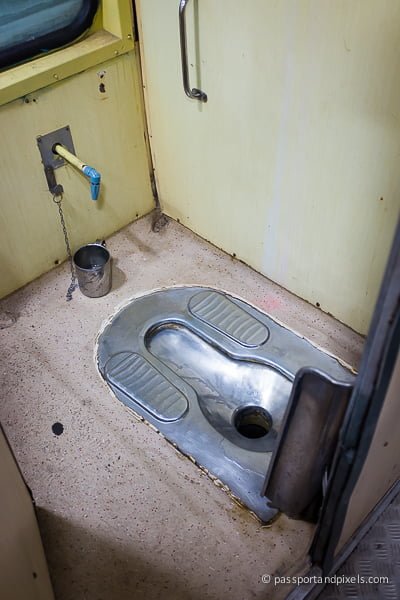
As you can see from these images, although they’re pretty basic, they were actually considerably better than I was expecting.
At least, at the start of the journey, which is when these photos were taken. As you might expect, they don’t stay too fragrant for long, so I’d suggest you get your visit in sooner rather than later.
Other facilities on night trains in India
In general, if you’re travelling on a basic or standard train like we did, the facilities are pretty basic. As well as the shared toilets at one end of the carriage, in the higher classes a pillow, sheet and blanket are provided (but not in sleeper class).
Many Indian night trains, specifically those with AC coaches (AC 2 Tier, AC 3 Tier), have plug sockets available for passengers to charge their devices. However, their availability and functionality can vary, and you’ll need to bring an adapter. Some newer trains might have dedicated charging stations near common areas.

Can you sleep on a sleeper train in India?
Once bunks had been made up, tickets checked, meals consumed and ablutions performed, the lights in the separate sections were turned out one by one. Sleep wasn’t easy: the bunk was not the most comfortable so I kept having to change position.
And all through the night the train stopped at different stations and people alighted or boarded, which created an extra disturbance. But my eye mask and earplugs helped, so I did manage a few hours.
I was actually asleep when our guide came round, announcing that we had about half an hour till arrival. All around me people were waking and packing up their stuff, accompanied by a chorus of coughing and hacking into the sinks at the end of the carriages.
It’s perfectly acceptable in India to clear your throat loudly and vigorously and spit out any phlegm you might have produced, and it seems a night on an Indian sleeper train is great for loosening the lungs!
The morning after a night on the India sleeper train
With the daylight came a chance to take a look at the view. Although the windows in the AC carriages are pretty small and dirty, they leave all the train doors wide open, so you can stand in the vestibule and (carefully!) lean out to enjoy the fresh air and passing scenery.
The open doors also mean it’s not unusual to see people hopping off the train in between stations as it slows down.
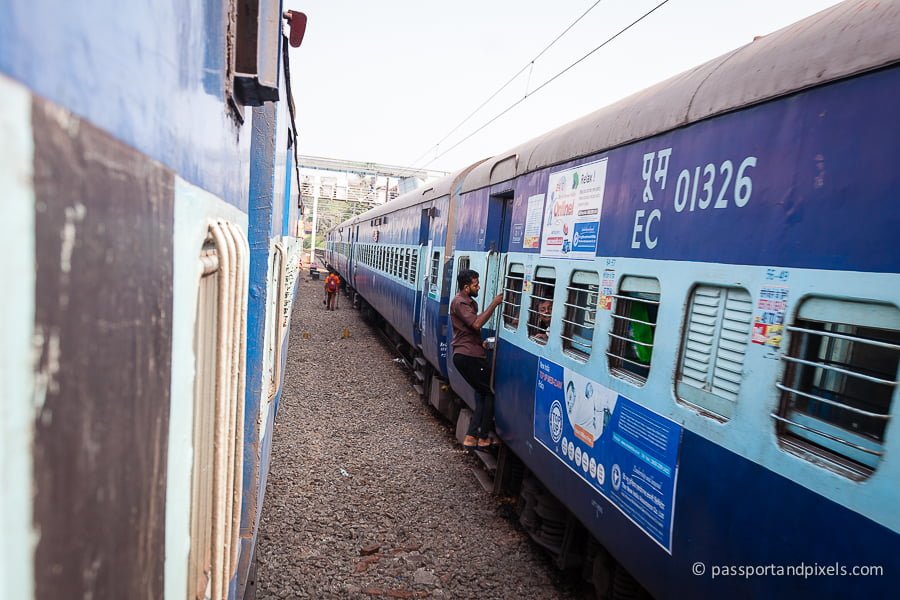
Finally, we arrived at our destination, Chennai Central, slightly dishevelled, a bit sleep-deprived, but on time. So it turns out most of my concerns about Indian night trains had been proved wrong. They’re actually a great way to cover long distances: well-organised, friendly, you get to sleep through all the hours of boring travelling, and although they’re basic, they’re relatively clean and comfortable.
Except for the toilets. I managed to hold on until we arrived at our breakfast stop, so I can’t comment on what they were like after an 11-hour journey, but I’m told they were pretty eye-watering!
India sleeper trains: some FAQs
Hopefully this post has already given you a good idea about what to expect on a sleeper class train in India, but in case you still have questions, here are some of the things people commonly ask about Indian night trains.
How much is a sleeper train in India?
The cost of a sleeper train ticket in India varies massively depending on several factors, including:
Train type: There are various sleeper train classes in India, ranging from the budget-friendly Sleeper Class to the more luxurious AC 1 Sleeper Class. The price significantly increases with each level of comfort and amenities offered.
Route: Ticket prices differ based on the distance travelled and the popularity of the route. Longer journeys and more in-demand routes usually cost more.
Booking class: Tickets are also arranged by type like Tatkal (last-minute), General, or Senior Citizen, each with specific prices and availability.
Seasonality: Train fares can fluctuate depending on the season, with higher prices at peak times.
Additional factors: Other add-ons like reservation fees, meals, and bedding charges can also push the price up.
So I can’t really give you a clear idea of the cost of a sleeper train in India as there are so many variables. But here are some ballpark figures to give you a general idea:
Sleeper Class: ₹300 – ₹2,000 (about $4 – $28)
AC 3 Tier: ₹800 – ₹4,000 (about $11 – $56)
AC 2 Tier: ₹1,500 – ₹6,000 (about $21 – $84)
AC 1 Sleeper: ₹3,000 – ₹10,000 (about $42 – $140)
In short, much cheaper and better value for money than rubbish British railways!
How do you book the India night train?
Head to the Indian Railways website (IRCTC) or use other online travel booking platforms like MakeMyTrip. Specify your desired route, travel dates, class and any add-ons. Then book!
Remember, prices are dynamic and can change frequently. Booking in advance often secures better deals and ensures availability.
Do I need a visa to visit India?
Yes, most tourists need a visa to visit India, and the application process can be quite complicated.
You can get an India e-visa by applying online through the official Indian government website, but the process can be pretty complicated, with detailed forms, document uploads, and strict requirements.
There are also 3rd party companies that will help with your India visa application. They charge a fee but can help navigate the process, ensuring all paperwork is correct and reducing the risk of last minute problems that could affect your trip.

What is sleeper class on Indian Railways?
Sleeper Class, often abbreviated as SL, is the most basic and widely available class on Indian Railways. It’s also the cheapest Indian rail class. The carriages have an open layout without individual compartments. There are three tiers of bunks and bedding is not provided. Facilities are basic. There’s no air-conditioning.
The difference between sleeper and 3AC is that the AC class has air-conditioning, bedding is supplied, and it’s less crowded and more comfortable.
While Indian rail sleeper class is not for you if you want luxury, it’s an adventure, and a great way to meet people and really get to the heart of authentic Indian life and the great Indian night train experience.
How do you sleep on a sleeper train?
Not easily! Sleeping soundly on a sleeper train, particularly in India’s Sleeper Class, can be an acquired skill.
To increase your chances, here are some tips:
Pack wisely: Bring earplugs or headphones, an eye mask, and comfortable loose clothing. Consider a travel sheet or sleeping bag liner for added hygiene and warmth.
Claim your bunk early: If possible, choose an upper bunk for more privacy and air circulation. Secure your luggage with locks or chains.
Create a cozy nest: Use your sheet or liner to create a personal space. Arrange your belongings within reach.
Manage your expectations: Stressing about not sleeping makes it harder to sleep! Accept that you’re unlikely to get much sleep on an Indian sleeper class train and that resting with your eyes closed is also beneficial. Make sure you’ve allowed time to catch up on sleep once you arrive at your destination.
Are Indian night trains punctual?
When travelling on a sleeper train in India, don’t expect it to depart and arrive exactly when the timetable says it will! Like everything in India, things happen in their own sweet time, but relax, be patient, and they will happen eventually!
According to the statistics, the average punctuality of all Indian trains in 2023-24 stands at 67.18%. However, India night trains specifically might have slightly different numbers.
So make sure you allow plenty of time to make your onward connection, and remember, while punctuality is an important factor, Indian night trains offer a budget-friendly and culturally immersive way to travel across the country. Embrace the adventure, be prepared for potential delays, and enjoy the journey!

Are there luxury sleeper trains in India?
Yes there are! My experience was on a standard Indian sleeper train like the ones the locals use. But if you’re looking for a more luxurious night train experience, here are two of the best ones:
Palace on Wheels: Experience royal opulence on this Rajasthan-based train featuring luxurious cabins, gourmet meals, and personalized service. However, be prepared for the hefty price tag.
Maharajas Express: Another luxury option, offering themed journeys through different regions with spacious cabins, fine dining, and onboard activities.
There are also higher-class inter-city night trains like the Rajdhani Express and Duronto Express that, while not as luxurious as the two mentioned above, will certainly give you a more comfortable experience than some of the more basic Indian sleeper trains.
Which is the best overnight train in India?
Choosing the best overnight train in India is subjective and completely depends on what you’re going for. Many of the night trains, journeys and train companies differ widely. But any of the trains I’ve just mentioned above could be considered the best.
In addition, here are a couple more India night trains that are great for adventurers:
Nilgiri Mountain Railway: This UNESCO World Heritage site offers a thrilling journey through the Nilgiri Hills with breathtaking views and unique heritage charm. Be prepared for limited amenities due to its small size.
Uttaranchal Express: Connects Delhi with Dehradun, offering affordable AC 3 Tier and Sleeper Class options. Not the most luxurious, but provides a decent overnight journey.
Vivek Express: Another budget-friendly choice, connecting Mumbai with Goa. Sleeper Class might be crowded, but the coastal route offers scenic views.
Do Indian sleeper trains have showers?
Most Indian sleeper trains have very basic toilet facilities without showers, especially in the budget-friendly Sleeper Class.
Some newer AC 2 Tier and AC 3 Tier class coaches might have shower cubicles at one end of the carriage.
However, these are not always operational and can be shared by a large number of passengers, so are probably best avoided. Shower once you get to your destination instead!
Luxury trains like Palace on Wheels and Maharajas’ Express typically offer en-suite bathrooms with showers in their cabins.
Are sleeper trains worth it?
Taking a night train in India is an experience! You’ll save money by combining your travel and accommodation in one go, and you can save time by sleeping and travelling all at once!
Trains are also more environmentally friendly and safer than travelling by road (and Indian roads are often insane, dangerous, and slow). While they may also be slower than flying, they’re much cheaper, better for the environment, and part of the Indian travel adventure.
So yes, I’d say sleeper trains in India are worth it. If you’re looking for an authentic Indian experience and don’t mind a few delays and a lack of privacy for one night, then give it a go!

Want to see more of my photography or travel writing? Have comments or questions? Come follow me on Instagram, Threads or Bluesky and share your thoughts!
Buy me a coffee
Did you enjoy this website or find it useful? If you did and fancy showing your appreciation, that would be amazing!
A small token of support helps keep Passport & Pixels going, so I can carry on creating free content for travellers like you. Also, it makes my day! Thank you!
Where to next?
Enjoyed this India night train post? Why not try some of my others?
- Street Photography In India: The Real India Through My Lens
- A day trip to Port de Sóller on the Palma Soller train, Mallorca
- Climbing The 8 Days Lemosho Route On Kilimanjaro
- 23 Best Places to Visit in Thailand
- The Beautiful Leg-Rowing Inle Lake Fishermen, Myanmar
My favourite travel tools and brands
To help you organise your trip, here’s a short list of some of the brands and tools I use over and over again when I’m planning my travels. You can see more on my Travel Resources page.
- Booking.com: A huge range of hotels to choose from, often with free cancellation. If you book hotels regularly you can earn discounts. I’m on Genius Level 3 which gets me 20% off!
- Expedia: Another great place to find hotels and Expedia also sell flights, car hire, and loads more all in one place.
- Skyscanner: The only place I ever go to search for flights and compare prices.
- Flight Centre: Booking a more complicated route? Let Flight Centre organise it for you (and deal with the drama when something goes wrong).
- Priority Pass: I love having access to 1600+ airport lounges when I fly, allowing me to enjoy my time at the airport. Buy through my link and you get up to 20% off!
- Airalo: Say goodbye to ridiculous mobile roaming charges. Did you know you can now buy ane-SIM, install it in your phone before you leave home, and then use data abroad at local prices? Game changer. Get US$3 credit with code BELLA5735.
- TourRadar: If you prefer group travel and organised tours, TourRadar has a huge range of fantastic tours from respected operators. They’re very helpful and have 4.5 stars on TrustPilot.
- Viator: Part of the TripAdvisor brand, Viator is another great place to search for group adventures and day trips.
- GetYourGuide: A great place to find local tours and day trips in your destination.
- Wex Photo Video: The UK’s best camera gear store.
- Ellis Brigham: Looking for good quality backpacks, travel clothes and other gear? Ellis Brigham is where I buy almost all of mine.
- Rentalcars.com: Part of the Booking.com family and the world’s largest online car rental service, with 24/7 customer service.
- World Nomads Travel Insurance: I never ever travel without travel insurance and nor should you!
