


If you’ve visited this site before, you’ll know that I’m passionate about Africa and safari and will jet off to photograph wildlife in far-flung places as often as I can manage it.
And as a resident of the UK, I’m sometimes guilty of overlooking the stuff that’s right on my doorstep.
Because while we may be a small island, and we don’t have free-roaming lions and elephants, we do have some gorgeous natural places and plenty of incredible wildlife that you can see without having to get on a plane.
And some of the best UK wildlife can be found in Wales.

Incredible wildlife in Wales
From comical puffins to dive-bombing gannets, from swooping red kites to dolphins skimming through the waves, and from plunging valleys to sparkling night skies, Wales has masses to offer nature lovers.
Here are just five of the top places to enjoy nature photography in Wales.
Note: Some of the activities on this list I did as part of a gifted Welsh nature photography tour with Wildlife Worldwide. I was not required to write this blog post but I’m doing it anyway because I thought the experiences were great and I want to share them with you. I don’t accept freebies or payment in exchange for positive reviews. This post may contain affiliate links.

1/ Capturing the night skies over the Elan Valley
Parts of Britain are crowded with lots of light pollution, making it virtually impossible to see stars. But did you know that Wales has some of the darkest, clearest skies in the UK?
The Elan Valley is a designated International Dark Sky Park where sources of artificial light are strictly controlled.
That means you can see the stars without the glare of light pollution, and if you’re lucky with the weather, the phase of the moon and the time of year, you may even get to see the full Milky Way rising over some of the UK’s most dramatic landscapes.

Where to go
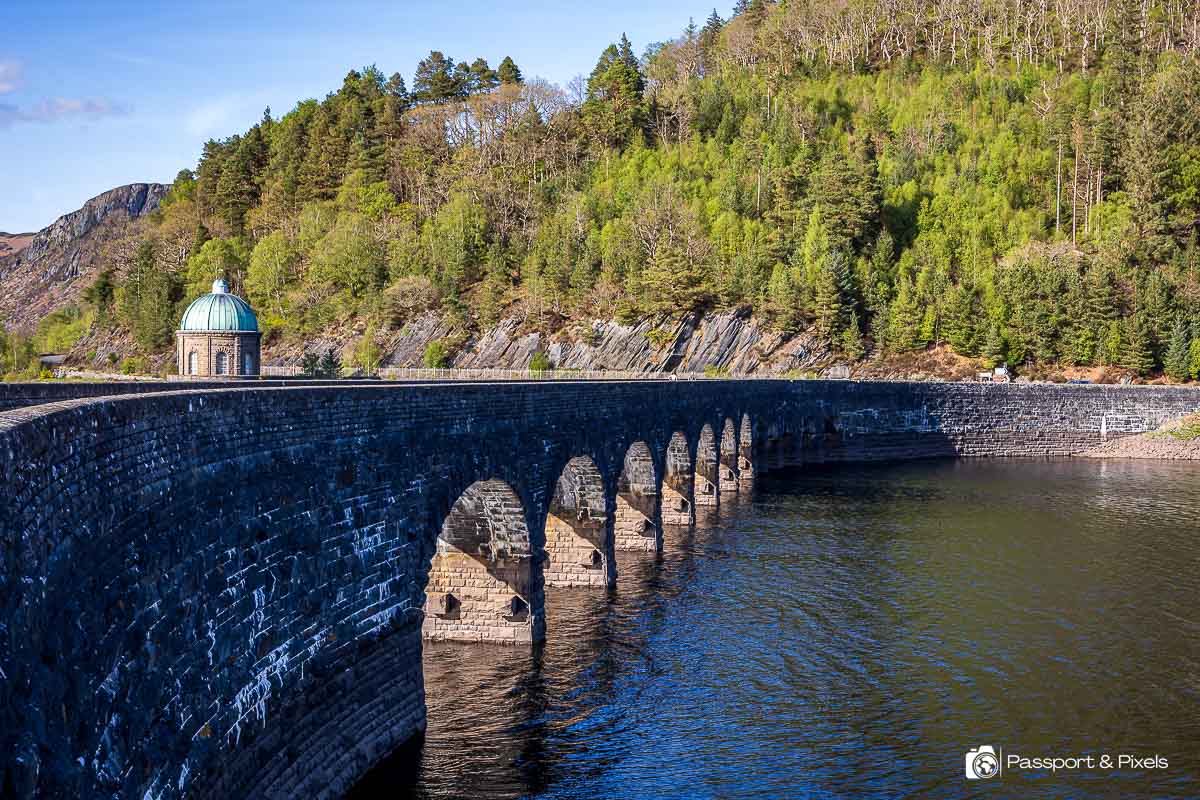
The Elan Valley is known for its historic dams and reservoirs. These were built around the turn of the 20th century by Victorian engineers and today create a dramatic landscape of deep valleys, rushing rivers, cascading waterfalls and sparkling lakes.
There are five dams on the River Elan: Caban Coch, Garreg Ddu, Pen y Garreg, Craig Goch and Nant y Gro – as well as two dams on the River Claerwen: Dol y Mynach and Claerwen.
My favourite spot was probably the Garreg Ddu Viaduct, which also has the quirky little Foel Tower at one end and the pretty Nantgwyllt Church at the other end.
Even by day, these landscapes, punctuated by the five historic dams and bridges, make fantastic subjects for photography.
But on a dark, cloudless night, when you can capture the stars reflecting in the water or the Milky Way rising over those impressive Victorian structures, they’re spectacular.
These photos were taken at the very end of April / start of May, with the best Milky Way views at 02.45 am.
When to go to the Elan Valley
For the best astrophotography you need to check the weather forecast and the phase of the moon.
The Milky Way is only visible in the UK between late spring and early autumn. Unfortunately this also coincides with the days getting longer, which means you don’t have a huge window between sunset and sunrise to shoot the stars.
Your best chance is during the months of June and July, when the Milky Way core will be over the horizon between around midnight and 4 am (depending on the date and your location).
At this point the sunrise isn’t till about 5 am, giving you a small window to get your shots before dawn ruins your chances (but if you’re still awake then you could stick around and capture the sunrise).
June and July are generally seen as the peak months for core visibility from the UK because the galactic centre rises early enough at night and stays above the horizon for the longest, offering the richest composition and longest dark window for photography.

Nature photography tips in the Elan Valley
For clear, sharp shots of the Milky Way, these are the basic things you’ll need:
- A tripod
- A camera that you can fully manually control
- A wide angle lens
Once you have all that set up, here’s how to take sharp, correctly exposed star shots.
- Set your camera to manual focus, zoom all the way out to the widest setting on your lens, and use the live view or magnification function to point at the brightest star. Then manually nudge the focus ring until the blurry circle becomes as small and sharp as possible. Once your stars are sharp, be careful not to knock the focus ring or adjust your zoom.
- Set your aperture to its widest (usually f/2.8 or f/4), ISO 3200, and a 20-second exposure and play with the ISO and exposure time until you get the look you want. As a general rule, I find that overexposing by about one stop compared with what the camera thinks is correct, will give you the best exposure for the night sky.
- Don’t use a shutter speed slower than 30 seconds or your stars will blur and start to look like grains of rice.
- Use a remote shutter release or a 2 second self-timer so you don’t get camera shake when you press the shutter.
- Include a foreground subject for depth and interest – the Elan Valley dams or the the Foel Tower work beautifully for this. Bring a torch and try light painting your subject to make it stand out in the scene.

How to get there
Just rent a car (or take your own) and go! Access to the Elan Valley is free, though you may need to pay for parking.
When driving around at night, take it slow and watch out for sheep or even badgers on the road. When you park, make sure you don’t block the road for other drivers.
If you’re not confident going on your own, you can also do nature photography in the Elan Valley as a guided trip, which includes transport, accommodation, and tuition.
The trip I did was organised by Wildlife Worldwide and led by wildlife photographer Sean Weekly. It was one of the most varied and rewarding few days of photography I’ve had in the UK and if you want a tour where everything is organised for you and you get to spend time with other photographers, I’d definitely recommend it.

2/ Photographing red kites
Red kites can be seen all across Wales and southern England, but if you want a guaranteed way to see and photograph them up close, the daily feeding at Gigrin Farm near Rhayader is the place to be.
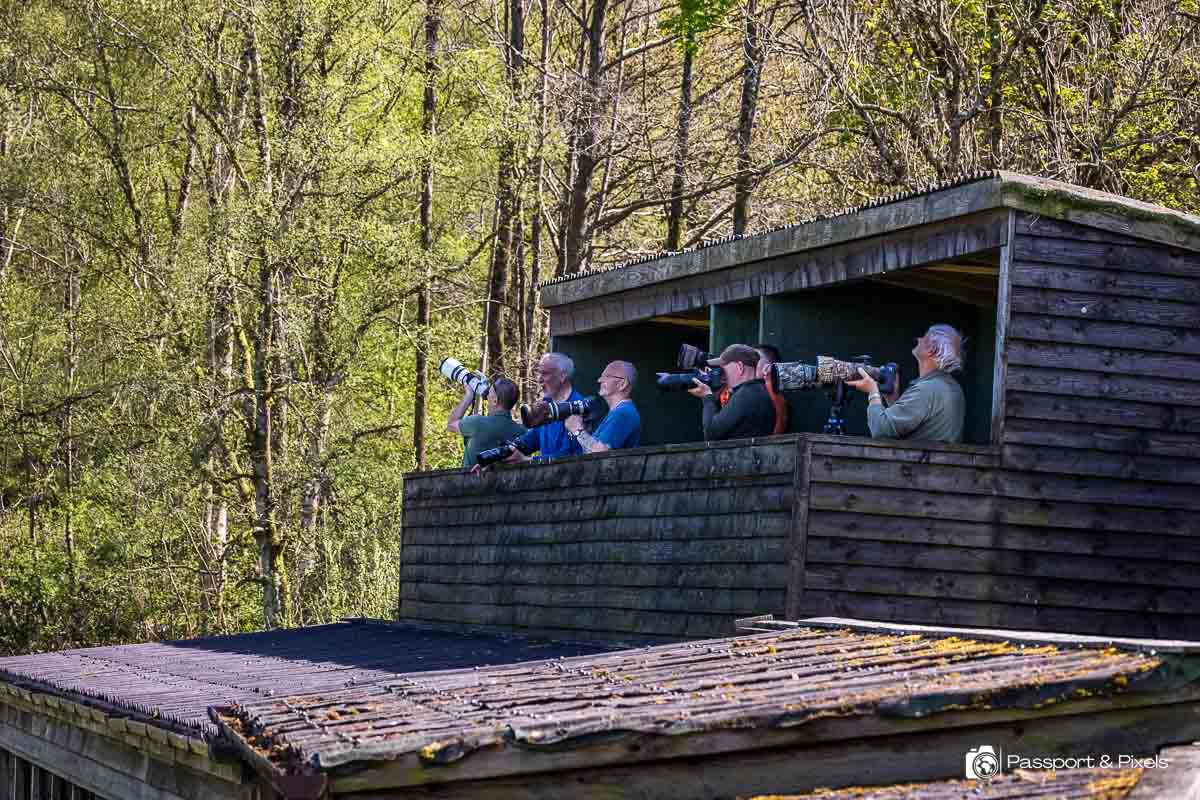
Every day at around 2-3 pm, staff from the farm chuck offcuts of meat into a field and up to 500 red kites swoop down to grab it. You can watch and photograph from one of nine different hides, all located with front row seats to the action.
For a bird photographer, it’s a chaotic thrill, and an excellent way to practice tracking and panning techniques.
Read more: Red Kites In Wales: How To Photograph These Majestic Birds

Best places to photograph red kites in Wales
Gigrin Farm is famous for being one of the UK’s best places to photograph red kites. The farm has several hides, but if you’re serious about photography, book a place in the Tower Hide where you’ll be at eye-level with the birds.
Alternatively, they feed the red kites at Bwlch Nant yr Arian Forest Visitor Centre near Aberystwyth, where there’s a daily feeding station popular with photographers.
Note that there are no specialist photographic hides here, so you’ll be out in the open capturing shots from more natural vantage points.

When to photograph red kites
Feeding happens daily at Gigrin Farm but it isn’t always open to the public, so check the website for more information.
There’s no bad time of year to see red kites – summer will probably give you the best chance of clear, dry weather, but autumn has the gorgeous colours of the changing leaves and winter might give you dramatic skies or even snow. Just remember to wrap up warm – the hides aren’t heated!
Top tips for photographing red kites
There are loads more tips on red kite photography in my other blog post, but here are few basic pointers:
- Use a fast shutter speed, ideally 1/2500s or faster to freeze movement.
- Switch to AI Servo/AF-C for continuous focus as you pan.
- Use the electronic shutter if you have one, and burst mode to increase your chances of catching the perfect moment.
- Aim for the birds that are flying from left to right in front of you (or vice versa) and pan smoothly to keep the bird in the frame.

3/ Dolphins and seabirds off the Welsh coast
Did you know we have dolphins in the UK? Bottlenose dolphins and porpoises can commonly be seen around Cardigan Bay on the coast of Wales, alongside scores of seabirds like razorbills, kittiwakes, gannets, oystercatchers and guillemots.
One of the best ways to see them is on a boat trip from the pretty seaside town of New Quay. Various operators offer tours usually lasting about two hours.
Note that to protect the dolphins, each boat is not allowed to spend more than 15 minutes with any one dolphin or group. After your 15 minutes are up, you have to leave and go look at something else.

Where to go to see dolphins in Wales
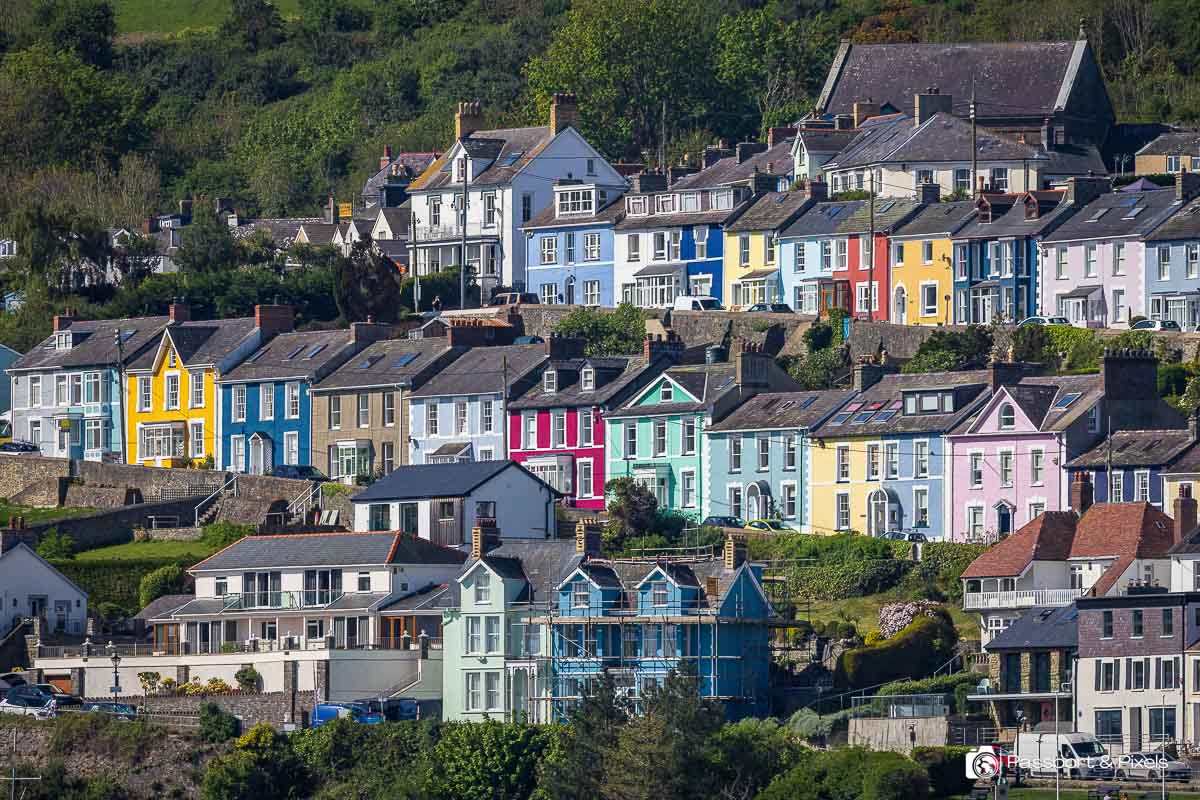
Boat trips around Cardigan Bay are available from the town of Cardigan itself, but we went to New Quay, a small and postcard-cute seaside town packed with pastel-painted houses and the usual array of cafes and bars, souvenir shops and ice cream parlours.
Don’t confuse it with Newquay in Cornwall, which is a totally different place!
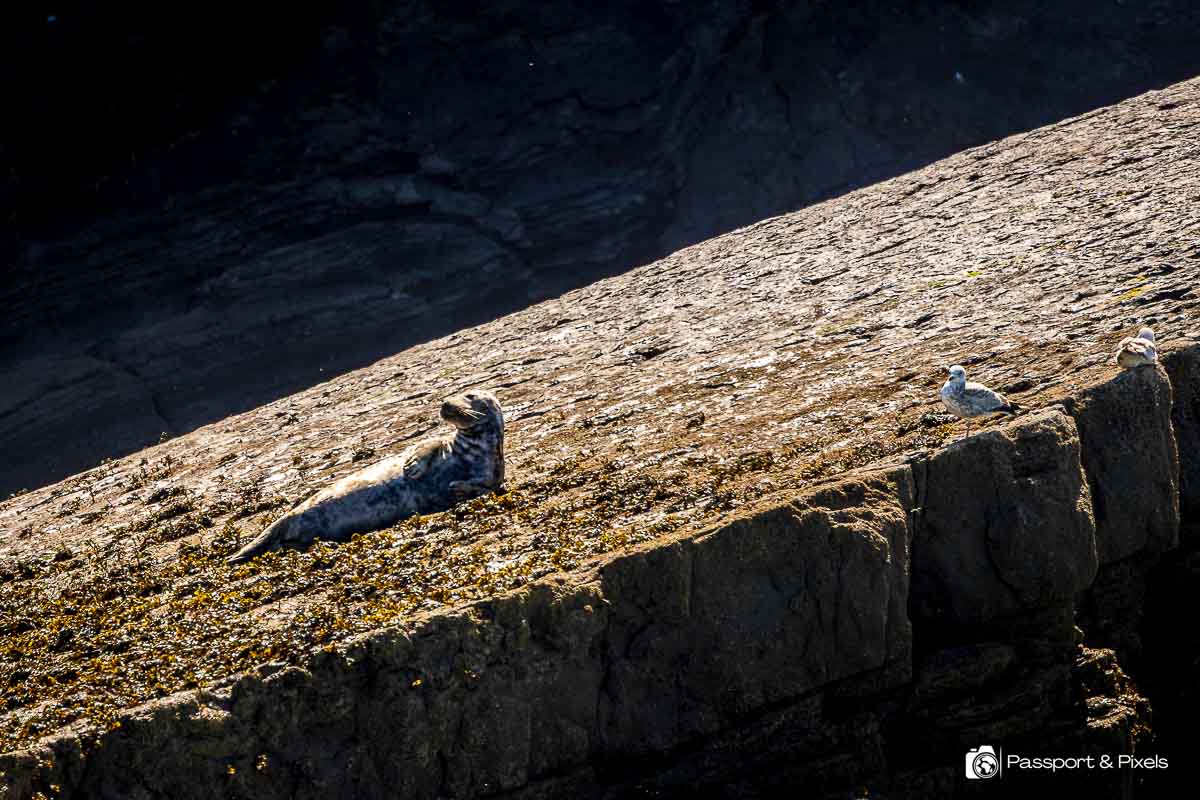
From there, we hopped on a wildlife watching cruise along the coast, stopping to look at seabirds nesting on the granite cliffs and spending time with the occasional passing dolphin or porpoise.
Sadly when I visited they were a little shy, but the glorious sunshine – somewhat unusual for Wales -more than made up for it.
Top photography tips for shooting seabirds and dolphins
- Use a zoom lens (my Canon RF 100–500mm was great) for flexibility on a moving boat.
- Fast shutter speeds are essential, ideally 1/2000 or more.
- If it’s overcast you may need to increase your ISO to compensate for movement and changing light.
- It’s also good to up the exposure compensation a little to capture dark subjects against bright water.
- Consider using a polarising filter to cut glare off the water.

How to do it
In New Quay, New Quay Boat Trips and SeaMor Dolphin Watching both offer dolphin, porpoise and seal spotting adventures daily during the summer months. Private charters are also available.
In Cardigan and Gwbert, A Bay To Remember runs dolphin and wildlife watching trips out to Cardigan Bay.
Prices vary depending on the length of the trip and the size of the boat.

4/ Visit the puffins on Skomer Island
One of my absolute favourite wildlife photography experiences in the UK is the chance to spend time with puffins.
These charming little black and white seabirds are popular visitors to our shores, returning around April time to breed and raise their chicks, before departing by early August to spend the rest of the year at sea.
Wales has several spots where you can see puffins, but by far the most popular is the legendary Skomer Island, off the coast of Pembrokeshire. Most people visit on a day trip, but there is a small bunkhouse where you can stay the night, though it books up extremely fast.
The chance to have the island almost completely to myself and photograph the puffins at sunset and sunrise is something I’ve always wanted to do, but so far I’ve never been organised enough to book before it sells out!

How to get to Skomer Island
The only way to get to Skomer Island is on a boat from Martin’s Haven, on the Pembrokeshire coast. Visitor numbers are strictly limited to protect the birds, and boat tickets sell out months in advance, so make sure to book ahead.
You can also visit and stay on nearby Skokholm Island, which is quieter, smaller, and much less famous than Skomer. Stays can be three, four, or seven nights. I’ve never been, but it’s certainly on my list!

When to go to Skomer Island
Boat trips to Skomer run throughout spring and summer, but if you want to see puffins, you’ll need to go between April and July.
I’ve written a detailed post about visiting the puffins on Skomer Island, so check it out if you want to know more.

My top puffin photography tips
- Bring a long lens ( at least 400mm) to get tight shots without disturbing the birds.
- Get low to shoot at puffin eye-level.
- Try to capture interesting behaviour such as flying in with a beakful of sand eels, social interactions, and bill tapping.
- Overcast days are ideal as they reduce the risk of burnt out whites on the birds’ faces and bellies.
- Respect the guide ropes and never leave the path. Puffin burrows are everywhere, and you might step on one and destroy it, potentially harming the birds or eggs inside.
Read more: How to See and Photograph Puffins in the UK: 20 FAQs

5/ Seabirds and red squirrels on Anglesey
If you’re into dramatic scenery and a huge variety of seabirds all in one place, South Stack Cliffs on Anglesey is a great place to go.
This rugged stretch of coastline in North Wales is famous for its towering sea cliffs, panoramic views, and the iconic South Stack lighthouse perched on a rocky islet.
But what makes it really special for nature photographers is the sheer number and variety of seabirds that nest here in spring and summer.
During the breeding season, the cliffs become a noisy, frantic bird metropolis. Thousands of guillemots, razorbills, puffins, and kittiwakes cram onto every ledge and crevice, squabbling, preening, and launching into the air.
But it’s not just the cliffs that are worth visiting. Elsewhere on Anglesey, you’ve also got the chance to photograph one of the UK’s most charming and increasingly rare mammals: the red squirrel.
Anglesey is one of the few places in Wales where red squirrels have been successfully reintroduced and continue to thrive, thanks to local conservation efforts.

Where to go
For seabirds, head to the RSPB South Stack Cliffs reserve near Holyhead. There’s a visitor centre and café, plus well-maintained paths that take you along the clifftops and down to the lighthouse. There are viewing platforms set up specifically for birdwatching and photography.
For red squirrels, try Newborough Forest on the south-west corner of the island, where pine woodlands provide perfect squirrel habitat. Look out for feeding stations and signs along the trails.

When to go
Spring through early summer (roughly April to July) is the best time to visit if you want to photograph seabirds in action. This is when the cliffs are busiest with breeding activity.
Red squirrels can be seen year-round but are most active in early morning and late afternoon. Autumn is a great time, when they’re gathering food for the winter and the forest floor is covered in golden light and crunchy leaves.

Top Anglesey photography tips
Seabirds
- Bring a long lens (at least 400 mm and ideally a whole lot more) to capture detail on the cliff faces.
- Again, fast shutter are you’re friend – 1/2000s or more for flying birds.
- A monopod can help with stability if you’re trying to hold up a heavy lens for long periods.
- Take time to tune into the birds’ flight paths before you start shooting.
Squirrels
- Use a quiet, fast-focusing lens, and keep movements minimal.
- A zoom lens like a 70–200mm f/2.8 gives you flexibility without needing to get too close, and a wide aperture will help in the dark, shaded woods.
- Try photographing them on tree trunks or mossy logs for more natural-looking compositions.
- Be patient and move slowly to avoid scaring them off when they do finally show up!

How to do it
South Stack Cliffs is free to access and open year-round, though parking charges apply. The visitor centre and café are run by the RSPB and your visit supports their conservation work.
Newborough Forest is managed by Natural Resources Wales and is also free to access, though there’s a small fee for car parking.
The trails are well-marked and suitable for all levels. Bring binoculars and a flask, and keep an eye out – red squirrels are fast, but once you spot that tufted tail, you won’t forget it.

When’s the best time for nature photography in Wales?
Every season has its advantages. Winter might give you moody skies or even snow. Autumn has the joy of the changing colours in the leaves and more civilised sunset and sunrise times.
But for wildlife it’s probably best to aim for between April and July, when you’ll get the chance of good weather for boat rides, and the puffins and other seabirds are breeding.
In Wales the weather can always be hit or miss, but if you strike lucky with a week of sun (like we did!), it’s unbeatable.

Where to stay for your nature photography trip to Wales
ELAN VALLEY: Bryn Derwen, Rhayader
A small and welcoming guest house that feels like a home-from-home. The rooms are clean and comfortable with decent views over the Cambrian hills, and you’re only a short drive from the Elan Valley reservoirs. Booking.com rating: 9.2.
SKOMER ISLAND: Rwts Rooms and Resto
Rwts Rooms and Resto sits right by Broad Haven beach in Pembrokeshire, with the coast path starting almost outside the door and long views across St Brides Bay. It’s a handy base for Skomer boat trips, and the downstairs restaurant has outdoor seating looking straight onto the beach for a relaxing drink after your trip to Skomer. Booking.com rating: 9.2.
ANGLESEY: Trearddur Bay Hotel, Holyhead
Trearddur Bay Hotel sits right by the wide sandy Trearddur Bay beach on Anglesey’s west coast, so you can step straight out to look for seals bobbing near the rocks or oystercatchers probing the tidal pools. Some rooms have sea views or balconies, and there’s an indoor pool. It’s about a 10-minute drive from Holyhead if you want to nip into town or explore South Stack RSPB reserve. Booking.com rating: 8.3.

5 more great places to photograph wildlife in the UK
- The Isle of May and the Bass Rock, East Lothian. Seabird heaven, especially good for puffins and the world’s largest colony of northern gannets.
- Cairngorms National Park, Scotland. Home to red squirrels, ospreys, mountain hares and capercaillie.
- RSPB Minsmere, Suffolk. Diverse habitats and species, including bitterns and marsh harriers.
- Isle of Mull, Scotland. Fantastic for sea eagles and otters, especially around the lochs.
- Slimbridge Wetland Centre, Gloucestershire. A great year-round destination for waterfowl and waders.
Read more: Seeing Gannets at the Incredible Bass Rock in Scotland

Buy me a coffee
Did you enjoy this website or find it useful? If you did and fancy showing your appreciation, that would be amazing!
A small token of support helps keep Passport & Pixels going, so I can carry on creating free content for travellers like you. Also, it makes my day! Thank you!
Where to next?
If you liked this post about wildlife in Wales, why not check out some of my other wildlife photography posts?
- 19 Easy Wildlife Photography Tips For Beginners
- 41 Safari Photography Tips For Stunning Wildlife Photos
- Best Camera For Wildlife Photography: Gear, Lenses And More
- Wildlife Hide Photography Tips For Safari Photos Like A Pro
- Using The Canon R5 For Wildlife Photography: A Full Review
- 60+ Awesome Antarctica Photography Tips
- Wildlife Wonders on an Epic South Georgia Cruise
- Instinct of the Mara Review: Exclusive Wildlife In Kenya
- The Canadian Big Five: The Most Iconic Animals In Canada
My favourite travel tools and brands
To help you organise your trip, here’s a short list of some of the brands and tools I use over and over again when I’m planning my travels. You can see more on my Travel Resources page.
- Booking.com: A huge range of hotels to choose from, often with free cancellation. If you book hotels regularly you can earn discounts. I’m on Genius Level 3 which gets me 20% off!
- Expedia: Another great place to find hotels and Expedia also sell flights, car hire, and loads more all in one place.
- Skyscanner: The only place I ever go to search for flights and compare prices.
- Flight Centre: Booking a more complicated route? Let Flight Centre organise it for you (and deal with the drama when something goes wrong).
- Priority Pass: I love having access to 1600+ airport lounges when I fly, allowing me to enjoy my time at the airport. Buy through my link and you get up to 20% off!
- Airalo: Say goodbye to ridiculous mobile roaming charges. Did you know you can now buy ane-SIM, install it in your phone before you leave home, and then use data abroad at local prices? Game changer. Get US$3 credit with code BELLA5735.
- TourRadar: If you prefer group travel and organised tours, TourRadar has a huge range of fantastic tours from respected operators. They’re very helpful and have 4.5 stars on TrustPilot.
- Viator: Part of the TripAdvisor brand, Viator is another great place to search for group adventures and day trips.
- GetYourGuide: A great place to find local tours and day trips in your destination.
- Wex Photo Video: The UK’s best camera gear store.
- Ellis Brigham: Looking for good quality backpacks, travel clothes and other gear? Ellis Brigham is where I buy almost all of mine.
- Rentalcars.com: Part of the Booking.com family and the world’s largest online car rental service, with 24/7 customer service.
- World Nomads Travel Insurance: I never ever travel without travel insurance and nor should you!
