


Choosing a safari can be overwhelming.
There are so many countries to visit, and so many different companies offering different routes, different experiences, and different levels of luxury.
While I’ve done a lot of safaris, I certainly can’t claim to know them all!
What I can do is highlight ones I would recommend, and point out some of the key things I look out for when deciding if a safari is good or not.
So that’s what this post is: a suggested itinerary for a 9-day luxury Uganda safari with an operator I recently travelled with.
Even if you don’t book this exact trip, this post will hopefully give you a better idea of where to go and what to do when planning your own luxury safari in Uganda.

Note: My luxury safari in Uganda was a group media trip hosted by WildPlaces Africa. I had writing commissions for Luxury Travel Australia and the Independent. I wasn’t required to write this post and WildPlaces have not been involved in any way in what I’ve written here.
I don’t accept trips or freebies in exchange for positive reviews – all of this is my own, personally-researched, honest opinion. I did not use AI to write this post – so if you find typos, they’re all mine! This post may contain affiliate links.
About my Uganda safari experience
I’ve been on many safaris, at varying levels of luxury, in Kenya, Tanzania, Botswana, South Africa and more.
I’ve written about them for Travel Africa, BBC Wildlife Magazine, The Great Outdoors, Lonely Planet and loads of other publications.
A few years ago I lived and volunteered in Uganda for three months, and travelled around a lot of the country while I was there, including doing an independent two-week safari, staying in budget camps and lodges and travelling everywhere by road.

A couple of months ago I went back to Uganda on a nine-day luxury safari starting and ending in Entebbe, and visiting Uganda’s three most popular national parks: Murchison Falls, Queen Elizabeth, and Bwindi Impenetrable Forest.
It taught me that if you can afford to spend a bit more, you can definitely experience Uganda’s top highlights in 9 days – and be looked after extremely well in the process.
All the photos in this post were taken by me – you can click on the galleries to enlarge them.
Read on to find out where we went, how we did it, and what I thought about my experience with WildPlaces Africa.

About WildPlaces Africa
WildPlaces Africa isn’t a big, international safari operator with dozens of camps and lodges.
They’re a Ugandan-owned, family company with decades of experience and just seven unique properties.
Each has been carefully designed and built in a remote, under-visited area, where tourism can help support conservation and boost local communities, rather than just adding pressure to already busy tourist locations.

Owners Jonathan and Pamela Wright and their team have worked incredibly hard for more than two decades to bring something postive to Uganda’s massively under-appreciated safari tourism industry.
They’ve done everything from identifying new locations, securing permits and licences, setting up infrastructure, designing and building the lodges, training staff from scratch, and working closely with local communities.
For me, that’s so important in a luxury safari. I’d much rather money was being invested in conservation, community development, and doing things ethically and responsibly, than in gold plated taps and hot and cold running WiFi.

Need help booking your dream safari?
If you’re ready to plan your dream African adventure but don’t know where to start, I can help.
I’ve travelled extensively throughout Africa and have a great network of personally-vetted and trusted safari operators.
Now I use those connections to help you plan your perfect trip.
Fill in my safari enquiry form and I’ll:
- Answer your questions personally
- Help you decide which options are right for you
- Match you with up to three trusted partners with decades of experience
- They will provide you with expert advice and FREE personalised, no-obligation quotes.
Simply fill out my safari enquiry form here to get the ball rolling.
Save time, avoid stress AND get a great deal by having an expert do the work for you!
Our nine-day Uganda safari itinerary
So here’s what our luxury safari itinerary in Uganda with WildPlaces Africa looked like:
Day 1: Arrive in Entebbe and stay the night.
Day 2: Next morning, board a bush flight from Entebbe to Murchison Falls National Park, followed by road transfer through the park to Papa’s Camp.
Days 3 – 4: Around Murchison Falls National Park, including game drives and boat safaris in the park, and visiting the famous waterfalls.
Day 5: After a final game drive, fly from Murchison Falls to Kasese, before being picked up and taken to The River Station by boat. Evening dhow cruise on the Kazinga channel.
Day 6: Chimpanzee tracking in Kyambura Gorge and an afternoon game drive in Queen Elizabeth National Park.
Day 7: Drive from The River Station to Bwindi National Park; then a 4-hour hike through the forest along the Ivy River Trail (your luggage continues by road). At the other end, you’re picked up and driven a short distance to Clouds Mountain Lodge.
Day 8: Gorilla trekking in Bwindi Impenetrable Forest and an afternoon community visit.
Day 9: A short transfer down the mountain to Kisoro airstrip, where you’ll board a flight back to Entebbe. Depending on the time of your flight, spend the afternoon relaxing at a hotel before your flight home.
And now here’s the detail…

Day 1: Entebbe
Entebbe is the gateway to Uganda – it’s where the international airport is. It’s actually quite a nice city on the shores of Lake Victoria, but because you’ll probably arrive late and leave early the next morning, you won’t get to see much of it.
However I did spend a bit of time there on my previous visit to Uganda, so if you want to find out more, check out my things to do in Entebbe post.
Where to stay in Entebbe
We stayed at the Boma Hotel Entebbe. This is a rustic colonial-style guesthouse set in tropical gardens just a few minutes from the airport, so ideal for a restful first or last night in Uganda.
Rooms are spacious and clean, with mosquito-netted beds, African textiles, private verandas overlooking the gardens, and a really good hot shower. There’s also a decent pool and the food in the restaurant was great, with loads of choice and good-sized portions.

Days 2 – 4: Murchison Falls National Park
Next morning, your driver will pick you up, hopefully rested, and take you back to Entebbe airport for a small internal bush plane flight to Murchison Falls National Park.
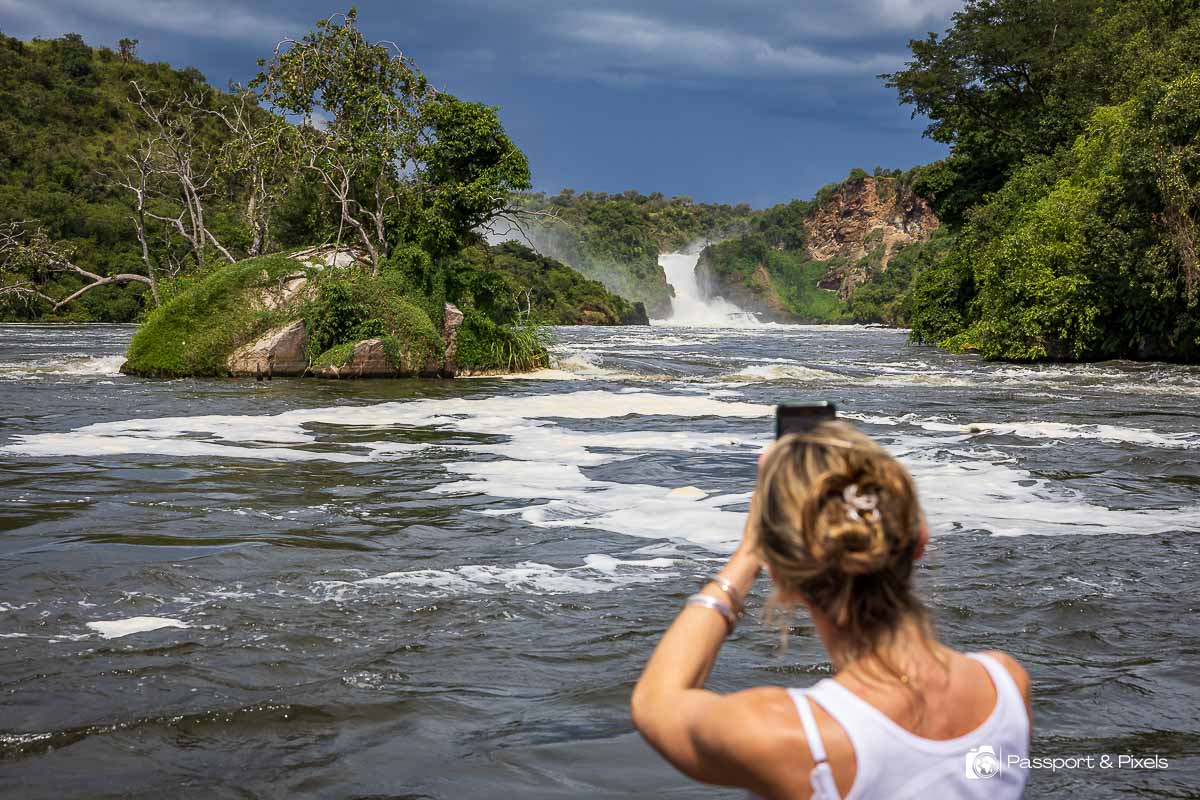
Murchison Falls National Park is the oldest and biggest national park in Uganda. Located in the north-west of the country, it’s bisected by the River Nile, which narrows dramatically before plunging through a rocky gorge at the famous Falls themselves.
Downstream, the river widens and slows, creating one of the most wildlife-rich corridors in the country – home to elephants, giraffes, buffalo, lions, loads of antelopes, and more than 450 species of birds.
Most visitors head to the area around Paraa on the northwest side of the park, which is where I went on my first visit and where most of the established lodges and game drive routes are.
But if you head south of the river, more into the central sector of the park, you’ll find a secret ‘low use zone’ which is still almost completely undeveloped.
Very few people visit and it’s been untouched since forever – meaning that the wildlife is still completely wild, and you won’t see any other vehicles.
Read more: Murchison Falls National Park Uganda: A Complete Photo Guide


Murchison Falls low use zone
This special low-use zone was created by the WildPlaces Africa team.
When the Ugandan government decided they wanted to expand and boost Uganda’s safari industry, they offered selected approved operators the chance to bid for new licences.
The WildPlaces team pitched for this area in Murchison Falls National Park – which although it was wild and beautiful, was also a haven for poachers because there was basically no one there to stop them.
They won their bid and moved in, building everything from scratch – laying out dirt roads, putting in the infrastructure for their camp, and hiring and training local staff.

They built a ranger station and funded patrols so that Uganda Wildlife Authority rangers could start finding and removing poachers’ snares.
Since then, poaching has declined and the wildlife, which used to be terrified of cars and humans, has started to become habituated.
I was really impressed with the enormous effort the WildPlaces team has put into opening up this new area, and the very real and tangible difference they’re making.
It’s very easy to talk about how luxury safari tourism can be a force for good, but here you actually see how your money is being spent to help both wildlife and people.
Read more: 46 Amazing African Safari Animals – A Photo Guide


Where to stay in Murchison Falls National Park
Papa’s Camp
Papa’s Camp is the only camp in this low-use zone. It sits in a very private, hidden area right on the banks of the river Nile, which roars and thunders right past your tent.
As the name suggests, it is a camp and not a lodge, with just five tents. But these are comfortable safari tents, with proper beds with mosquito nets, ensuite bathrooms, and private verandas overlooking the river where hippos wallow.


There’s also a central dining and lounge area, where we were served delicious home-cooked meals which seemed to appear miraculously given our remote location.
It’s incredibly natural and private with a real wilderness feel. Showers are outdoor bucket showers, manually filled by the camp staff (but still hot and refreshing). There’s no WiFi in the tents, and everything is solar powered – so no hairdryer either.
But the real luxury here is the location. There are no neighbouring lodges and traffic – the entire area is yours alone. Animals wander through the camp, and the sounds of the river are a constant audio backdrop.


Kulu Ora
If, however, you fancy this same incredible privacy with a few more creature comforts, WildPlaces Africa are about to open a sister lodge just a short distance from Papa’s. Once it opens, it will be the only other property sharing the area.
I visited Kulu Ora while it was still under construction and it looked like it’s going to be amazing – with 10 beautiful rooms with private plunge pools, all with those same dramatic river views.
If you do visit, see if you can find the sausage tree I planted!
Read more: First Time Safari Facts: 18 Surprise Things To Know Before You Go


Things to do in Murchison Falls National Park
Murchison Falls is known for three main things:
- The River Nile for boat safaris
- Murchison Falls
- Game drives in the park
With three days in the park as part of this luxury safari itinerary, you’ll have time to do all of them.
We took a wildlife-spotting boat cruise down the river to the bottom of the Falls, visited the top of the Falls to see the water thundering over, and had plenty of time to look for wildlife on game drives.

Because we were in this special low-use zone, we never saw any other cars on our game drives.
But the wildlife was a bit more skittish and harder to spot, because it’s not so used to cars and humans.
Plus there are no other cars around to spot things and communicate sightings. Out here, you really are on your own, relying on the skills of the guides and trackers. But when you do find something, you get it to yourself!
The other bonus is the lions. Thanks to the ranger patrols reducing poaching in this area, the lion population has bounced back.
This is in stark contrast to some other areas of Uganda, where human-wildlife conflict has caused serious problems for some prides.
Papa’s has three nearby prides including its own resident pride, led by top cat Tony. We saw them hiding in the long grasses, climbing trees (a rare skill that only a few lion populations have) and just chilling out against some very photogenic red soil.
Read more: Best Camera For Wildlife Photography: Gear, Lenses And More


Days 5 – 6: Queen Elizabeth National Park and chimpanzee trekking
On Day Five, after a final morning game drive, you’ll fly from Murchison Falls to Kasese where you’ll be picked up and taken by boat to your lodge near Queen Elizabeth National Park.
This beautiful park is another of Uganda’s most popular and visited wildlife areas, covering about 760 square miles of open savannah, wetlands, forests and volcanic crater lakes.
The park sits on the equator in the west of Uganda, roughly 155 miles southwest of Murchison Falls.
Animals to see here include African elephants, buffalo, Uganda kob, hippos, Nile crocodiles, masses of birds and even lions if you’re lucky.

Running through the middle of the park is the Kazinga Channel, a natural waterway about 20 miles long that links Lake George and Lake Edward.
The channel has one of the highest densities of hippos in Africa and also attracts elephants, buffaloes and large numbers of waterbirds.
On the park’s eastern edge you also have Kyambura Gorge, a steep, forested valley carved by the Kyambura River. Sometimes called the ‘Valley of Apes’, it’s one of the best places in Uganda to see chimpanzees (after Kibale Forest).
Read more: Queen Elizabeth National Park Uganda: Is It Overhyped?

Where to stay in Queen Elizabeth National Park
The River Station
Just as in Murchison Falls, WildPlaces Africa have two sister properties in an area that very few other tourists visit: the Kyambura Game Reserve.
The reserve is part of the Queen Elizabeth Protected Area but separated from Queen Elizabeth National Park by the Kazinga Channel and Kyambura Gorge.
We stayed at the River Station, which was undoubtedly my favourite place I’ve ever stayed in Uganda, and one of my top luxury safari lodges of all time.
The River Station sits on a hillside overlooking the Kazinga Channel. Unlike many lodges outside the park boundaries, The River Station is inside the reserve itself, which means the animals come to you.


We had hippos walking along the paths and into our private gardens at night, and in the morning our breakfast view was accompanied by baboons playing in the golden hour light.
Accommodation is in gorgeously-decorated tented rooms with solid foundations, proper walls, amazing hot showers and large verandas with private plunge pool overlooking the channel.
There’s even a raised swimming pool where you can cool off after a hot day while elephants drink just a few dozen metres away in the lake behind the property.
It was truly magical and my only complaint is that we only had two nights there. If you can afford to stay a bit longer, you must!
Read more: Uganda Animals: The Amazing Wildlife of Uganda


Honey Bear Camp
Just a short distance along the riverbank is Honey Bear, which we visited but did not stay in.
Honey Bear is a tented camp – still gorgeous, comfortable and chic, but simpler, with luxury safari tents instead of rooms, and a smaller tented lounge and dining area.
It’s aimed at travellers who prefer a pared-back approach, while still getting the same excellent service and access to the wildlife.
Two things that excited me about Honey Bear were the trees around the property which apparently are sometimes used by climbing lions (!), and a small lake behind the camp which blooms with hyacinths and is popular with birds and wallowing buffalos.
One day I would love to go back to spend more time photographing there!


Things to do in Queen Elizabeth National Park
You could easily spend several days doing game drives and boat cruises, but for our nine-day luxury Uganda safari itinerary we focussed on three main things:
1/ Kazinga Channel boat cruise
On our first evening, after a welcome drink at the lodge, we did a boat cruise on the Kazinga Channel.
It’s a brilliant way to get close-up, eye level views of hippos, crocodiles and large herds of elephants and buffaloes as they come to the river to drink.
You’ll also see masses of waterbirds, including African fish eagles, purple herons and kingfishers – a delight for birdwatchers and photographers like me!


Almost all Kazinga Channel boat cruises are done by motorboat, but if you stay with WildPlaces you get a much quieter, more serene experience on their traditional wooden dhow sailing boat – the only one in Uganda.
Instead of chugging noisily up the same stretch of river as other tourist boats, you’ll get to sail silently at sunset, sipping drinks and enjoying the calm sounds of the river as the light fades and pelicans swoop low over the water.
Read more: A Kazinga Channel Boat Cruise In Uganda: Is It Worth It?


2/ Chimpanzee tracking in Kyambura Gorge
Uganda is deservedly famous for its primates, especially the gorillas (more about them in a moment).
But I’ve always maintained that chimpanzee trekking is just as incredible an experience, though different, from gorilla trekking. If you have time it’s really worth doing both.
The best place to go chimpanzee trekking in Uganda is Kibale Forest, which is where I went on my first Uganda safari.
But to save time in your packed itinerary you can also see chimpanzees in Kyambura Gorge, which is home to a single habituated group.


Your guide will lead you into the steep, forested gorge to find them, and then you get to spend an hour observing them. When we visited, they were hunting, which was pretty intense!
The gorge is also home to black-and-white colobus monkeys (which is what they were hunting), red-tailed monkeys and plenty of birds.
As the gorge is a contained area it shouldn’t take the guides too long to find the chimpanzees, meaning you’ll be back in time for a delicious lunch at the lodge and a game drive in the afternoon.
Read more: Chimpanzee Trekking In Uganda: A Complete Guide With Photos


3/ Game drive and crater lakes
Game drives in Queen Elizabeth National Park aren’t just about seeing animals – though there are plenty of those too.
The landscapes are also some of the most incredible I’ve seen in Africa, with ancient rolling volcanic hills and valleys peppered with ancient craters and crater lakes.
Just like in Murchison Falls, WildPlaces decided to build their properties in an under-visited area, part of the park, with as light a footprint as possible.
The roads, which they mapped out, are simple unsealed tracks through the grass, and the animals that live here had rarely seen humans before.
That means they’re still quite skittish. I noticed a huge difference between the reaction of the elephants here – quite unsure and suspicious – compared with places like Chobe in Botswana or the Maasai Mara in Kenya, where they walk right past the cars without batting an eye.
This really is wild Africa in its truest form.
Read more: 41 Safari Photography Tips For Stunning Wildlife Photos


Need help booking your dream Uganda safari?
Parks, lodges, prices, operators… it’s easy to get overwhelmed before you’ve even started.
That’s where I come in.
Using my first-hand experience and trusted contacts in Uganda and beyond, I’ll help you cut through the confusion and find the right trip for you – at no cost.
Here’s how it works:
- You fill in my safari enquiry form.
- I review your plans and answer your questions.
- Then I pass your enquiry to up to three of my trusted, handpicked safari partners.
- They contact you directly to provide a free, no-obligation quote.
Get the ball rolling on your dream safari here!
Save time, avoid stress and confusion AND get a great deal by having an expert do the work for you!
Days 7 – 8: Bwindi Impenetrable Forest and gorilla trekking
The next morning it’s time to pack up again and head up into the hills.
No bush planes this time – the views on the four-hour drive from River Station to Bwindi are unmissable, so make sure you don’t nod off, and have your camera handy!

About Bwindi Impenetrable Forest
Bwindi Impenetrable Forest is a huge ancient forest which cloaks the volcanic mountainsides that rise between 1,160 and 2,607 metres in south-western Uganda.
At an estimated 25,000 years old or more, it’s one of the continent’s most biologically complex ecosystems, and it’s home, of course, to the legendary mountain gorillas.
More than half of the world’s remaining population lives here, divided into four sectors. The main hub, and most visited, is Buhoma – but (as you’ve probably come to expect by now), WildPlaces’ lodge is in a less-visited sector, Nkuringo.

Where to stay in Bwindi: Clouds Mountain Gorilla Lodge
Clouds Mountain Gorilla Lodge was set up nearly 20 years ago in partnership with the local Nkuringo community.
Although it’s maintained and run by WildPlaces Africa, they don’t own it. It’s owned by the community, and revenue from guest stays directly supports jobs, local development projects and conservation programmes designed to reduce human-wildlife conflict and protect gorilla habitat.
The lodge sits on a forested ridge close to the Nkuringo trekking trailhead, and feels like a highland retreat, with private stone cottages, each with a cosy bedroom and a lounge fitted with a wood-burning fireplace to keep the mountain chill at bay.
There’s also a main lodge with a dining area, cosy lounges and views towards the Virunga volcanoes and Great Rift Valley, and a kitchen garden which supplies fresh, organic, zero-food-miles fruit and veg for your dinner.


Things to do in Bwindi Impenetrable National Park
1/ The Ivy River Trail and Waterfalls Hike
It takes about four hours to drive up into the mountains to Buhoma, the main gateway at the northern edge of the forest.
From there, it’s another five hours along very twisty and bumpy roads all the way round to Nkuringo and Clouds on the southwest side (there’s a reason why it’s less visited!).
Of course you can sit in the car all that time, but it’s far nicer (and actually quicker!) to leave your luggage in the vehicle and take a shortcut through the forest from one side to the other.
This is known as the Ivy River Trail, and it’s a gorgeous – though somewhat strenuous and challenging – hike through the dense jungle along forest paths, through muddy streams and past waterfalls to the other side.
You could consider it a warm-up for your gorilla trek! But make sure you wear proper hiking boots and bring waterproofs as it can get very muddy and wet.
Read more: What To Wear On Safari: My Detailed Safari Packing List With Photos

2/ Gorilla trekking
If you follow this nine-day Uganda itinerary in full, this is the big finale to your luxury safari – the final adventure on your last day.
There’s much more detail about both of my gorilla trekking experiences in this separate gorilla trekking post – but here’s how it works.
WildPlaces will have booked your gorilla trekking permits for you and your group will have been allocated a specific family to go and see.
Read more: Demystifying Gorilla Trekking: Permits, Planning And Packing

When you arrive at the Nkuringo trailhead, you’ll meet your guide who will lead you into the forest to find them. Trackers go out early to find where the family slept the previous night and then follow their trail and communicate with your guide so you can find them.
It might take an hour or so, it might take longer depending on which family you get allocated and how far they’ve travelled.
Once you’ve found them, you get to spend one hour with these amazing creatures before you have to hike back the way you’ve come.
Read more: Gorilla Trekking In Uganda – The Real Inside Story


3/ Community visits
Depending on how long it takes to find your gorilla family, you should have time in the afternoon to visit the local community to see how the money raised by your visit to Clouds is helping.
We saw the kitchen garden and met head gardener Dennis and his team of organic pest controllers – wild chameleons!
We also visited the local school which WildPlaces Africa supports, and met some of the Batwa community who demonstrated traditional dancing and hunting.
Read more: The Batwa People: How To Visit This Unique Uganda Community


Day 9: Return to Entebbe and depart
Day nine is, unfortunately, just a travel day. You’ll have to get up early to drive down the mountain to the nearest airstrip, from where it’s a short flight back to Entebbe.
Depending on the time of your flight, you might get taken back to your starting hotel in Entebbe for a chance to rest, repack, and freshen up before the long flight home.
Want to see more of my photography or travel writing? Have comments or questions? Come follow me on Instagram, Threads or Bluesky and share your thoughts!

Three things I loved about my luxury Uganda safari
1/ The feeling of privacy and remoteness
What struck me was how wild and uncrowded the locations felt. In Queen Elizabeth and Murchison, we barely saw any other vehicles and had sightings to ourselves.
Perhaps most importantly, I never felt like I was adding to any kind of problems with overtourism or pressure on the wildlife.
2/ Beautiful lodges and excellent food
Despite being far from major towns or even proper roads, all the camps and lodges were comfortable and well designed, often using local materials and fitting naturally into their surroundings.
We were also incredibly well-fed with generous and delicious meals – an impressive level of hospitality in such isolated settings.
3/ The commitment and ethics of the WildPlaces Africa team
Throughout the safari, it was clear that the team cared deeply about conservation and community involvement. Lodge staff and guides were helpful and passionate about Uganda, and you can clearly see the dedication and hard work that’s gone into every property.
With so many issues with overtourism and overdevelopment in the world, it felt reassuring to be in a place where my presence was actively benefitting the wildlife and the community.
Read more: Ethical Travel Photography: How To Capture With A Conscience

Three things I liked less about my luxury Uganda safari
1/ The full-on pace
This 9-day Uganda safari itinerary was intense, with early starts, long drives and busy days to fit everything into a relatively short time.
We had very few opportunities to slow down, rest or even do practical things like laundry! But that’s the trade-off if you want to see a lot in one trip – you may need a holiday after your holiday!
2/ Wildlife can be harder to find in remote areas
Again, it’s another trade-off, but one downside of visiting uncrowded locations is that there are no other vehicles to share information about wildlife sightings.
This did mean that sometimes we had to drive around for a long time without seeing anything – and when we did find animals, they tended to be much more wary. With the wild elephants, their suspicion was even a little worrying at times.
But of course, the flip side is that we had all our sightings to ourselves!
3/ Missing some other highlights
Only having nine days inevitably meant missing out on stuff. I’d have loved to have visited Kidepo Valley and Semliki National Parks, where the last two WildPlaces Africa lodges are located.
I would have loved an extra day at River Station to actually enjoy the lodge – with such a busy schedule we barely had any time there.
It just goes to show that while you can see Uganda’s top highlights on a nine-day itinerary, it’s much better to stay a bit longer if you can!
Read more: 32 Best Things To Do In Uganda (By A Safari Addict)

Want to see more of my photography or travel writing? Have comments or questions? Come follow me on Instagram, Threads or Bluesky and share your thoughts!
Who is this luxury Uganda safari for?
While safaris are expensive compared to many other types of travel, a lot of what you’re paying for is the chance to visit really remote places and have incredible wildlife encounters, yet still experience high levels of comfort and service.
Which is no mean feat in areas where there are few (or no) roads or other infrastructure, and where the weather has a habit of upsetting even the best-laid plans.
So while you will be extremely well looked after, a luxury safari in Uganda will inevitably involve the occasional bit of discomfort or disrupted plans.
Some days you will be tired, you will get muddy, and you may get rained on. It’s not always glamorous, and if you’re looking for the designer labels and marble bathrooms type of luxury, it might not be for you.
But if you have a sense of adventure and want privileged access to remote landscapes and wildlife, with a team that genuinely and visibly cares about the people and places they work with, this is the trip for you!
Read more: Using The Canon R5 For Wildlife Photography: A Full Review

Need help booking your dream Uganda safari?
Parks, lodges, prices, operators… it’s easy to get overwhelmed before you’ve even started.
That’s where I come in.
Using my first-hand experience and trusted contacts in Uganda and beyond, I’ll help you cut through the confusion and find the right trip for you – at no cost.
Here’s how it works:
- You fill in my safari enquiry form.
- I review your plans and answer your questions.
- Then I pass your enquiry to up to three of my trusted, handpicked safari partners.
- They contact you directly to provide a free, no-obligation quote.
Get the ball rolling on your dream safari here!
Save time, avoid stress and confusion AND get a great deal by having an expert do the work for you!
Buy me a coffee
Did you enjoy this website or find it useful? If you did and fancy showing your appreciation, that would be amazing!
A small token of support helps keep Passport & Pixels going, so I can carry on creating free content for travellers like you. Also, it makes my day! Thank you!
Where to next?
If you enjoyed this Uganda safari post, why not try some of my other safari posts?
- Affordable Botswana Safaris: My Bargain Wildlife Trip Review
- Birds In Botswana: 40 Stunning Species To See On Safari
- Leroo La Tau In Botswana: See The Incredible Zebra Migration
- Kenya Vs Tanzania: Travel Experts Decide
- Is Cardamom House In Vipingo The Best Beach Hotel In Kenya?
- Kipalo Hills Lodge In Tsavo West, Kenya: My Complete Review
- Botswana Rainy Season: Here’s Why It’s A Great Time To Visit
- Which Is The Best Botswana Safari Lodge? My Favourites With Photos
My favourite travel tools and brands
To help you organise your trip, here’s a short list of some of the brands and tools I use over and over again when I’m planning my travels. You can see more on my Travel Resources page.
- Booking.com: A huge range of hotels to choose from, often with free cancellation. If you book hotels regularly you can earn discounts. I’m on Genius Level 3 which gets me 20% off!
- Expedia: Another great place to find hotels and Expedia also sell flights, car hire, and loads more all in one place.
- Skyscanner: The only place I ever go to search for flights and compare prices.
- Flight Centre: Booking a more complicated route? Let Flight Centre organise it for you (and deal with the drama when something goes wrong).
- Priority Pass: I love having access to 1600+ airport lounges when I fly, allowing me to enjoy my time at the airport. Buy through my link and you get up to 20% off!
- Airalo: Say goodbye to ridiculous mobile roaming charges. Did you know you can now buy ane-SIM, install it in your phone before you leave home, and then use data abroad at local prices? Game changer. Get US$3 credit with code BELLA5735.
- TourRadar: If you prefer group travel and organised tours, TourRadar has a huge range of fantastic tours from respected operators. They’re very helpful and have 4.5 stars on TrustPilot.
- Viator: Part of the TripAdvisor brand, Viator is another great place to search for group adventures and day trips.
- GetYourGuide: A great place to find local tours and day trips in your destination.
- Wex Photo Video: The UK’s best camera gear store.
- Ellis Brigham: Looking for good quality backpacks, travel clothes and other gear? Ellis Brigham is where I buy almost all of mine.
- Rentalcars.com: Part of the Booking.com family and the world’s largest online car rental service, with 24/7 customer service.
- World Nomads Travel Insurance: I never ever travel without travel insurance and nor should you!
Liked this post?
Social shares help support my hard work! You can share via the buttons at the bottom, or pin this handy Pinterest Pin. Thank you!


