


In my previous post I shared my experience of what it was like to visit the Falkland Islands and some of the things there are to see and do there. But that post didn’t contain much practical information, so here’s a follow up in which I’ve included answers to the most common questions people tend to ask about visiting the Falkland Islands. If you can’t find your question here, please post it in the comments and I’ll add it in!
Where are the Falkland Islands?
The Falkland Islands are located in the South Atlantic Ocean, about 300 miles off the coast of Argentina.
Who owns the Falkland Islands?
The Falklands are a British Overseas Territory. That means that they make their own decisions on all internal matters, but Britain is responsible for their defence and foreign affairs.
Who lives on the Falkland Islands?
There are about 3000 people living on the islands, mostly native-born Falkland Islanders of British descent. Falkland Islanders are British Citizens. The main industries are fishing, farming and tourism, and over quarter of the population works for the Falkland Islands government.

What is the capital of the Falklands?
The Falkland Islands capital is Stanley (or Port Stanley), a small city with a population of just 2500 people. It’s located on East Falkland, on the far east of the archipelago.
What language do they speak in the Falkland Islands?
The main language is English.
Read more: Visiting the Falkland Islands on an Expedition Cruise
Can you travel to the Falkland Islands?
Although they are remote and quite expensive to get to, the Falklands are a great place to visit if you like wildlife, rugged scenery, and off-the-beaten-track places.
How do you get to the Falkland Islands?
Most people travel to the Falklands on a cruise ship. The islands often feature on South America cruises, or you can visit them on a South Georgia and Antarctica trip, as I did.
However, if you want to get there more quickly, there are flights from Santiago or Punta Arenas in Chile and a new route has just opened up from Sao Paolo in Brazil. Be aware that flights are infrequent and quite expensive.
There are also direct flights from the UK twice weekly, operated by the Royal Air Force from Brize Norton airbase.
For more information on flights, check out this Falklands flight information page.
How long does it take to get to the Falklands?
If you’re travelling by sea it takes at least a night and a full day to get from Ushuaia, the port at the southern tip of Argentina, to the Falklands.
Flights take about 2 hours from Punta Arenas, and about 5-6 hours from Santiago and Sao Paolo.
Also remember to factor in the length of time it will take to travel from your home country to either Chile, Argentina, or Brazil where you’ll connect with your flight or boat.

Do I need a visa to visit the Falkland Islands?
British Citizens and anyone arriving on a cruise ship and doing shore excursions will not need a visa to enter the Falklands. If you’re arriving by air or staying longer you may need one if you are not from a country that is part of the Falklands’ visa exemption scheme. You can find more information on the Falklands government website.
What was the Falklands War?
The Falklands War was a war that took place in 1982 between the UK and Argentina. Argentina invaded the Falklands because they believe that the islands – which they refer to as Las Malvinas – should be part of Argentina and not part of Britain, which is thousands of miles away. Although it’s called the ‘Falklands War’, it also included South Georgia, another British Overseas Territory. The war lasted 74 days and ended when Argentina surrendered. Over 900 people died. Today Argentina still lays claim to the territory, but in a recent referendum the Falkland Islanders voted overwhelmingly to remain British.

Where does the name Falkland come from?
The Falklands Islands are named after Falkland Sound, the stretch of water that runs between East and West Falkland. This was named by John Strong, a British explorer who visited the islands in the 17th century, who named the channel after the man who sponsored his expedition, Viscount Falkland, a Scottish landowner and treasurer of the Royal Navy.
What is the weather like in the Falkland Islands?
Temperatures range from about 15 degrees C in summer to about -5 degrees C in winter. It’s often rainy, cloudy and windy so there can be significant wind chill too. We were there in mid-December and it was sunny but breezy with a temperature of around 12 degrees which felt quite mild in the sunshine.
When is the best time to visit the Falkland Islands?
The best time to visit the Falklands is during the southern summer, so between about October and April. However even in summer the temperature doesn’t get much above 15 degrees C. The weather is nicest between November and February and you will also get the most hours of daylight and the best wildlife viewing – the birds will be hatching chicks and you may see seal pups too.

What is there to see and do in The Falkland Islands?
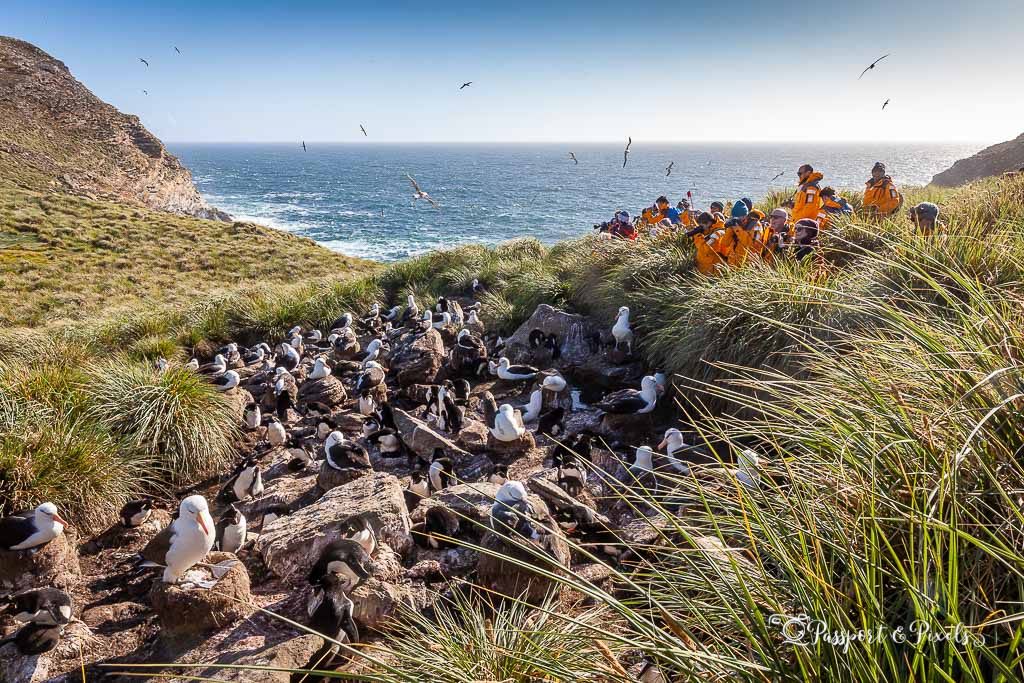
The Falklands’ main attractions are wildlife and remote, wild landscapes. This is a place to come if you want to get away from it all! It’s a wildlife haven, with over 1 million penguins and loads of other species including albatrosses, seals, vultures, and more and most of the wildlife is completely unbothered by humans, meaning you can get really close. The capital, Stanley, is a cute town with some nice shops and restaurants, a museum, and tour operators who can help you plan your trip around the islands.
What should I pack for the Falkland Islands?
You’ll probably be visiting in the summer when it’s mild but can still be chilly. You should definitely bring some sort of parka or padded jacket and also a waterproof and windproof shell. Layers are a good idea, as are waterproof trousers for shore excursions and for sitting on the ground watching penguin colonies. However in the summer it’s not THAT cold, so you can leave your super thermals at home – unless you’re carrying on to Antarctica afterwards.

Will I get seasick on my visit to the Falklands?
If you’re travelling by sea, then it’s possible, yes. You’ll have to spend at least a day and a night out on the open ocean, and it may be rough. If may be calm too, of course, but it’s best to be prepared by bringing travel sickness medication with you.
Is it dangerous to visit the Falkland Islands?
Not really, no. The Falklands are very safe. There’s always a risk with any travel – from getting on a plane to getting on a ship, plus of course you will be going to see wildlife – but I wouldn’t say the Falklands are any more dangerous than anywhere else. If you’re going on a cruise your guides will always be there to support and advise you with things like zodiac landings and wildlife watching, so don’t worry!

I have mobility issues. Will I be OK to visit the Falkland Islands?
There may be some physical activities you find challenging, but in general you should be OK. The hardest part for anyone with limited mobility will be getting in and out of the zodiac for shore landings. You may also have to do a small amount of walking to get from the beach to the albatross or penguin colony. If you’re not sure you can manage, speak to your tour operator for more advice.
Which companies do Falkland Islands tours?
The Falkland Islands tourist board has a handy list of companies offering cruises that stop at the Falklands. You can find it on their website here.
I travelled with Quark Expeditions and would definitely recommend them.
Where can I find out more about visiting the Falklands?
If you want to know more about what it’s like to visit the Falklands, check out Visiting the Falkland Islands on an Expedition Cruise
To find out exactly where we went and what we did, try The Falklands, South Georgia & Antarctica: Our Itinerary
For more information about visiting Antarctica and South Georgia, try South Georgia & Antarctica: The Trip Of A Lifetime
If you’re looking for wildlife photography tips, head over to 60+ Awesome Antarctica Photography Tips

My visit to the Falkland Islands was part of a longer trip that also included South Georgia and Antarctica. There is loads more still to come so please do sign up to updates by email to get notifications about new posts, or follow me on Twitter or Instagram. And if there’s anything you’d like to know, please comment below so I can include it in the next post!
I travelled to the Falklands, South Georgia and Antarctica with Quark Expeditions in December 2019 – January 2020. I paid in full for the trip. All opinions are my own and all prices correct at the time of writing.
If you liked this Falklands Islands post why not Pin It?

