


When I was offered a travel writing assignment to Palau, my first reaction was: ‘Yes of course!’
My second, swiftly afterwards, was: ‘But where is Palau?’
I’d heard of this tiny Pacific island nation, but I wouldn’t have been able to put it on a map. And when I looked it up, I discovered that it’s even more remote than I’d thought.
Which is why, if you’re planning to visit Palau, you need a well-planned itinerary that lasts at least a week.

Happily for me, I was hosted by Pristine Paradise Palau (aka the Palau Visitors’ Authority), who arranged an excellent trip that included all of Palau’s highlights.
Since it was created by the experts and designed to show off the best of Palau in 7 days, I decided to share it with you – alongside my honest thoughts about what worked and what I liked less.
Hopefully it will give you more of an idea about where to go and what things to do in Palau, allowing you to explore this unique tropical island destination without being rushed.

About my visit to Palau
I visited Palau on assignment for National Geographic Traveller, who tasked me with exploring as much of the country as possible and introducing it to their readers.
Over the course of a week, I kayaked through the famous Rock Islands, explored WWII battlefields, visited traditional communities, snorkelled coral reefs, toured conservation projects and took a scenic flight over the archipelago.
Every recommendation in this Palau guide is based on places I personally visited, and all the photographs (including the drone photos) were taken by me.
So this article is an authentic, original, first-hand account of what Palau is actually like and what there is to see and do, as experienced by yours truly.

Things to do in Palau: my itinerary
So here’s what my schedule looked like:
Day 1: Arrival & settling in
Day 2: Day tour of Airai State & discovering Palauan culture
Day 3: Scuba diving, kayaking or snorkelling in the Rock Islands
Day 4: Another day in the Rock Islands with more underwater adventures and history
Day 5: The dark side of Palau’s past: Peleliu Island
Day 6: Tour of Babelbaob – the ‘big island’
Day 7: Scenic flight over the 70 Islands and departure
And here is all is, plotted out on a map of Palau so you can get your bearings.
Before I go into the detail, it’s helpful to have a bit of context. If you already know all about Palau and want to jump straight to the itinerary, you can scroll past this next bit.
Introducing Palau
First of all, here’s a quick video I made about Palau to give you an idea of what there is do to there.
Don’t worry, you can skip the ad after a few seconds!
Where is Palau?
Now that I’ve looked it up (and been there) I can tell you!
Palau is an archipelago of about 340 jungle-clad limestone islands surrounded by pristine waters and incredible coral reefs.
It’s located in the western Pacific Ocean, about halfway between the Philippines and Guam – roughly a 3-hour flight from Manila, 4 hours from Taipei or 5 hours from Tokyo.
There are six main islands, the biggest of which is Babeldaob, where the capital is. But most visitors (including me) stay in Koror, which is in the middle of the archipelago, connected to Babeldaob by the Japan-Palau Friendship Bridge.
With a population of only around 22,000 people, Palau is one of the smallest and least-populated countries in the world.
That makes it a great place to visit if, like me, you want to get away from the crowds.

Essential facts about Palau
Here are some important facts about Palau that you should probably know before you go.
- Official name: Republic of Palau (Beluu er a Belau in the local language)
- Location: Western Pacific Ocean, part of Micronesia, southeast of the Philippines and north of Indonesia
- Size: About 180 square miles spread across about 340 islands (mostly coral atolls and volcanic islands)
- Population: Roughly 22,000 people (one of the world’s least populated countries).
- Capital: Ngerulmud (on the island of Babeldaob). But most people live in Koror, the former capital and main hub
- Currency: US dollar
- Official languages: Palauan and English
- Time zone: GMT +9 (the same as Japan and South Korea)

My Palau 1-week itinerary
So now you’ve got your bearings, let’s dive (pun intended!) into the detail.
While I’m calling this an itinerary, you’ll stay the whole week in one place and take day trips from there, so the days are interchangeable and you can do them in any order you like.
Keep an eye on tour availability and the weather forecast, and plan accordingly. Some companies may let you reschedule your tour for a different day if it looks like its going to be too rainy.


Day 1: Arrival in Koror
When you fly into Palau, I recommend a window seat so you can enjoy the gorgeous views of the tiny islands appearing after hours of empty blue ocean. But if you don’t have a window, don’t worry: you’ll get another chance on Day 7 of this itinerary.
As soon as you’ve disembarked at Palau International Airport, you’ll be asked to sign the Palau Pledge. This commitment is stamped directly into your passport, and by signing it you promise to behave respectfully and help protect the country’s fragile ecosystems.
Frankly I think every country should have one – and if you’re the sort of person who throws their rubbish on the ground, you need to take a long hard look at yourself.
Once you’ve collected your luggage, it’s just a 15-minute taxi ride from the airport to your hotel in Koror. Palau does have public buses but they are fairly infrequent. Most tourists use either taxis or rental cars, and most hotels offer airport pickup.
You’ll probably be exhausted after your long journey, so spend the rest of the day relaxing in your hotel, jump in the sea or a take a nap, and then in the evening head out for dinner in one of the restaurants on Koror’s main street.


Where to stay in Palau: Palau Pacific Resort
One thing I loved about Palau is that it’s so small you can stay in one place and explore from there, instead of having to pack and move every couple of days.
I stayed in the Palau Pacific Resort, one of the best-known resorts and a popular base for divers, photographers and luxury travellers visiting Palau.
Set on a private stretch of coastline just outside central Koror, the resort has a private beach, jetty, swimming pool, spa, tennis courts, gym, dive shop, restaurant, beach bar and snorkelling reef directly off the beach.

I did actually move every few days, but I didn’t go very far. The hotel wanted me to experience several different room types, so I started in a spacious ocean-view room, upgraded after a few days to a balcony suite, and then upgraded again to one of the resort’s gorgeous overwater bungalows.
All the rooms were great, as was the food and facilities. But I did especially love my overwater bungalow, where noddies came to perch on my deck and I could climb down a ladder directly into a coral garden.


Day 2: Exploring Airai State & Palauan culture
This is your chance to get a feel for Palau and what its all about, beyond the beaches and coral reefs it’s rightly famous for (you’ll do those later, don’t worry!).
The best way to do this is on a day tour of Airai State on the ‘big island’ of Babeldaob. Airai is one of Palau’s 16 states and home to some of the country’s best-preserved cultural sites.
The tour I did lasted a full day and included lunch and hotel pickup. It was organised directly through through Airai State Tourism – you can find my guide Velma’s email address via this link.
Or there are various other Palau day tours here.

What to do in Airai State
Tours will vary but here are the main things that are likely to be included:
1/ Kaigun Sho
This is a former Japanese WWII communications centre that was bombed in 1944. The scarred and empty shell, surrounded by rusting old tanks and guns, is eerie and fascinating, and is a great way to learn about about Palau’s Japanese occupation between 1914 and 1944. It’s also a tiny taster of the World War II history you’ll discover later in the week.

2/ Grass skirts and taro
Meet one of only two remaining traditional grass skirt makers in Palau and learn about the importance of these ceremonial skirts, and how they’re made from hibiscus bark fibre. The finished skirts can cost around $800 and are worn during important cultural ceremonies.
Here you’ll also learn about Palau’s matriarchal culture and women’s roles within Palauan society.
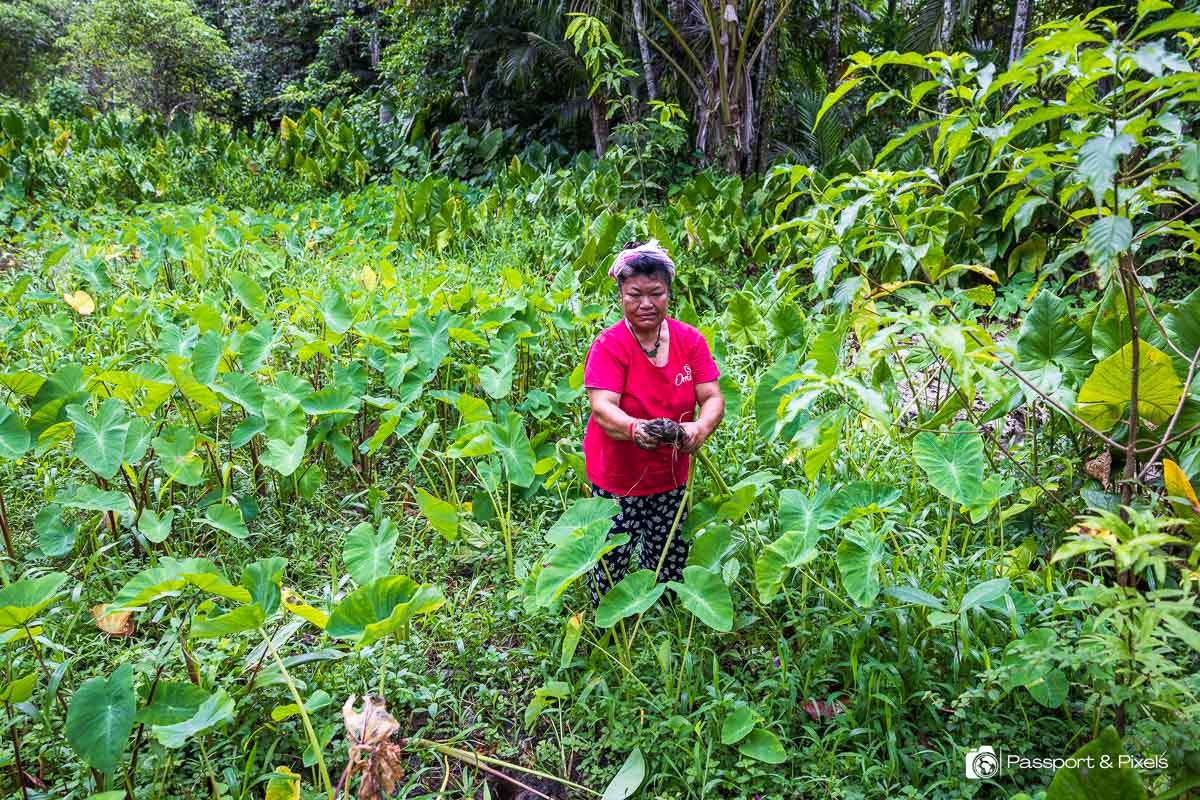
You may also get the chance to discover taro, the Palauan staple root vegetable. See where and how it’s grown and used in traditional Palauan cooking, and taste some delicious taro dishes.

3/ Ordomel and the Bai
Head to Ordomel, Airai’s main village, and walk the ancient stone path leading to the bai, or chief’s meeting house.
This particular bai is one of Palau’s oldest surviving chief’s houses, built in the 1800s. The intricately-painted wooden structure was built without any nails and is still used today for meetings.
Here you’ll also hear stories about Palauan demigods, ancestor spirits and traditional beliefs that still survive alongside Christianity.

4/ Conservation and history
A few other interesting stops you might make on your tour.
- Tour a fish and coral breeding centre working to reduce pressure on wild reefs by breeding aquarium species in captivity. We even got the chance to release some fish back into the ocean to help replenish populations.
- Visit the remains of Chades Ra Mechorei, an ancient fortress on the historic border between northern and southern Palau.
- See a traditional Palauan war canoe and learn the legends behind Airai’s symbol – the spider conch shell.

Day 3: Diving or snorkelling in the Rock Islands
In diving circles, Palau is known as one of the world’s best diving destinations, thanks to its dramatic reef walls, clear waters and prolific marine life.
Many visitors do multi-day liveaboard trips, exploring diving sites such as Blue Corner, German Channel and Ulong Channel, where you might see reef sharks, manta rays, turtles, napoleon wrasse and huge schools of fish.
There are also between 30-60 shipwrecks and aircraft from World War II, which offer fascinating – if sobering – diving opportunities.

If you want a shorter diving experience as part of a wider Palau itinerary, several companies run full-day dive trips from Koror with two or three dives and lunch included.
I do have a PADI Open Water qualification and would have loved to the chance to dive in Palau, but sadly it was not included as part of my 7-day itinerary.
Instead, I explored the area with Paddling Palau on a full-day tour from Koror, which included several kayaking and snorkelling stops around the Rock Islands.

About the Rock Islands
That famous photo of Palau from the air – the one that’s at the top of this post?
That’s the Rock Islands Southern Lagoon, a UNESCO World Heritage Site made up of 445 uninhabited limestone islands rising from bright turquoise water.
Formed from ancient uplifted coral reefs that were gradually carved away by waves and currents, the islands rise steeply from the water in mushroom-like shapes, with hidden beaches, caves, mangroves and sheltered channels between them.
With clear, warm water, coral reefs, hidden beaches and sheltered lagoons, the Rock Islands are perfect for kayaking and snorkelling, and one of the top things to do in Palau.

What to do in the Palau Rock Islands
- Kayak through narrow channels and sheltered lagoons between towering limestone cliffs.
- Explore Risong Bay, a protected conservation area known as a nursery for juvenile fish, blacktip reef sharks and grey reef sharks.
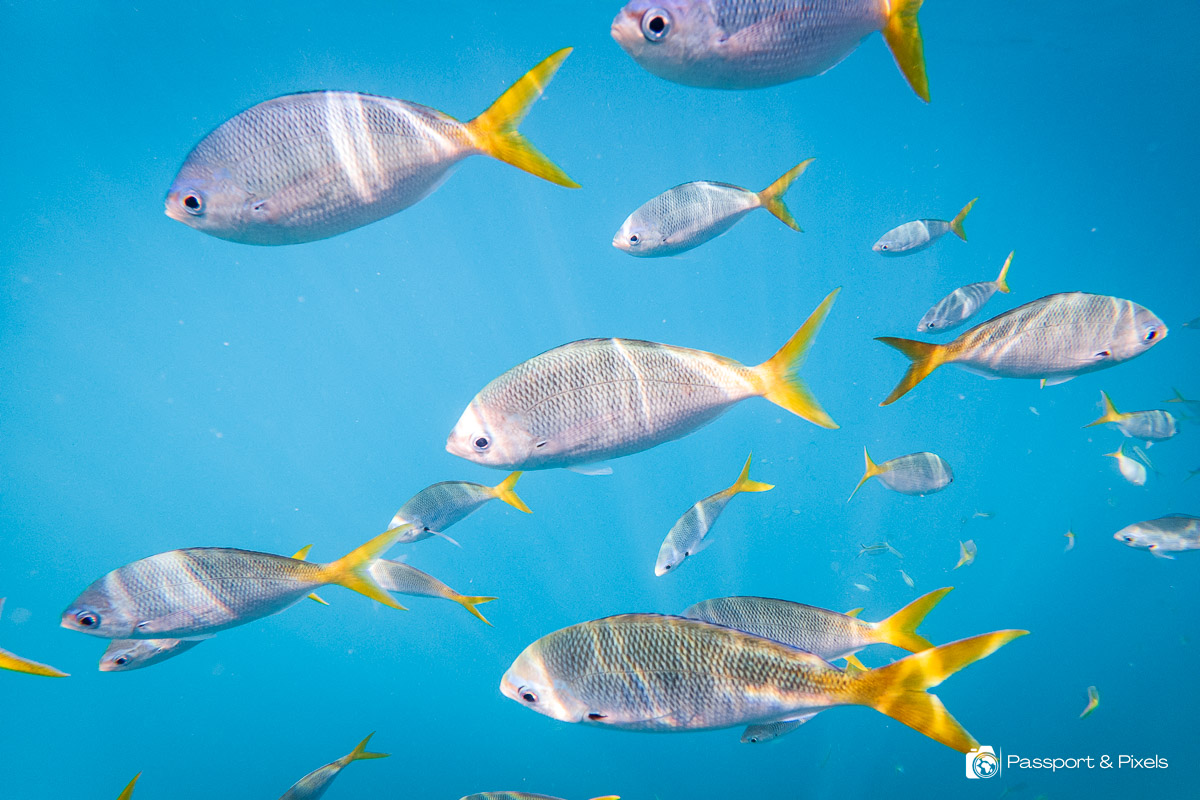
- Jump off the boat into the bathwater-warm water and snorkel through coral reefs filled with colourful tropical fish including wrasse, gobies and sergeant majors.
- See the remains of Japanese WWII landing craft partially submerged among the islands. In March 1944, Japanese forces attempted to hide boats among the Rock Islands, but American bombing raids destroyed many of them and some wrecks can still be seen today protruding from the water.
- Spot birdlife including black noddies, terns and white-tailed tropicbirds.
- Look out for endemic plants and wildlife including mangroves, pandanus trees and the white-flowered rur, Palau’s national flower.
Note that to go to the Rock Islands you will need a permit, which costs $50 per person. Most tour operators will organise it for you, but do check as you might need to get it yourself from the office in Koror.

Day 4: More diving or a Rock Islands history tour
There are so many places to explore in the Rock Islands, that one day is simply not enough. You can either do another dive trip, or join a combined snorkelling and history tour that mixes wildlife and local history with more time in the water.
What you’ll see on a Rock Islands tour
- Spend another day on the water, cruising through the stunning limestone islands and spotting bird life.
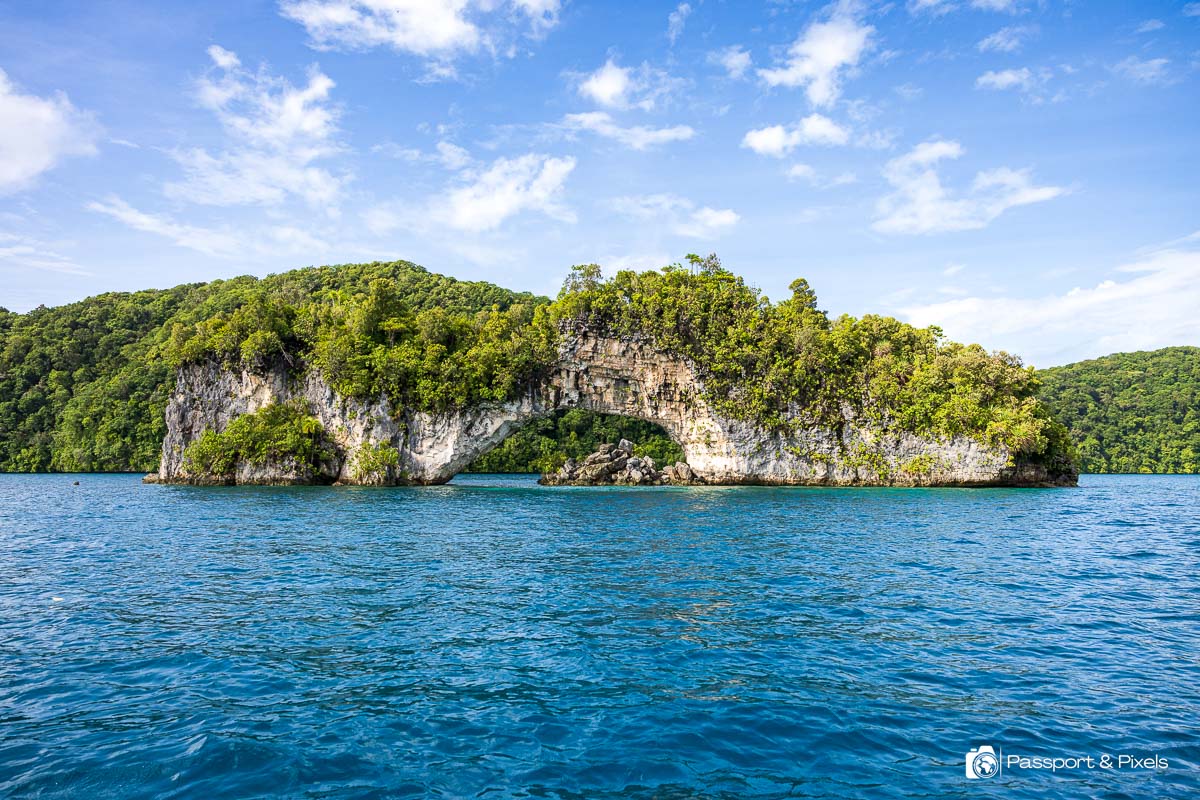
- Visit the Limestone Arch, a majestic natural arch slowly being eroded by the wind, rain and waves.

- Snorkel at ‘Shark City’, where blacktip, whitetip and grey reef sharks often congregate.
- Visit Ulong Island and see the memorial to Captain Henry Wilson, a British sailor whose ship the Antelope was wrecked here in the late 1700s. According to local accounts, the Palauans initially believed the survivors were supernatural beings or spirits, but eventually helped them repair the damaged vessel. In exchange, Wilson and his crew gave the locals guns, who used them to destroy their enemies on neighbouring islands.
- Walk through the remains of an ancient Palauan village occupied between about the 16th to 19th centuries. Stone walls and defensive structures still sit hidden among the trees, while large pits once collected rainwater for drinking.
Day 5: History on Peleliu Island
Even if you’re not a massive World War II buff, this is still a fascinating day out.
The island of Peleliu is about 25 miles southeast of Koror, and was the site of one of WWII’s deadliest battles.
In September 1944, American forces invaded Peleliu to capture its airfield, which was strategically important for the planned invasion of the Philippines.
They expected the battle to last just a few days, but they didn’t anticipate the Japanese resistance. The battle ended up dragging on for nearly three months, during which nearly 11,000 Japanese and 2,000 US troops died.
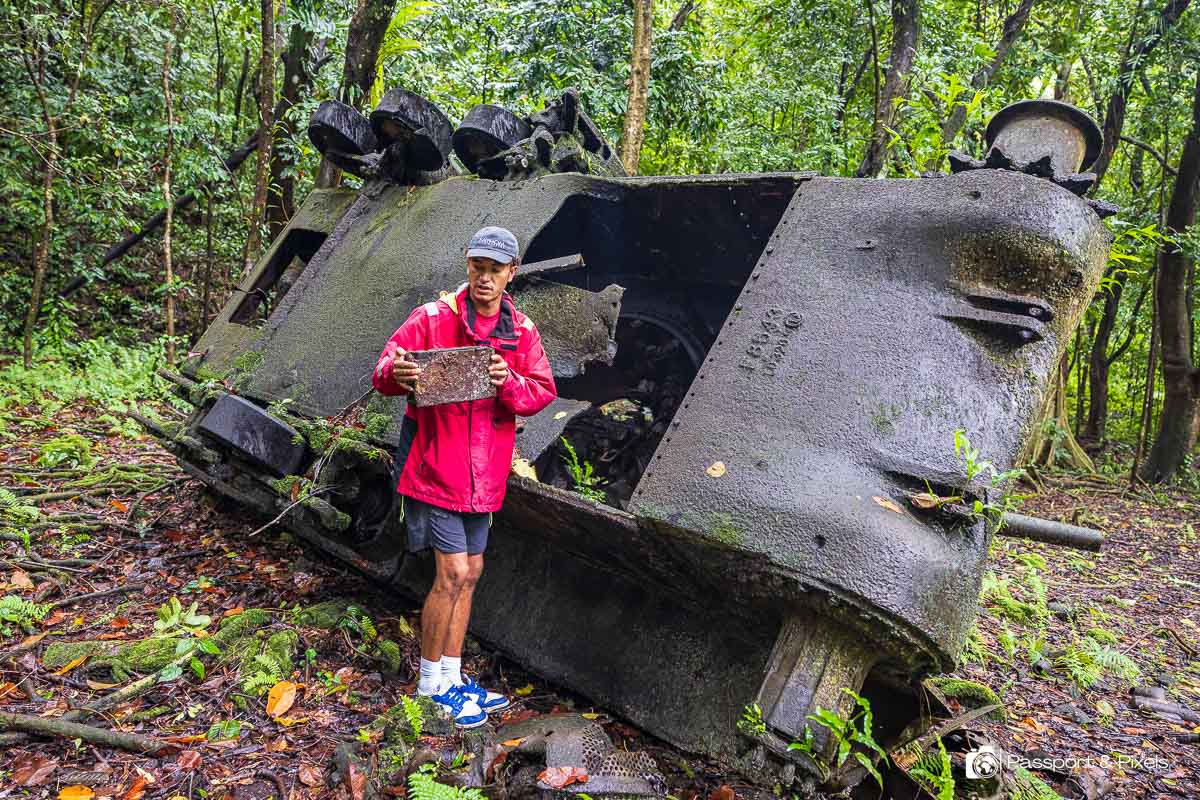
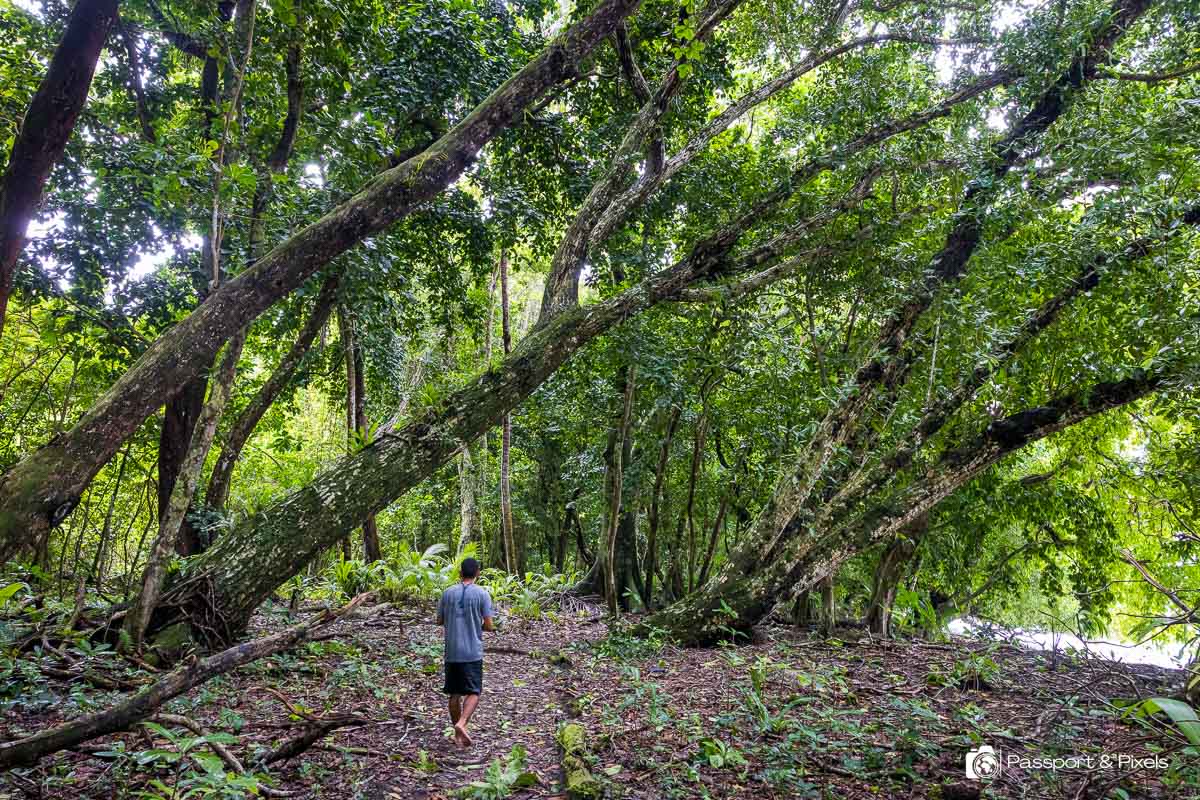
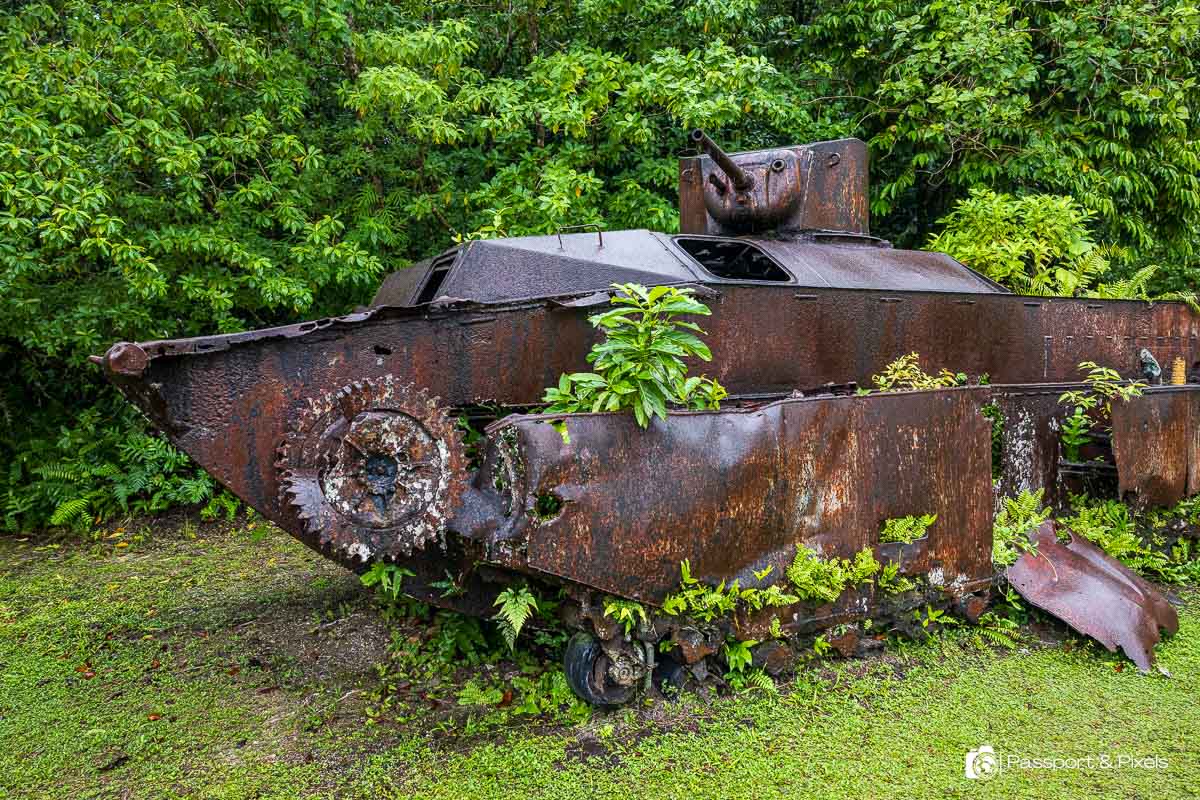
Today, Peleliu is still scattered with rusting tanks, abandoned bunkers, cave systems and jungle-covered military buildings.
Unlike many battlefield sites elsewhere in the world, much of it has been left untouched, making Peleliu an incredible open-air museum where the relics of war are gradually being reclaimed by nature.
I explored Peleliu on a day trip from Koror with Paddling Palau, who picked me up from my hotel and took me to their dive centre, from where we transferred into a boat for the 1-hour crossing to Peleliu.
We spent a (rather rainy) day exploring the ruins and relic, while learning details of what happened from local guide and history fan Sean Kilcullen.
Read more: Peleliu Island, Palau: Visit This Haunting WWII Battlefield

What to see on Peleliu
- Visit White Beach and Orange Beach, where American troops first came ashore during the invasion of September 1944.
- Explore abandoned Japanese defensive positions hidden in the jungle, including artillery placements, tunnels and cave systems.
- Walk through the ruined Japanese airfield headquarters, riddled with bullet holes and overgrown with strangler figs and tropical vegetation.

- Drive across the old Peleliu airfield, the crucial spot that precipitated the whole bloody mess.
- See rusting tanks, amphibious landing vehicles and anti-ship guns still sitting where they were left after the war.
- Visit Ceison Cave, where Japanese tanks were hidden during the battle.
- Stop at the Cave of 1000 Men, where Japanese medics and non-combat personnel hid during the fighting.
- After exploring the sites on land, get back on the boat to snorkel around WWII wrecks, including sunken Japanese vessels hidden in the waters around Peleliu and the Rock Islands.

Day 6: See the Big Island
On your last full day you can either spend time relaxing and snorkelling around your resort, or explore the quieter and more traditional side of Palau on a day trip to Babeldaob, Palau’s largest island.
Although people tend to spend most of their time on the water, a land tour around Babeldaob offers a very different side of Palau: small villages, forested hills, ancient stone monuments and traditional legends that still influence the culture today.
If you have a hire car, this is one you can easily do yourself. It takes less than an hour to drive all the way round the main island and there’s only one road so you can’t get lost.
However, if you prefer to have a guide, you can do what I did and take a day tour.
What to do on a Babeldaob tour
- Visit the Belau National Museum to learn about Palauan history, religion and family traditions.
- Learn about Modekngei, Palau’s traditional belief system centered on spirits and gods.
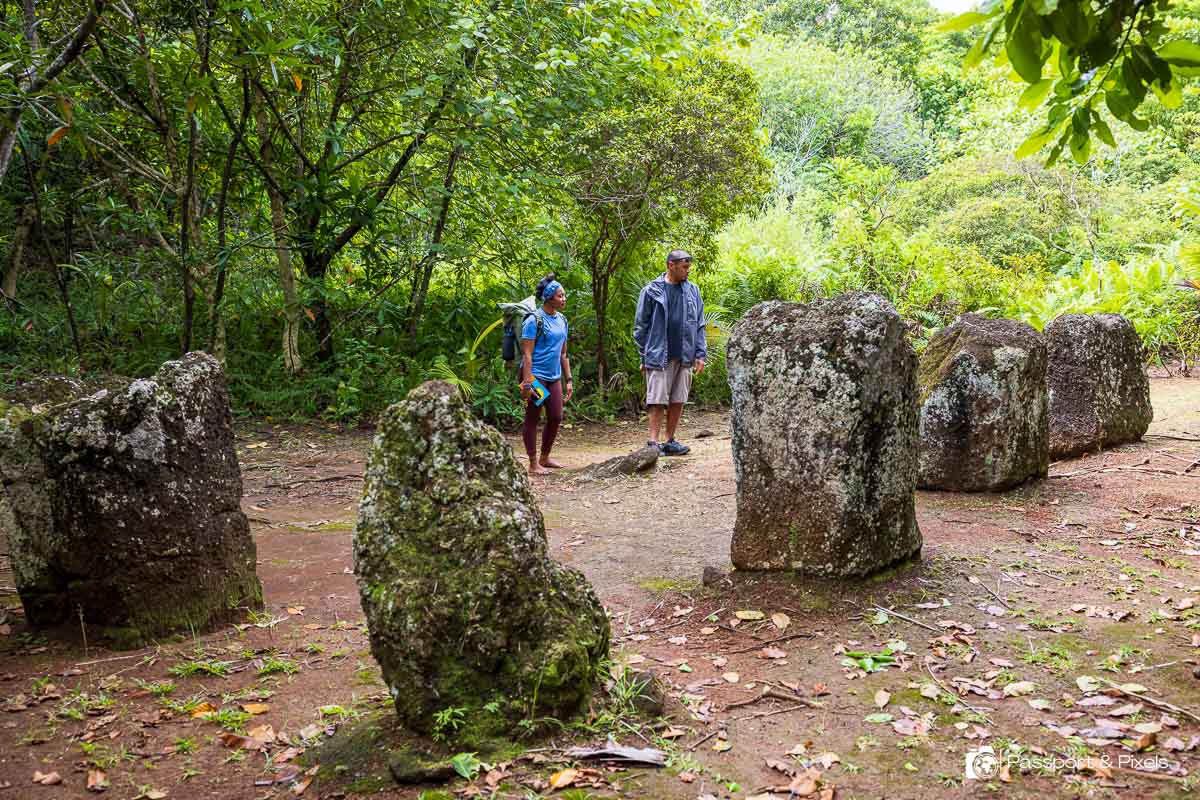
- Visit the mysterious Badrulchau standing stones – said to be Palau’s answer to the Easter Island heads or Stonehenge – and thought to date back almost 2,000 years. Hear the local legend of how they were formed by a demigod who tricked his rivals and turned them into stone.
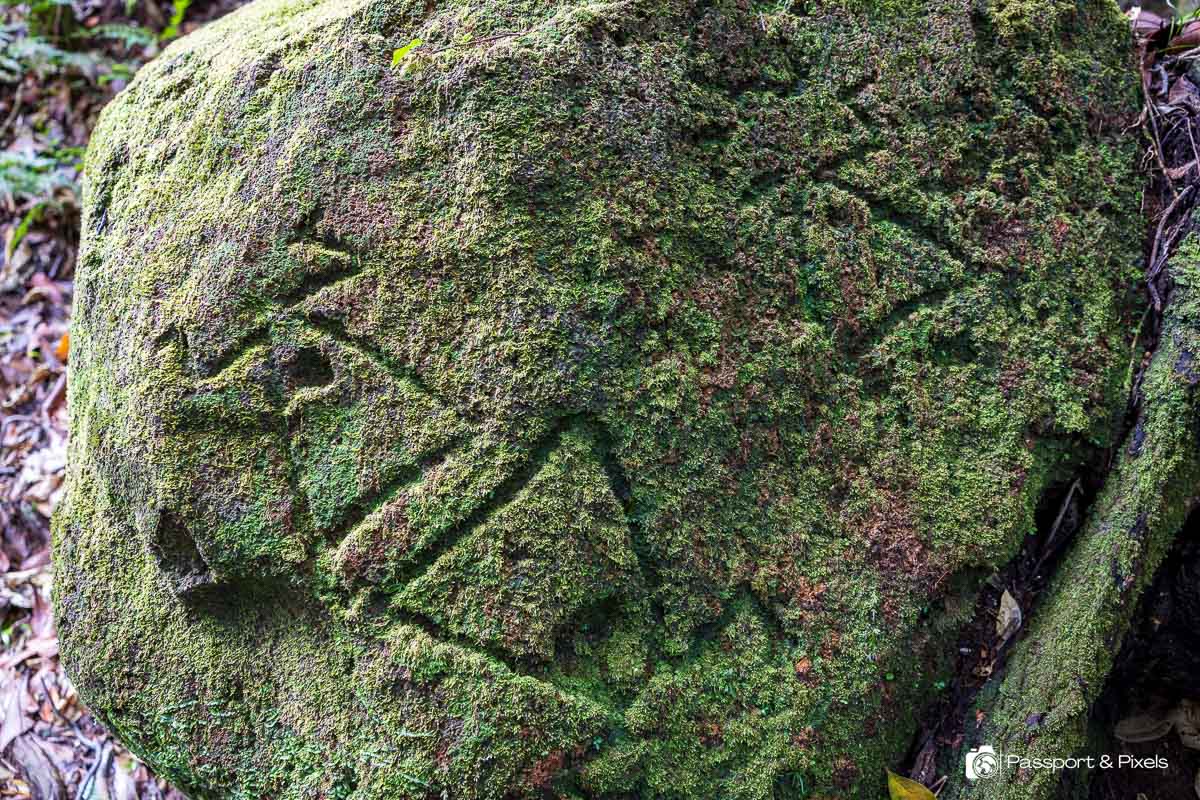
- See ancient petroglyphs carved into the rock and hear the dramatic stories associated with them.
- Stop at Palau’s so-called Fountain of Youth, where an old woman was supposedly transformed into a young girl after bathing in enchanted water.
While I did find this day interesting, I would say that it was my least favourite day in Palau. It might be one to save for if the weather is less good or you’re particularly interested in culture and legends; otherwise I’d probably spend more time in the Rock Islands.

Day 7: Scenic flight over the 70 Islands & departure
If the weather cooperates, there’s no better way to end a Palau itinerary than from the air with a doors-off scenic flight.
After spending a week exploring the Rock Islands by boat and kayak, I found that a scenic flight put the scale of the archipelago into perspective, giving me a literal overview of many of the places I had visited during the week including the Rock Islands, Long Beach, German Channel and Shark City.
Flights depart from Koror and last between 25 and 55 minutes, depending on the route. Mine was in a Cessna 182 with Smile Air and my lovely pilot Kay.
Flights cost between USD 170 and 290 per person, depending on route and duration.

Tips for your Palau scenic flight
It can be pretty overwhelming and scary flying with the doors off, but try to relax and enjoy it.
Make sure you have a strap for your phone or camera firmly attached. If you drop it, you’re definitely not getting it back!
Don’t lean or reach out. The force of the wind is strong and will snatch anything from you or may whip your phone back into your face.
After your scenic flight, return to Koror for souvenir shopping and lunch or a final swim or snorkel off the beach before your evening departure.


Practical tips for visiting Palau
Entry requirements & visas
If you’re from the UK (like me), USA, Canada or Australia, you don’t currently need a visa to visit Palau as a tourist. Passport validity requirements do apply and you may need proof of onward travel. Regulations can change, so check official websites before you go.
When is the best time to visit Palau?
Palau has a tropical climate with temperatures generally hovering around 27–31°C (80–88°F). The driest months are usually from December to March, which is considered the best time for diving and visibility underwater.
However, weather patterns have become less predictable in recent years and rain is possible at any time of year. My trip was in February, typically one of the driest months, but we had a lot more rain than expected.

Getting around Palau
Palau’s public bus service was only launched in 2024 and mainly covers stops around Koror. Buses run about once an hour and only take cash (at the time of writing).
Most visitors prefer to either rent a car or use organised tours and taxis. There is only one main road, so you can’t get lost, and it only takes about an hour to drive around the whole of the main island.
Environmental rules & responsible travel
Palau takes conservation extremely seriously, which is why they introduced the Palau Pledge. Though of course it shouldn’t take a stamp in your passport to make you act responsibly when you travel!
As well as all the usual rules about only taking photos and only leaving footprints, note that only reef-safe sunscreen is allowed, and e-cigarettes and vapes are banned in Palau. Your bag may be scanned or searched before you leave the airport, and contraband items will be confiscated.
As always when you travel, please be respectful of customs and cultures, ask permission before taking photos of people, dispose of your rubbish properly, and don’t take stones, shells, corals, WW2 artefacts, or anything else from the islands.

Visiting Palau: Some FAQs
Is Palau worth visiting?
I’m not gonna lie: Palau is a loooong old way. Especially if you’re coming from the UK like I did.
But the advantage of it being hard to get to is that fewer people make the effort – meaning that it’s quiet, unspoiled, uncrowded, and the people are genuinely pleased to see you.
All that, alongside the stunning islands, crystal clear waters, epic snorkelling, fascinating history and culture and amazing food definitely make Palau worth a visit!
Is Palau expensive?
Palau is not a budget destination. Hotels, flights, dive trips, boat tours and imported food can all be expensive due to the country’s remote location and the cost of bringing in supplies.
But as always, you get what you pay for. Palau’s landscapes, reefs, dive sites and experiences are genuinely world-class and worth saving up for!
What currency do they use in Palau?
US dollars are widely used and most places in tourist areas accept credit cards.
What language do they speak in Palau?
English and Palauan are the two main languages, and if you speak English you’ll have no problems.

What is the WiFi and internet like in Palau?
Mobile signal and Wi-Fi are available in Koror, although speeds can be iffy outside main tourist areas. I recommend getting an e-SIM so you can stay connected without running up huge roaming charges
What sort of plugs and electricity do they have in Palau?
Palau uses US-style two-pin plugs and 120V electricity.
Can you drink the water in Palau?
Tap water is considered safe to drink in Koror and major hotels, although you might still prefer bottled or filtered water. Make sure you bring a reusable water bottle so you don’t have to keep buying and using plastic.
Where to get more information about visiting Palau
For up-to-date travel advice, activities and tours, check the official websites of the Palau Visitors Authority and Airai State.

And there you have it! A comprehensive guide to things to do in Palau, along with a complete one-week itinerary. I hope it helps you plan an amazing trip to Palau.
Have a fantastic time and please come back and let me know how you got on!
Thanks for reading
Bella x
Buy me a coffee
Did you enjoy this website or find it useful? If you did and fancy showing your appreciation, that would be amazing!
A small token of support helps keep Passport & Pixels going, so I can carry on creating free content for travellers like you. Also, it makes my day! Thank you!
Where to next?
If you liked this post, why not check out some other amazing destinations?
- A Weekend In Tunisia – The Perfect Itinerary
- The Falklands, South Georgia & Antarctica Expedition: Our Epic Itinerary
- My Luxury Uganda Safari Itinerary: Into Africa’s Wild Places
- 4 Days In Jasper National Park: An Awesome Jasper Itinerary
- My Perfect Pembrokeshire Itinerary: A 5 Day Coast Road Trip
- 2 Weeks In Morocco: A Perfect Morocco Itinerary With Photos
- A Perfect Sri Lanka 2 Week Itinerary (With Stunning Photos)
- The Perfect Nova Scotia Road Trip In 5 days
- Things To Do In Victoria Falls: My Ideal 2 Day Itinerary
- Highlights Of Guatemala Itinerary In 10 Days, 2 Weeks Or 3 Weeks
- Park Hyatt Johannesburg: Is It Worth The Luxury Price Tag?
Liked this post?
Social shares help support my hard work! You can share via the buttons at the bottom, or pin this handy Pinterest Pin. Thank you!

My favourite travel tools and brands
To help you organise your trip, here’s a short list of some of the brands and tools I use over and over again when I’m planning my travels. You can see more on my Travel Resources page.
- Booking.com: A huge range of hotels to choose from, often with free cancellation. If you book hotels regularly you can earn discounts. I’m on Genius Level 3 which gets me 20% off!
- Expedia: Another great place to find hotels and Expedia also sell flights, car hire, and loads more all in one place.
- Skyscanner: The only place I ever go to search for flights and compare prices.
- Flight Centre: Booking a more complicated route? Let Flight Centre organise it for you (and deal with the drama when something goes wrong).
- Priority Pass: I love having access to 1600+ airport lounges when I fly, allowing me to enjoy my time at the airport. Buy through my link and you get up to 20% off!
- Airalo: Say goodbye to ridiculous mobile roaming charges. Did you know you can now buy ane-SIM, install it in your phone before you leave home, and then use data abroad at local prices? Game changer. Get US$3 credit with code BELLA5735.
- TourRadar: If you prefer group travel and organised tours, TourRadar has a huge range of fantastic tours from respected operators. They’re very helpful and have 4.5 stars on TrustPilot.
- Viator: Part of the TripAdvisor brand, Viator is another great place to search for group adventures and day trips.
- GetYourGuide: A great place to find local tours and day trips in your destination.
- Wex Photo Video: The UK’s best camera gear store.
- Ellis Brigham: Looking for good quality backpacks, travel clothes and other gear? Ellis Brigham is where I buy almost all of mine.
- Rentalcars.com: Part of the Booking.com family and the world’s largest online car rental service, with 24/7 customer service.
- World Nomads Travel Insurance: I never ever travel without travel insurance and nor should you!
