


No trip to Guatemala is complete without a visit to Lake Atitlán.
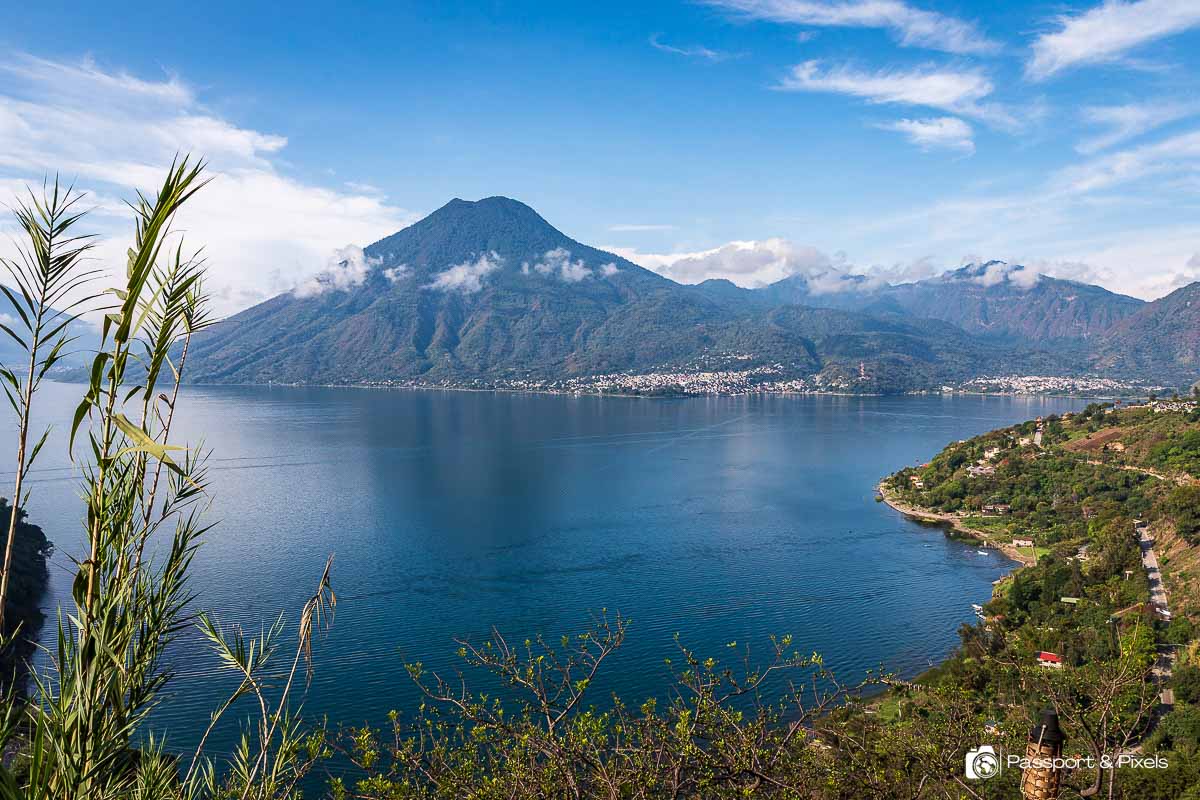
Encircled by three volcanoes, dotted with colourful towns that hum with Maya tradition, and often described as one of the world’s most beautiful lakes, Lake Atitlan is one of the top places to visit in Guatemala.
As well as being beautiful, it’s a destination that has something for everyone.

Love adventure? You can hike a volcano. Interested in traditional culture? Visit one of the villages where life carries on much as it has done for centuries.
Want to relax or do a wellness retreat? There’s a whole town for that. Want to buy some Guatemalan art? No problem. Want to party and make new friends? Lake Atitlan’s got you covered.
Personally, my favourite thing about Lake Atitlan, apart from the scenery, is how friendly and photogenic the people are. But when you visit, I’m sure you will find your own reason to love it too.
Stick with me, and I’ll show you how.

About my visit to Lake Atitlán
As you may already know if you’ve been exploring this site, I spent three months backpacking around Guatemala. A large part of that was spent living and volunteering in the city of Quetzaltenango (aka Xela), which is about two hours by bus from Lake Atitlan.
With the Lake and all its pretty towns easily accessible, I made several trips there during my stay. In total I probably spent about 2-3 weeks in and around Lake Atitlán, visiting all of the main towns and getting off the beaten track too.
During those visits I stayed in Panajachel, San Pedro, Santiago Atitlán and Santa Catarina Palopó, and visited some of the other towns more than once.
I also photographed and wrote about Lake Atitlán in National Geographic Traveller, JRNY magazine and The Great Outdoors Magazine – plus loads more articles about Guatemala in national publications.
So I’m confident I know Lake Atitlan better than many bloggers who might’ve visited for only a couple of days, and you can trust that I know my onions!
Read more: A Perfect Guatemala Itinerary In 10 Days, 2 Weeks Or 3 Weeks

About this Lake Atitlan travel guide
Before I went to Guatemala, I did what you’re doing now, which is Google a lot to plan my trip.
And I must admit I found Lake Atitlán quite confusing. There are so many towns, options for places to stay and things to do, that it can be overwhelming.
That’s why I’m here to simply it for you in a concise and easily-digestible way.
In this post I will:
- Explain all the different towns and what their main attractions are.
- Reveal my favourite towns you shouldn’t miss.
- Tell you what the top things are to do at Lake Atitlán.
- Cover FAQs like how to get there and how long to stay.
- Fill your page with beautiful photos to whet your appetite!
Let’s crack on!
Read more: Is Guatemala Safe? 60+ Practical Tips For Safe Travel In Guatemala


Lake Atitlan video
Before I get into the details, here’s a very short video I made about Lake Atitlán to give you an overview. Don’t worry, you can skip the the ad after a few seconds.
Introducing Lake Atitlán
Lake Atitlán is located in the southwestern highlands of Guatemala, about 75 miles (120 km) west of Guatemala City.
It sits in the caldera of an ancient supervolcano whose last eruption, about 85,000 years ago, shaped the dramatic landscape you can see today.
Looming over the lake are three striking volcanoes – San Pedro, Tolimán, and Atitlán – whose fertile slopes support agriculture, forests, and wildlife including the rare and beautiful quetzal, the national bird of Guatemala.
Dotted around the shore are 11 small villages or towns, each with its own unique character, which I’ll explain in a moment.

Connected by a network of boats and winding roads, Lake Atitlan is remote and beautiful, a place where ancient traditions endure against a backdrop of natural splendour.
I’m excited for you to see it!
Facts about Lake Atitlan
- Length: 11 miles (18 km)
- Width: 5 miles (8 km)
- Area: 50 square miles (130 km2)
- Altitude: 1,562 metres asl
- Maximum depth: 340 metres
- Number of towns: 11 (or 12 if you count Sololá)
- Number of volcanos: 3
- Height of its volcanos: San Pedro 3,020m; Toliman 3,158; Atitlán 3,535.
- Number of active volcanos: Only one, Volcán Atitlán, is considered active, but it hasn’t erupted since 1856.
Read more: The Thrilling Volcan De Acatenango Hike In Antigua Guatemala

Why should you visit Lake Atitlán?
What sets Lake Atitlán apart is its diversity, both cultural and natural.
Its volcanic origins created a breathtakingly dramatic setting, with sheer cliffs plunging into deep blue waters, and fertile soils that sustain forests, farms and abundant wildlife.
The lake’s ecosystem is home to numerous bird species, including herons, hummingbirds, and the elusive resplendent quetzal.

Meanwhile, its villages remain strongholds of the Maya people, where languages like K’iche’ and Tz’utujil are spoken alongside Spanish, and cultural traditions are still practised in daily life, not just as shows for tourists.
Visitors to Lake Atitlán are spoilt for choice. You can trek volcanic trails, visit women’s weaving cooperatives, browse art galleries, or simply wander the towns and watch life unfold.
Each village around the lake offers something unique, whether it’s the wellness retreats of San Marcos, the art and crafts of San Juan, or the markets and bars of Panajachel.
You could easily spend two weeks here and still not even begin to scratch the surface of this exciting place.
Read more: Guatemala People: 30 Portraits Of Guatemalans That Show Their Rich Culture

The towns of Lake Atitlán
Lake Atitlán has 11 main lakeside towns, plus one slightly further away. Here’s a summary of each of them, more or less in order of popularity and interest.
1/ Panajachel
Known as the gateway to Lake Atitlán, Panajachel (pronounced PA-na-HA-chell) is the lake’s busiest and most modern town.
Known as Pana for short, it’s where most visitors arrive, thanks to its good bus connections to Antigua, Xela, Guatemala City and beyond.
Its busy dock has dozens of small lanchas (public boats) departing regularly throughout the day for the other towns around the lake, making it a great base for exploring.
Its busy streets, particularly Calle Santander, are lined with cafés, bars, and shops selling everything from handwoven textiles to jade jewellery.

The town is also a cultural hub, with the Museo Lacustre offering an intriguing insight into the lake’s geological history, and the story of the lost city of Samabaj, ‘the Mayan Atlantis’, now submerged beneath the water.
By night, Pana comes alive with live music and street food stalls dishing up smoky grilled meats and fresh tortillas.
If you only have time for one of Lake Atitlán’s towns, it has to be Panajachel. I stayed here three times, and while it’s not the prettiest town on Lake Atitlan, it’s definitely the most convenient.

Where to stay in Panajachel
COMFORT: Hotel Atitlán. Right on the waterfront, Hotel Atitlán is a beautiful hotel with manicured gardens and an outdoor pool and hot tub. Each room is decorated with traditional Guatemalan textiles, and there’s an on-site restaurant. Booking.com rating: 8.8.
AFFORDABLE: Hotel Utz Jay. Located just off the main street, Calle Santander, Hotel Utz Jay provides comfortable rooms set in gardens, and there’s a Mayan-style sauna. Its central location makes it convenient for exploring, and there are lockers so you can leave most of your gear if you want to spend a night in a different lake town. Booking.com rating: 8.9.

2/ San Pedro La Laguna
San Pedro has a split personality. Its waterfront is a busy backpacker hub, filled with hostels, bars, and budget-friendly eateries offering typical tourist menus.
But venture uphill, and you’ll find the more traditional and quieter side, where narrow lanes wind past colourful houses and small markets brim with fresh produce.
San Pedro is also the gateway to two of the Lake’s most challenging adventures: hiking the San Pedro Volcano and the Rostro Maya (Indian Nose) lookout.
If you want to do either of these, you’ll need to stay the night before in San Pedro (which I visited twice).

Where to stay in San Pedro La Laguna
TOP PICK: Sababa Resort. The four-star Sababa Resort overlooks the Lake and also has a restaurant, swimming pool, garden and bar. Rooms are modern and clean and breakfast is included. Booking.com rating 8.1.
MID RANGE: Hotel Mikaso. This is where I stayed. Right on the waterfront in the quieter side of town, Hotel Mikaso offers views of the water and surrounding volcanoes. The rooftop terrace provides a great spot for relaxation. Rooms are simple but clean and comfortable. Booking.com rating: 8.5.

3/ San Juan La Laguna
Probably my favourite town on Lake Atitlan, San Juan La Laguna is a colourful place best known for its art galleries and artisan cooperatives.
San Juan is home to a thriving art scene. The main street, which runs steeply uphill from the waterfront, is lined with galleries and craft shops selling works by local artisans, while murals adorn the town’s walls, telling stories of community life.
Women’s weaving groups produce stunning textiles and offer workshops where visitors can try their hand at backstrap loom weaving.
If you’re a photographer like me, you’ll love how photogenic the town is.

Where to stay in San Juan La Laguna
COMFORT: Mundo Abu San Juan La Laguna. Another lakefront property, Mundo Abu offers great views of Lake Atitlán and the surrounding mountains. The property offers beautifully designed rooms that blend traditional Guatemalan aesthetics with modern amenities. Guests can enjoy direct lake access and a tranquil environment. Booking.com rating: 9.5.
AFFORDABLE: Eco-Hotel Mayachik’. Located a little outside the town in a tropical garden, Eco-Hotel Mayachik’ provides a serene retreat with a focus on sustainability. The hotel offers cosy bungalows and a vegetarian restaurant. Its peaceful setting is perfect for those looking to connect with nature. Booking.com rating: 8.7.

4/ Santiago Atitlán
The largest and one of the most traditional towns on the lake, Santiago Atitlán is a bastion of Tz’utujil Maya culture.
It also holds a dark history: the town was the scene of one of the worst atrocities of the Guatemalan Civil War, in 1990, when 14 civilians were gunned down by the army during a peaceful protest. Today you can visit the memorial for the war victims, a sobering reminder of the country’s turbulent past.

Santiago is also the spiritual home of Maximon, a folk saint whose shrine moves to a new location each year. Guided tours can offer fascinating insights into his role in blending Maya and Christian traditions.
Don’t miss the main church, Parroquia Santiago Apóstol, a landmark of colonial architecture and a focal point for community life, and the colourful markets, with vendors selling everything from handcrafted textiles to fresh tamales.
Santiago Atitlán is also the base for birdwatching tours in the Rey Tepepul nature reserve.

Where to stay in Santiago Atitlan
COMFORT: Tiosh Abaj Hotel. Located close to the lake, Tiosh Abaj offers spacious rooms with traditional décor and modern amenities. There’s also an outdoor pool, sauna and WiFi, and a restaurant serving local and international cuisine. Booking.com rating: 8.1.
AFFORDABLE: Hotel y Bungalows Ecológicos Marcelo. Set a little outside the town, the eco-friendly Marcelo Hotel offers simple bungalows set in a garden. Its commitment to sustainability and affordable pricing make it an attractive option for budget travellers. Booking.com rating: 8.4.

5/ Santa Catarina Palopó
This small lakeside village recently became the most photogenic town on Lake Atitlan, thanks to a community art project that transformed its houses from grey concrete blocks to works of art covered with designs inspired by traditional Maya imagery.
The result is a vibrant open air art gallery of blues, greens, and pinks that reflects the surrounding landscape and the town’s cultural heritage.
There isn’t an awful lot to do here apart from walk around and take photos, but it’s very easily accessible from Panajachel and the people are super friendly and welcoming. I liked it so much I visited twice!
Read more: Santa Catarina Palopo: The Colourful Painted Town In Guatemala

Where to stay near Santa Catarina Palopo
Santa Catarina is only a short hop from Panajachel so you can easily stay there. But if you fancy treating yourself to a gorgeous lakeside retreat, head to Casa Palopó.
This gorgeous boutique hotel sponsors the painting project and is listed by luxury hotels group Relais & Chateaux, so you know you’ll be looked after well. Booking.com rating: 9.1.
It’s also the sister hotel to Villa Bokéh, which you should definitely check out when you visit Antigua.
Read more: 28 Tried And Tested Things To Do In Antigua Guatemala

6/ San Antonio Palopó
Another gorgeous and quiet little town, San Antonio Palopó is known for its ceramics, with a handful of workshops producing distinctive hand-painted pottery that makes a unique souvenir.
The town’s steep streets offer yet more wonderful views of the lake, while its market is a good place to see locals in traditional attire, including intricately embroidered huipiles.
Remember though, that lots of Guatemalans don’t like being photographed, so make sure you’re respectful and ask permission wherever possible.
Read more: 30 Beautiful Pictures Of Guatemala And The Stories Behind Them

7/ San Marcos La Laguna
San Marcos is Lake Atitlán’s wellness capital, attracting yoga enthusiasts, spiritual seekers, and anyone looking for tranquillity.
Wellness centres and holistic retreats are tucked away in tropical gardens, offering everything from mainstream activities like yoga and meditation to slightly more weird stuff like ecstatic dance and naked saunas (and yes, there may be drugs, I couldn’t possibly comment on that!)
If you’re after more adventure, the town has a swimming platform which is popular with locals and visitors alike (and is in a part of the lake where its considered safe to swim, which is not true of all of it.
San Marcos is also home to several organic cafés and restaurants, serving everything from raw vegan dishes to fresh lake fish.
Read more: A Surprise Review Of Eagles Nest Yoga Retreat in Lake Atitlan, Guatemala

Hotels on Lake Atitlan in San Marcos La Laguna
COMFORT: Lush Atitlán. Lush Atitlán offers uniquely designed suites, each boasting a private balcony with stunning lake views. The artistic architecture and attention to detail create a unique atmosphere. Its central location provides easy access to local cafés and the waterfront. Booking.com rating: 8.7.
AFFORDABLE: Casa AHAU. Located in the centre of San Marcos, Casa AHAU offers dorms and private rooms with rustic décor and and a shared kitchen. The communal garden and terrace provide relaxing spaces to unwind. Its a convenient and budget-friendly choice. Booking.com rating: 9.0

8/ Santa Cruz La Laguna
Santa Cruz is one of the lake’s most picturesque villages, perched on steep cliffs with more amazing views of the water.
Accessible only by boat, it’s a popular base for divers and kayakers, with several eco-lodges offering equipment and guided excursions.
Santa Cruz is also home to CECAP, a vocational training centre that empowers local people through education and skill development. Visitors can tour the centre and support its cause by purchasing handmade goods or dining at its café.

Lake Atitlan hotels in Santa Cruz La Laguna
COMFORT: Casa Prana Villa & Suites. Situated on a private estate a little outside Santa Cruz, Casa Prana is a gorgeous luxury reatreat with breathtaking lake views. The property features an outdoor pool, wellness centre with fitness, yoga and massage facilities, and beautifully landscaped gardens. Booking.com rating: 10.
SOCIABLE: La Iguana Perdida. Backpackers go to Santa Cruz just to stay at La Iguana Perdida. This very popular hostel offers private doubles, triples and dormitories making it ideal for budget travellers. The communal areas, including a bar and garden, also make it a great place to meet fellow travellers. Booking.com rating: 8.3.
9/ Santa Clara La Laguna
Perched high above Lake Atitlán, this quiet town offers some of the best panoramic views, especially from the famous Indian Nose hike. As one of the least-visted towns on the lake, it’s a great spot if you want to find authentic Maya culture away from the crowds.
10/ Jaibalito
The most remote village on the lake, only accessible by boat or foot, Jaibalito is rarely visited by tourists and offers scenic hiking trails, and limited accommodation. It’s perfect if you really want to get away from the crowds while still being connected when you need to be.
11/ San Lucas Tolimán
Located on the lake’s southeastern shore, this working-class town has a more local feel, with fewer tourists and a strong indigenous culture. It’s an excellent base for climbing Volcán Tolimán or experiencing everyday Guatemalan life.

12/ Sololá
Not actually ON the lake, but close enough to warrant inclusion here, Sololá sits above Lake Atitlan, about 30 minutes by chicken bus from Panajachel.
Its market, held every Tuesday and Friday, is one of the most vibrant and authentic in Guatemala, where locals in traditional dress gather to trade produce, textiles, and handmade goods.
Unlike Chichicastenango which can be a bit touristy, this one offers a glimpse into everyday Mayan life, making it a must-visit for cultural travellers and photographers!
Adventure-lovers can also do this awesome-looking 6-hour day hike to Solola.
Read more: The Colourful Market In Solola Guatemala: A Photo Guide

Top things to do around Lake Atitlán
If you do nothing else during your visit to Lake Atitlan but wander around the various towns, drink in the cafés and chat to the locals, you’ll be doing just fine.
But if you’re looking for a bit more adventure, here are a few of the most popular things to do in Lake Atitlan.
Shop for art and souvenirs
Make sure you save room in your luggage for all the wonderful handicrafts available to buy in the various markets around Lake Atitlán.
From handwoven fabrics to hand-painted pottery, to art, locally-grown coffee and chocolate, masks, jewellery and much, much, more, you’re bound to find something you can’t resist.
I had no plans to buy anything while I was there but I fell in love with a gorgeous jug. I had no way to get it home unbroken; I ended up buying a painting instead, which now hangs in my office, behind where I’m sitting right now.


Hike the Rostro Maya (Indian Nose)
The Rostro Maya is the easiest Lake Atitlan hike. Typically starting at about 4 am, you’ll hike up in time to watch the sunrise over the lake (if you’re lucky – when I went it was cloudy!)
The trail takes about an hour, ascending a ridge that resembles the profile of a sleeping face (hence the name), and serves up panoramic views of the lake, volcanoes, and surrounding villages.
If you like to book ahead, you can book your Indian Nose tour here.

Climb San Pedro Volcano
San Pedro Volcano is the most accessible of Lake Atitlan’s three volcanos, offering a challenging but rewarding climb.
Starting early and taking about four hours (if you’re reasonably fit), the trail winds through farmland and forest, eventually reaching a summit that offers 360-degree views of the lake and surrounding highlands.
Go early to enjoy the views – if you go a bit later like I did you may end up seeing nothing but cloud.
Due to reports of robberies on the trail you should never hike this one alone, and it’s best to go with a guide.


Go birdwatching
Lake Atitlán is a haven for bird enthusiasts, with species like the resplendent quetzal, and blue-crowned motmot frequenting the area.
Head to Santiago Atitlán and do an early morning hike into the Rey Tepepul nature reserve for a chance to see some of them with an expert guide.
Read more: Seeing The Resplendent Quetzal Bird In Guatemala

Take a weaving class
In San Juan La Laguna, women’s cooperatives offer hands-on weaving workshops.
Using traditional backstrap looms, participants can create their own piece while learning about the cultural significance of each design.

Yoga classes or retreats
San Marcos La Laguna is the lake’s wellness hub, with holistic centres offering yoga, meditation, and therapies.
Check in for a longer stay, or just do a one-hour yoga class. You can also book massages, reiki, or just about any other therapy you fancy.

Visit Chichicastenango Market
The biggest and most famous market in Central America, Chichicastenango’s twice-weekly market is another unmissable thing to do in Guatemala.
While not right on Lake Atitlán, it’s only about 1.5 hours away from Panajachel. If you want to visit, doing it from Pana is the quickest way (you can get there from Antigua, but it takes a bit longer).
Read more: Chichicastenango Market in Guatemala: A Photo Guide

Visit Sololá market
Much closer to Lake Atitlan, but no less fascinating, the weekly market at Sololá is another great place to immerse yourself in Maya culture. It’s much less touristy than the one at Chichicastenango, and you may find you’re the only tourist there.
People here are quite camera shy, so make sure you chat to them and get consent before taking photos.
Read more: Ethical Travel Photography: How To Capture With A Conscience

Experience a Maya shaman ceremony
A Maya shaman is a spiritual guide and healer, believed to bridge the physical and spiritual realms through ancient rituals and medicinal knowledge.
You can experience these traditions by taking part in a group or private ceremony, which often includes offerings, prayers in Maya, receiving blessings and a chance to ask questions and seek guidance in your life.
I’m not religious or spiritual, but I found the experience fascinating and moving, and it was great to meet Tomás, the shaman, and ask him questions about Maya culture and beliefs.

Lake Atitlan tours
While most tours and activities can be booked in person once you arrive at the Lake, if you’re pushed for time or you’re someone who likes to plan ahead, here are some more Lake Atitlan tours you can book in advance (that I think sound cool).
- Lake Atitlan 1-day tour by boat with a guide from Panajachel
- Day tour to San Juan La Laguna and Santiago Atitlan from Panajachel
- Guatemalan cooking class in Santa Cruz La Laguna
- Lake Atitlan Kayak adventure
- Cultural tour of San Juan La Laguna

How to get around Lake Atitlán
By lancha
While there are roads around the edge of the lake, they are windy and quite unsafe, so by far the quickest and best way to get between the Lake Atitlan towns is by lancha (small boat).
Each town has its own dock, and boats usually depart when they’re full. So all you have to do is go to the dock, ask one of the boatmen which boat is going to your destination, and get on.
Fares cost typically about Q10-25 (£1 to £2.50) depending on the destination. You must pay the boatman in cash and tipping is not expected.
Sometimes you may have to wait a while for the boat to leave, so allow plenty of time, and make sure you check the time of the last boat back to avoid being stranded in the wrong place.
If the weather in Lake Atitlan is really bad, with strong wind and waves, the journey can sometimes be quite hairy, so you may want to change your plans.

By tuk-tuk
Within towns, tuk-tuks are the most convenient way to get around. You can either flag one down, or there are tuk-tuk stands like taxi ranks. Make sure you agree the price in advance (usually only about Q5-10 for a short journey within a town).
Tuk-tuks are also useful for getting between adjacent towns, such as going from Pana to Santa Catarina, or San Pedro to San Juan.
Another way to do this is by public pickup. These are basic flatbed trucks with benches in the back. They’re cheap and quite a fun way to travel (and you can see more as you go by than you can with a tuk-tuk). They usually depart from designated areas and only leave when they’re full.

How long should you spend at Lake Atitlan?
Most people only spend a couple of days at Lake Atitlán, but you could easily spend two weeks if you have time. As I mentioned at the start, I went back several times, and I still didn’t see everything!
For most people, two to three days is enough to take in the scenery and explore a couple of villages. Add another day if you want to go to Sololá or Chichicastenango Markets, and another if you want to do a volcano hike or go birding.
A week lets you experience San Juan’s art, San Marcos’ wellness scene, and Santiago’s rich traditions, plus hike Indian Nose or a volcano.
Two weeks or more allows for a proper exploration, or pure relaxation. The lake’s slow pace and stunning setting often make visitors stay longer than planned!

My suggested 3-day Lake Atitlan itinerary
What you do during your time at Lake Atitlán will obviously depend on how long you have. But I imagine most people reading this will only have 1-2 weeks to spend on their entire Guatemala itinerary, giving you only about 3 days at Lake Atitlán. Here’s how I’d spend that time:
Day 1: Arrive, settle into your hotel in Panajachel. Explore Pana; get a tuktuk to Santa Catarina and/or San Antonio Palopó.
Day 2: Get an early boat to San Pedro, leave your stuff in a hotel there, and book your hike for the next day. Then take a tuk-tuk to explore San Juan La Laguna (which is right next door). After lunch, get the boat to Santiago Atitlán, and then back to San Pedro for the night.
Day 3: Get up early to do the Indian Nose or San Pedro Volcano hike; or you could stay the previous night in Santiago and do a birdwatching hike. Alternatively, stay in Panajachel the whole time and use this day for a market visit to either Chichicastenango or Sololá.
Day 4: Depart.

How to get to Lake Atitlán
From Guatemala City or Antigua, private shuttles or shared tourist minibuses will take you to Panajachel in about three hours. Book through your hotel or hostel, or online via Monte Verde Tours or Adrenalina Tours.
Similarly, you can easily get to Lake Atitlan from Xela by tourist shuttle in about 2 hours.
If you’re in a rush, you can also do a full-day trip to Lake Atitlan from Guatemala City or Antigua.
For loads more practical information about getting around in Guatemala, check out my Guatemala Travel Guide: 50+ Essential Things To Know Before You Go

Can you swim in Lake Atitlán?
Swimming is possible in certain parts of the lake, though water quality varies.
Areas like Santa Cruz and San Marcos tend to be cleaner and are popular swimming spots. Always check local advice before diving in.

Is Lake Atitlan safe?
Like most destinations in Guatemala, Lake Atitlán is generally a safe and welcoming place, and most tourists have a delightful and trouble-free time.
However, it is always sensible to take a few basic precautions to avoid running into trouble:
- Petty crime, like pickpocketing, can occur, especially in Panajachel. So take care of your stuff.
- Some areas, particularly remote hiking trails such as on Volcan San Pedro, have seen occasional robberies, so going with a guide is recommended.
- Boat travel is usually safe, though conditions can become dangerous in rough weather.
- At night, it’s best to stay in central areas and not walk around after dark by yourself.
Read more: Is Guatemala Safe? 60+ Practical Tips For Safe Travel In Guatemala
And that’s it. Thanks for reading all the way to the end! I hope you have an amazing time in Guatemala – and if you’re planning a big trip, make sure you check out all my other posts!
Want to see more of my photography or travel writing? Have comments or questions? Come follow me on Instagram, Threads or Bluesky and share your thoughts!

Buy me a coffee
Did you enjoy this website or find it useful? If you did and fancy showing your appreciation, that would be amazing!
A small token of support helps keep Passport & Pixels going, so I can carry on creating free content for travellers like you. Also, it makes my day! Thank you!
Where to next?
If you liked this post, why not explore some more of my favourite places in Guatemala?
- A Guide To Flores Guatemala: Why I Loved This Maya Town
- Tikal Guatemala: My Essential Guide To The Iconic Maya Ruins
- Yaxha Guatemala: The Magical Mayan Ruins You Need To Visit
- Rio Dulce Guatemala: Is The ‘Sweet River’ Worth It?
- Visiting San Andres Xecul, Guatemala: Home Of The Famous Yellow Church
- Crater Azul: Is Guatemala’s Gorgeous Blue Crater Overhyped?
- A Review Of Villa Bokeh, A Luxury Hotel In Antigua Guatemala
- Alfombras In Guatemala: A Guide To The Colourful Sawdust Carpets
- Semuc Champey Guatemala: All You Need To Know Before You Go
My favourite travel tools and brands
To help you organise your trip, here’s a short list of some of the brands and tools I use over and over again when I’m planning my travels. You can see more on my Travel Resources page.
- Booking.com: A huge range of hotels to choose from, often with free cancellation. If you book hotels regularly you can earn discounts. I’m on Genius Level 3 which gets me 20% off!
- Expedia: Another great place to find hotels and Expedia also sell flights, car hire, and loads more all in one place.
- Skyscanner: The only place I ever go to search for flights and compare prices.
- Flight Centre: Booking a more complicated route? Let Flight Centre organise it for you (and deal with the drama when something goes wrong).
- Priority Pass: I love having access to 1600+ airport lounges when I fly, allowing me to enjoy my time at the airport. Buy through my link and you get up to 20% off!
- Airalo: Say goodbye to ridiculous mobile roaming charges. Did you know you can now buy ane-SIM, install it in your phone before you leave home, and then use data abroad at local prices? Game changer. Get US$3 credit with code BELLA5735.
- TourRadar: If you prefer group travel and organised tours, TourRadar has a huge range of fantastic tours from respected operators. They’re very helpful and have 4.5 stars on TrustPilot.
- Viator: Part of the TripAdvisor brand, Viator is another great place to search for group adventures and day trips.
- GetYourGuide: A great place to find local tours and day trips in your destination.
- Wex Photo Video: The UK’s best camera gear store.
- Ellis Brigham: Looking for good quality backpacks, travel clothes and other gear? Ellis Brigham is where I buy almost all of mine.
- Rentalcars.com: Part of the Booking.com family and the world’s largest online car rental service, with 24/7 customer service.
- World Nomads Travel Insurance: I never ever travel without travel insurance and nor should you!
Liked this post?
Social shares help support my hard work! You can share via the buttons at the bottom, or pin this handy Pinterest Pin. Thank you!

