

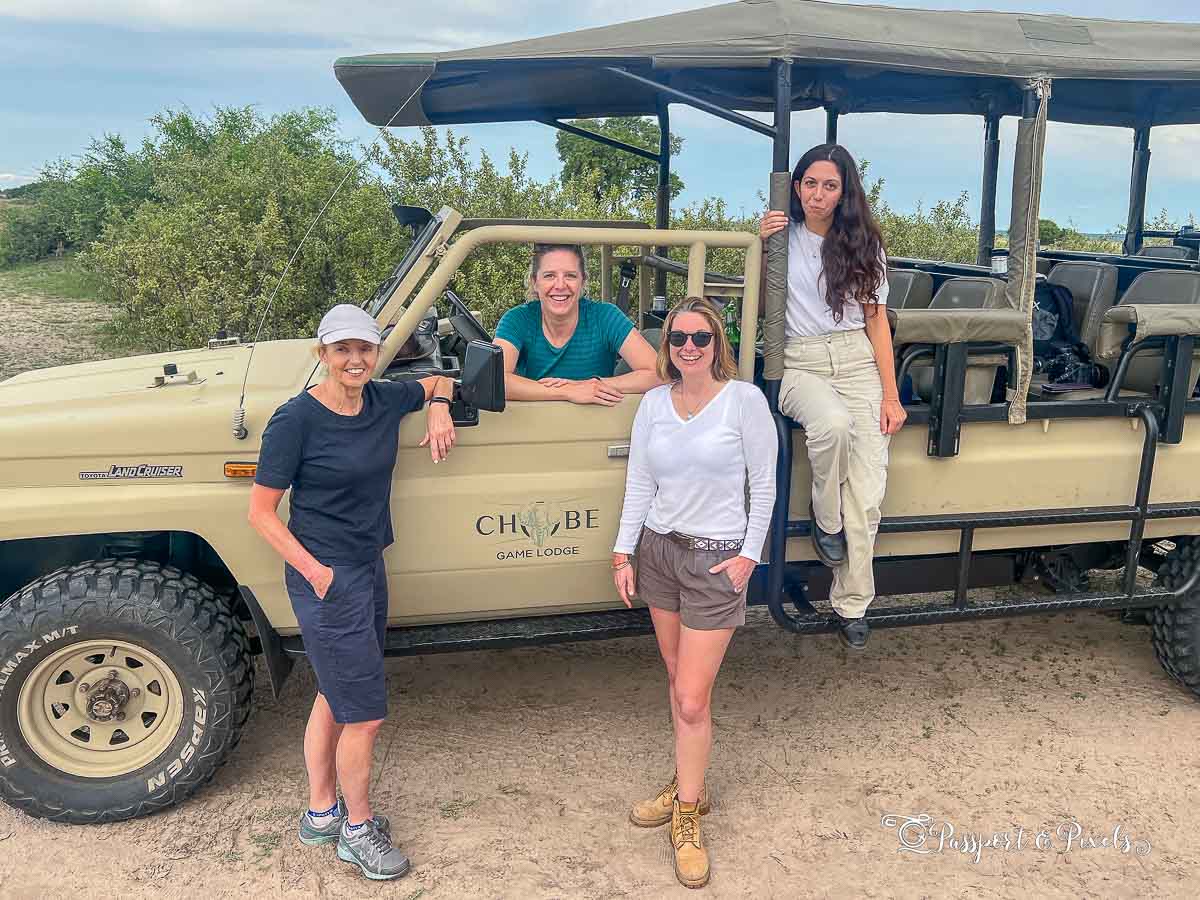
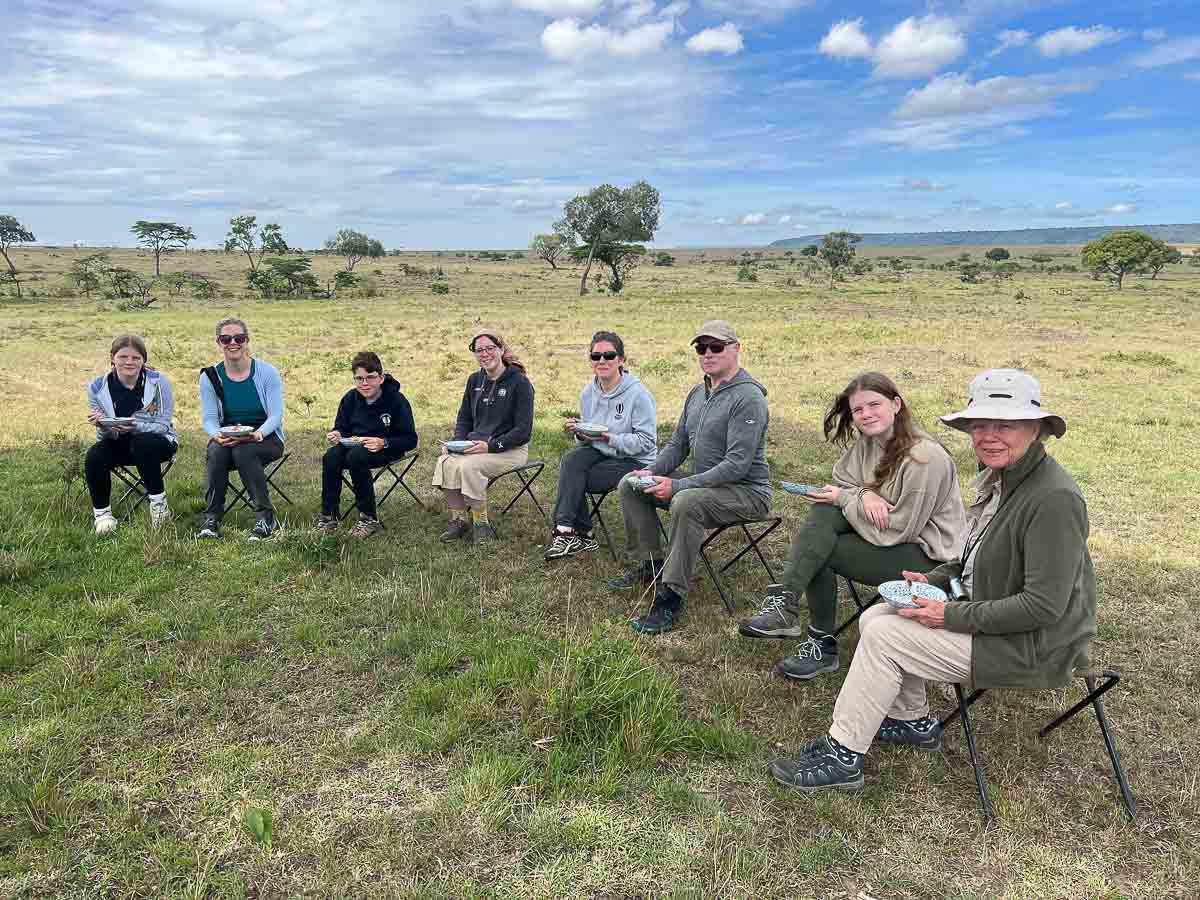
You’ve all seen the brochure photos: a smiling family is sitting at a camping table in the middle of the African bush. Behind them, the sun is setting, and perhaps a giraffe is crossing the savanna landscape.
What are they wearing? I’m sure you can picture it: lightweight designer safari gear, all matching, in indistinguishable shades of beige, taupe and camel.
Maybe the dad is wearing khaki chinos and the mum has a floppy-brimmed hat (colour: putty) on her head. They all have sand-coloured lace-up boots on, and from head to toe all their clothes are pristine, clean, and crease-free.
If it’s your first time figuring out what to wear on a safari, it might feel like this is the model you have to follow.
Like, having booked the blindingly expensive trip of a lifetime, you now have to go out and splurge hundreds more on the ‘proper’ kit, otherwise people will laugh at you and you may even get into trouble for not doing it right.
Well I’m here to reassure you: that’s rubbish.

What should you wear on safari?
I’ve been on at least ten safaris (to Kenya (three times), Botswana (four times), Tanzania, Uganda (for three months) and South Africa) and I still don’t own any ‘official’ safari clothes. I’ve always worn stuff I already own and been just fine.
That said, there are some dos and don’ts about packing for a safari, some things it’s a good idea to make sure you bring with you, and some stuff you should definitely leave at home.
So welcome to my complete safari packing guide. I’m going to go through a few points and FAQs, and then make a handy list at the end. Scroll down if you just want to skip to that.
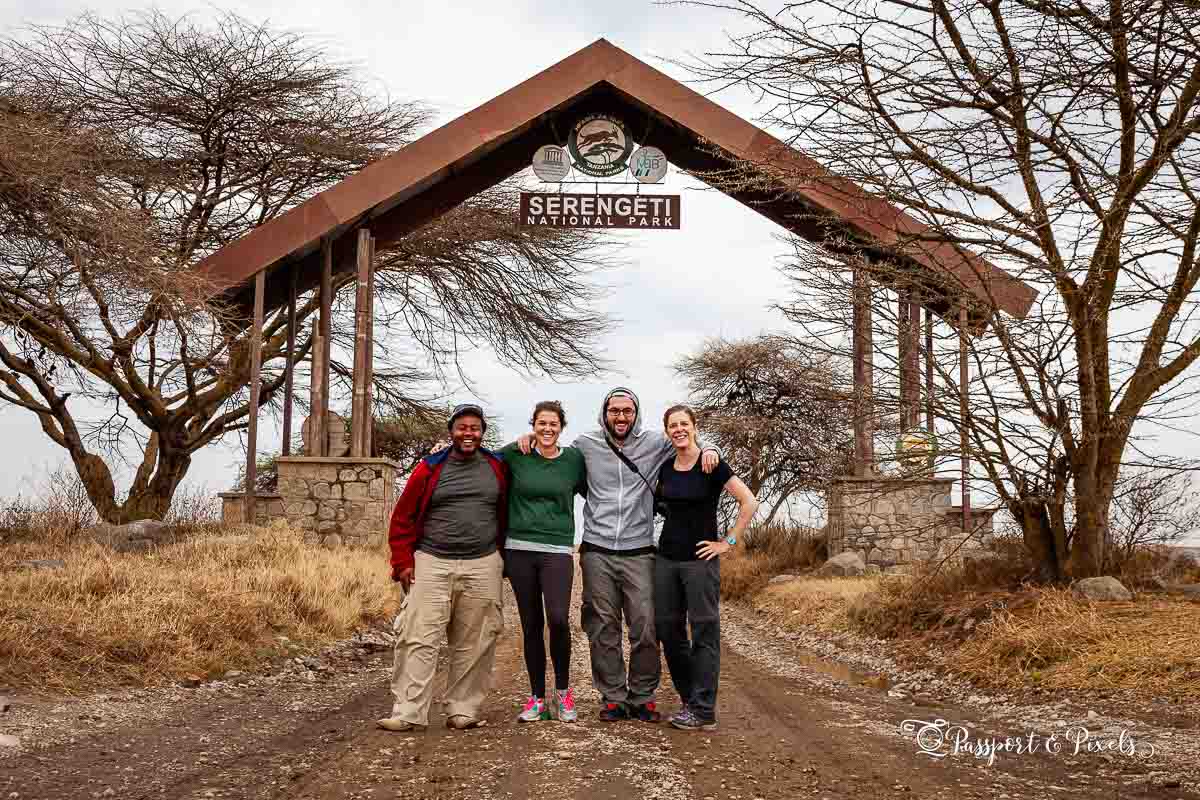
What happens on a safari?
Days on safari follow a similar schedule. You wake early and head out shortly after sunrise for a morning activity – usually a game drive but sometimes a boat cruise, guided walk, or scenic flight.
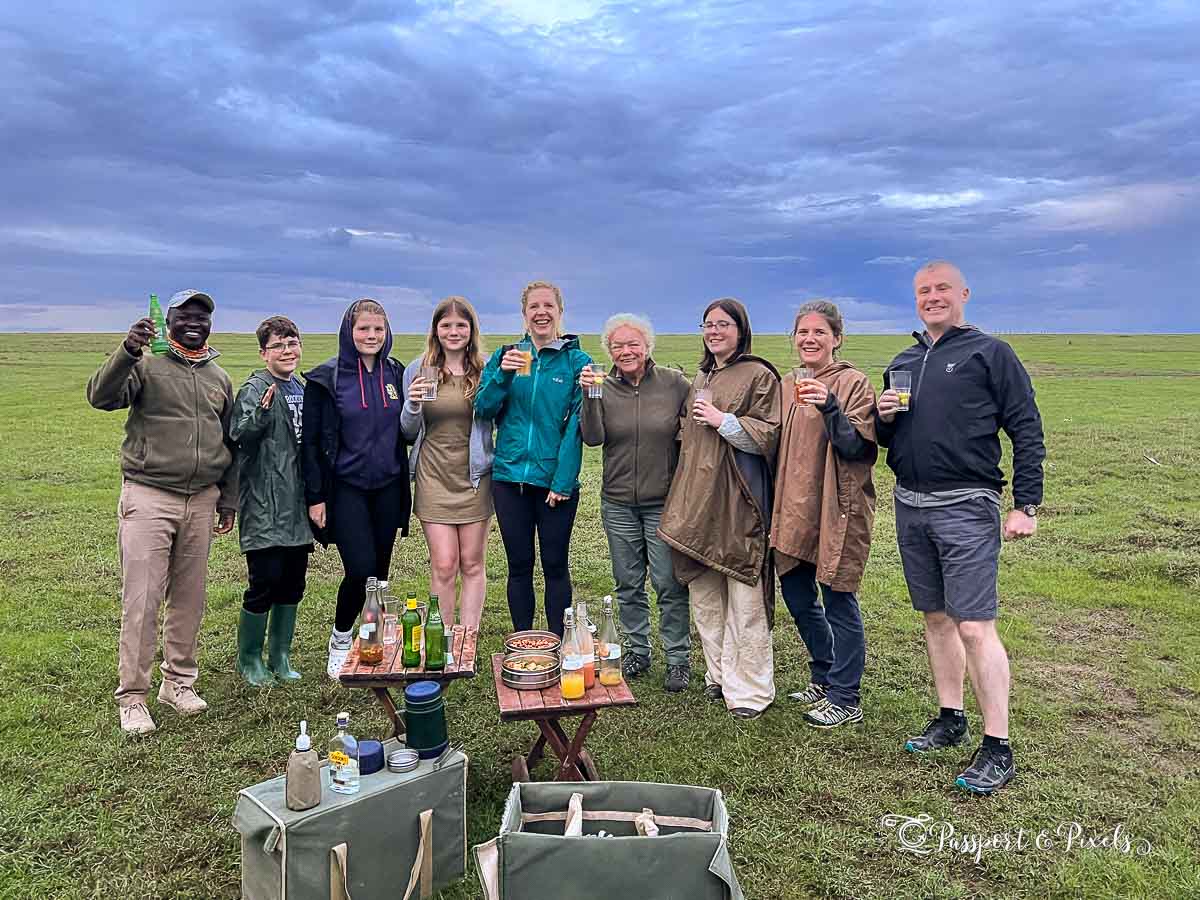
You return to the camp mid-morning for brunch and have some hours to relax in the heat of the day before heading out again for another activity later in the afternoon. Your afternoon game drive or boat cruise normally ends with sunset drinks in a beautiful location, before you head back to the camp for dinner.
After dinner you might sit round the campfire or boma enjoying a few drinks with your fellow guests, but most people go to bed fairly early, ready for another dawn start the next day.
Read more: First Time Safari Facts: 18 Surprise Things To Know Before You Go

What to wear on safari during the day
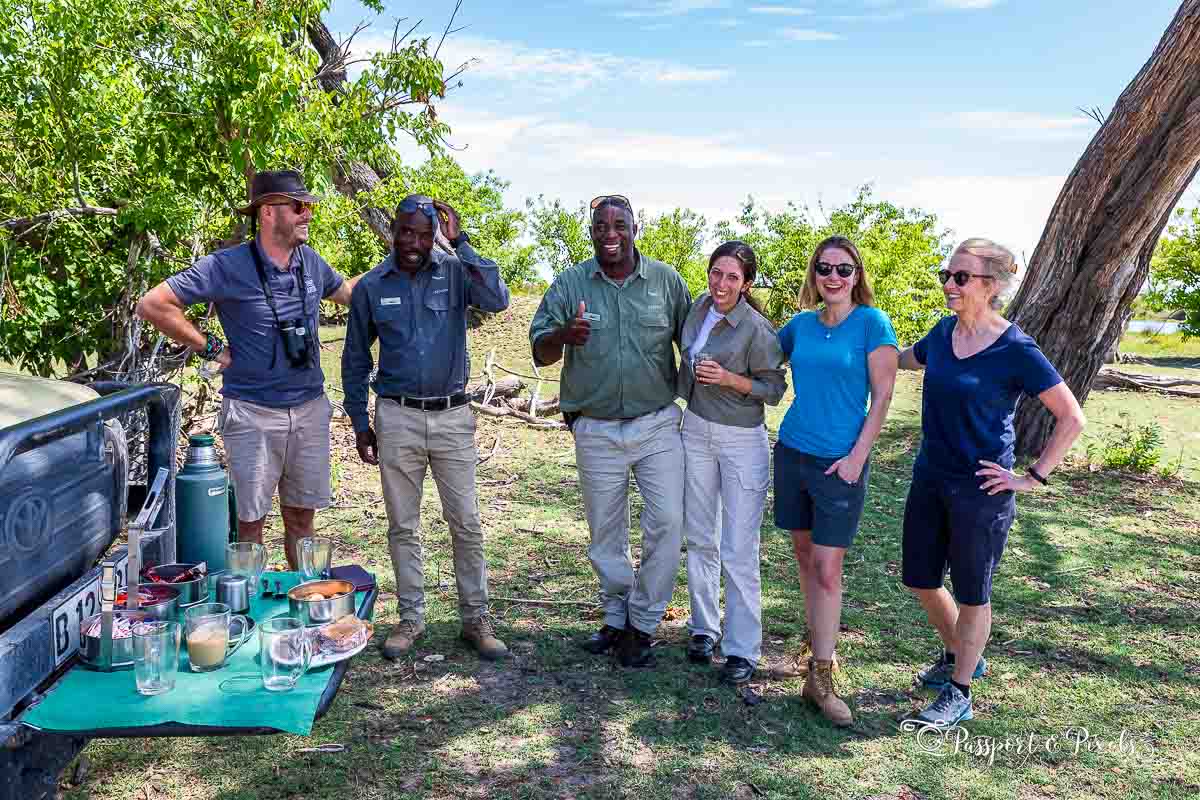
The most important thing to note is that a safari is not a fashion show. It can be hot and dusty, or rainy and muddy, so it’s important to dress for comfort and practicality, so leave the designer gear, luxury fabrics and bling jewellery at home. Instead, bring stuff that washes easily, dries quickly and hides the dirt well!
You’ll also be coating yourself daily in suncream and insect repellent, so don’t bring anything that won’t mix well with those!
When I was in Botswana in December, some days reached 40 degrees C (104 F) with high humidity, so think lightweight breathable fabrics like cotton, viscose or sweat-wicking sportswear, or even linen if you don’t mind the creases).
T-shirts and shorts are your friends, but I’d avoid strappy vests for two reasons:
- Many African countries are quite conservative, and it doesn’t do to flash a lot of skin.
- The sun is extremely strong and the more skin you show, the more of you there is to get burned, even in a shaded safari car.
Read more: Top 50 African Birds: A Safari Photo Guide

What to wear on a game drive or boat cruise
On wildlife viewing trips you’ll be sitting in a car for several hours, so it’s important to be comfortable. T-shirts and shorts are a great option.
Early mornings in Africa can be chilly, so bring a long-sleeved shirt, light sweater or jacket just in case.
Don’t forget your hat and sunglasses. Most (but not all) safari cars have roofs, but sometimes the roof rolls back so you can stand up, and when the sun is low in the sky it can shine in from the side very strongly. I was surprised by how much I ended up needing my hat.
Since you won’t be walking around much, light sneakers or sandals are fine.
Safari cars are open-sided, so if it rains you may get wet. Most safari companies carry ponchos in the car, to hand out to guests when it rains, but you might want to bring your own light waterproof raincoat just in case.

What to wear on a walking safari
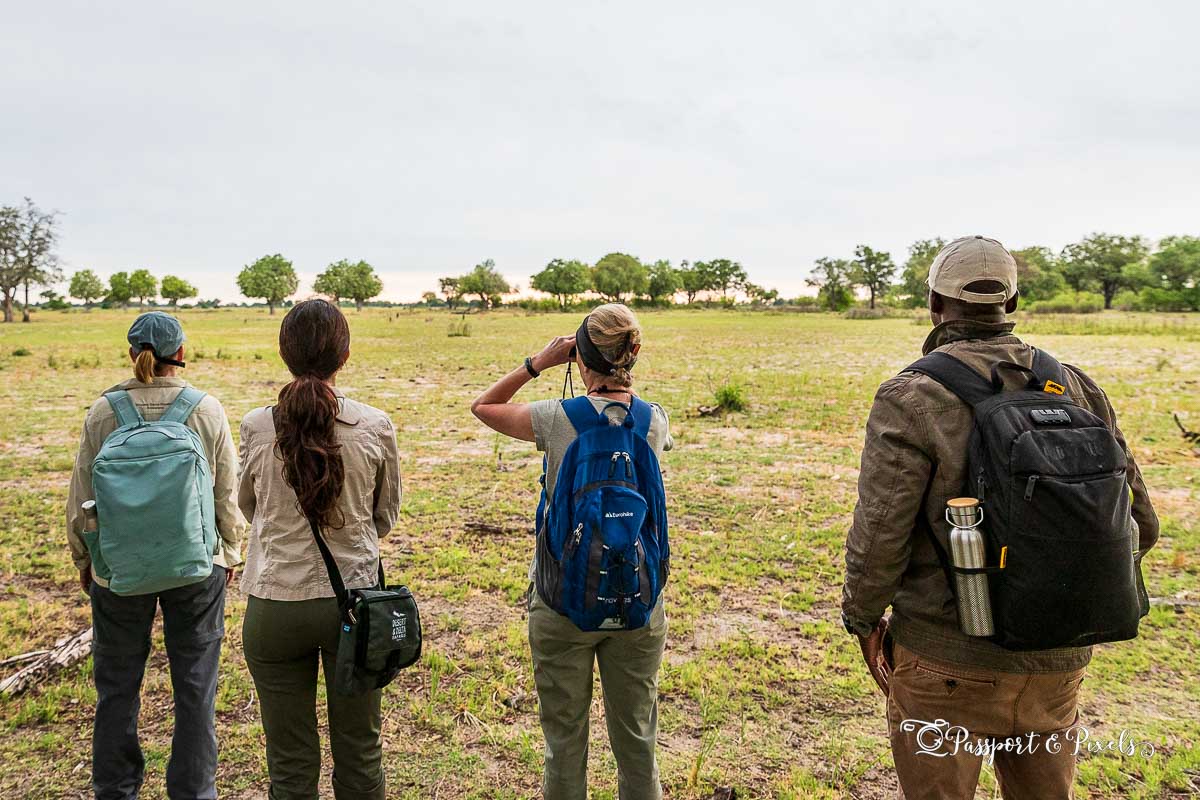
For a walking safari the principles are the same, but you should wear long trousers or leggings to prevent your legs being cut or scratched by branches, and closed-toed shoes to protect you from biting or stinging animals or insects.
Although walking safaris can sometimes last for three or four hours, you don’t actually walk that far because there’s a lot of stopping and looking at stuff.
So you don’t need hiking boots; comfortable trainers or walking shoes are fine. If you’re travelling in rainy season you might want to bring waterproof or Gore-Tex ones.
Read more: 46 Amazing African Safari Animals – A Photo Guide
Do I need warm clothes on safari?
We think of Africa as being hot, and it is, but it can also be extremely cold. If you travel during the northern hemisphere summer, that’s winter in most of Africa, and temperatures can drop below freezing especially in desert areas, if you’re at altitude, and the further south you go.
In Botswana and South Africa during the winter, average nighttime temperatures can be 0 or even -2 degrees C (28-32 F), and remember that safari cabins and tents are not heated!
Even in Kenya, which is much closer to the equator and therefore not as cold, nights and early mornings can definitely be chilly.

Staff in camps will provide you with hot water bottles and blankets both in your tent and on game drives, but you still need to bring warm clothes with you as well.
If you’re travelling to the southern African countries between April and October, I’d recommend bringing at least one pair of long trousers, one long-sleeved top, one jumper, and a packable down jacket.
But remember to dress in layers, as the day quickly warms once the sun’s up, and even if it’s close to freezing during the night, afternoon temperatures can ramp up to high 20s (70+ F) or more.
It’s very important to check the weather forecast before you travel, as different regions’ climates can vary.
Read more: First Time Safari Facts: 18 Surprise Things To Know Before You Go
Need help booking your dream safari?
If you’re ready to plan your dream African adventure but don’t know where to start, I can help.
I’ve travelled extensively throughout Africa and have a great network of personally-vetted and trusted safari operators.
Now I use those connections to help you plan your perfect trip.
Fill in my safari enquiry form and I’ll:
- Answer your questions personally
- Help you decide which options are right for you
- Match you with up to three trusted partners with decades of experience
- They will provide you with expert advice and FREE personalised, no-obligation quotes.
Simply fill out my safari enquiry form here to get the ball rolling.
Save time, avoid stress AND get a great deal by having an expert do the work for you!
What colour should you wear on safari?
It’s recommended that you wear plain designs in neutral, earthy or natural colours, such as shades of beige, grey, brown or natural greens.
Avoid vibrant, bright colours like orange, red and yellow, or vivid patterns. This is for two reasons:
- It helps to make you less noticeable to animals.
- You can get pretty dusty on safari, and natural shades don’t show the dirt so much!
Bright white and full black are also not recommended. This is not only because they show the dust really badly, but because many animals actually only see in black and white, and large gleaming white shapes or dark black ones are very noticeable to them.

With that all said, I wouldn’t worry about it too much, and you certainly don’t need to rush out and buy an entire new wardrobe full of khaki and beige. As I just mentioned, many animals only see in black and white, and when you’re inside the car, most only see the car as one large object, and not the people inside.
It’s more important to stick to the rules when you’re on a walking safari and don’t have the protection of the car.
But in general, if you pack plain, neutral-ish colours, you’ll be fine.

Why not wear blue on safari?
Some people recommend not wearing blue on safari. Apart from being a pretty noticeable bright colour, it’s said to attract tsetse flies, which are prevalent in some areas of southern Africa and can deliver a nasty bite and spread disease. They are also thought to prefer black (another reason not to wear it).
That said, my light down jacket is bright blue, and I also took a blue t-shirt and a pale blue cardigan to Kenya, and I wore all three with no problems.
Read more: An Epic Uganda Itinerary In 2 Weeks

What to wear on safari evenings
Most people like to dress up when they go on holiday, so you might be wondering what to wear in the evening on safari. Perhaps you’re thinking about throwing a few glamorous dresses, high heels or some party shirts into your suitcase?
But you probably won’t wear them. Even in the luxury camps, most people really don’t dress up for dinner, for four main reasons:
- At night it’s a good idea to cover your arms and legs to avoid insect bites, so floaty skirts and strappy tops are a bad idea.
- It can get quite chilly at night, so you’ll probably be more comfortable in trousers and a fleece anyway.
- You’ll be tired after a long day and an early start; you’ll probably find you can’t be bothered to dress for dinner as you’ll be going to bed soon afterwards anyway.
- Walking round camp after dark you may run into snakes or spiders, and paths can be muddy and uneven, so high-heels are a definite no-no.
When I was in Botswana in December (the height of their summer) it was still 30+ degrees (86 F) in the evening, so I wore lightweight trousers or a long casual dress and then liberally coated myself with insect repellent.
In Kenya in September it was a bit cooler, around low 20s (70 F), so I wore trousers, a t-shirt and a light cardigan, and had my jacket handy for later in the evening as the temperature dropped.

Is it OK to wear jeans on safari?
It’s perfectly fine to bring a pair of jeans for the cooler evenings, especially if you’re travelling in winter when you know it will be chilly at night.
However jeans aren’t recommended for game drives as you’ll probably be too hot in them during the day, and if they get wet they’ll take ages to dry.
As a general rule I wouldn’t take jeans on safari but instead bring lightweight trousers. The convertible zip-off ones that turn into shorts are especially good as you can have long pants for cold mornings and safari walks, and convert them into shorts once the day’s warmed up.
Pro tip: Whatever you choose to bring, make sure you have some ‘room to grow’! The food on safari is usually really good and you won’t be doing much exercise, so stretchy waistbands are a good idea!
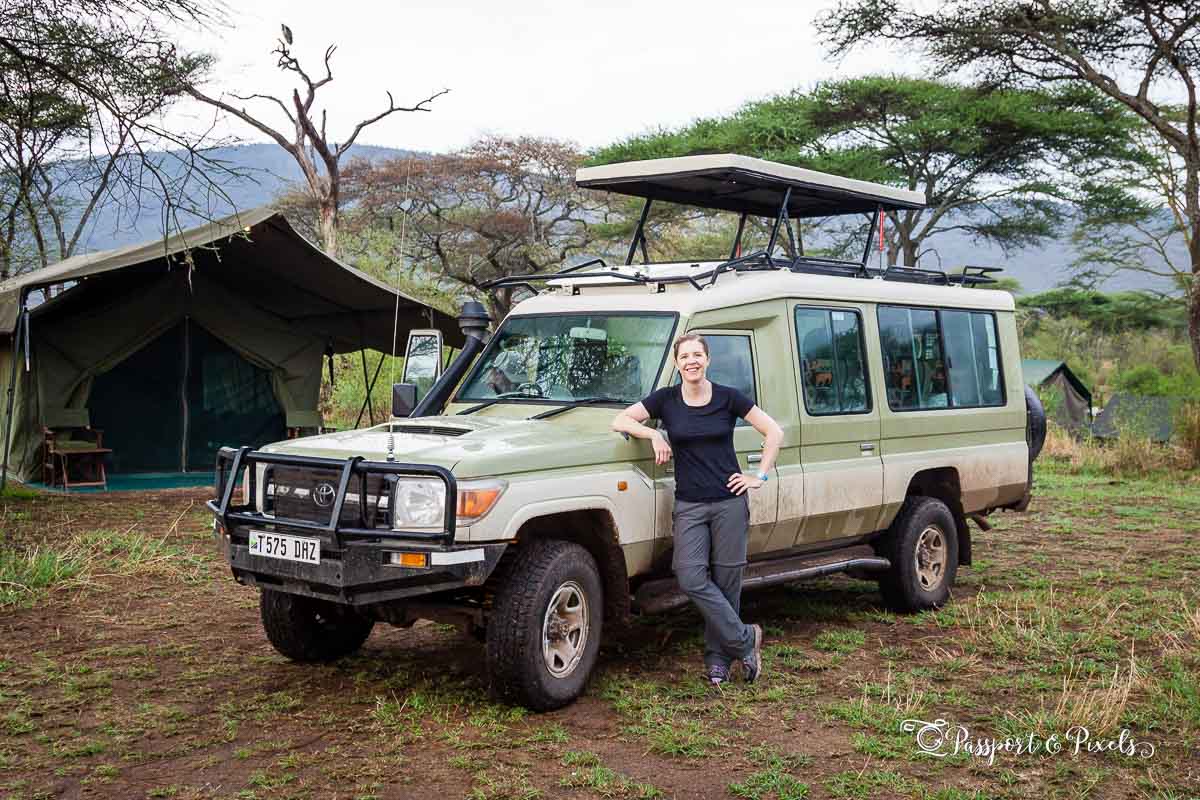
Can you wear leggings on safari?
Yes, absolutely. Leggings are great for safari because they’re lightweight, wash and dry easily, are comfortable, and protect you from bugs and the sun.
Just stick to neutral colours for your safari leggings and leave the snazzy activewear designs at home!
I always pack a pair of leggings for safari – and if there’s a gym in the hotel then I can also use them for a workout!

What are the best shoes to wear on safari?
As I mentioned above, high heels and smart shoes are definitely not something you should wear on safari.
For game drives it’s fine to wear sandals or light sneakers, and for safari walks you want closed-toed comfortable walking shoes. You definitely don’t need to buy special safari boots, no matter what the sales people might say.
If your lodge or hotel has a pool, you might want to bring some flipflops (also handy to have for walking around in your tent at night, or for nipping to the bathroom block if you’re staying in a campsite).
Can you wear trainers on safari?
Yes, absolutely. I always pack a pair of Asics Gore-Tex trail trainers that I wear for exercise, when it’s muddy or raining, and for walking or hiking.
On game drives and boat cruises, and for walking around the camp in the evening, I have a pair of Skechers Go-Walk sneakers that are super comfortable and easy to slip on and off.
Read more: Kenya Vs Tanzania: Travel Experts Decide

What to pack for the beach in Kenya or Tanzania
Many people like to combine their safari with a few days on the beach, perhaps in Zanzibar in Tanzania, or at Diani or Vipingo in Kenya.
Here’s where you will get the chance to dress up a bit – as if you’re staying in a nice hotel or beach resort destination, there will definitely be opportunities to put on a strappy dress, holiday shirt, or some sparkly sandals.
If you’re planning to hit the beach for a few days at the end of your trip, you’ll definitely want to throw in one or two nice evening outfits. And don’t forget swimwear and a beach cover-up too!

Can you wash clothes on safari?
This is a very important question, and the answer is yes! Almost all safari lodges and camps offer a laundry service and most of the time it’s included in the price of your stay.
So you can wash your clothes as often as you like at no extra cost – which means you really don’t need to bring huge amounts of luggage as you can wash and re-wear your clothes several times.
Note that in many places the laundry is done by hand by the hotel staff, dried out in the sun, and ironed using an old-fashioned coal iron. This is yet another reason not to bring anything too delicate or precious, as there’s a small chance it may get damaged during the laundry process.

What sort of underwear should I bring for safari?
Ladies: remember that you may spend many hours bouncing around over unsealed and bumpy roads in the back of a safari car.
Being quite an athletic build, this is not something that’s ever bothered me, but I’ve been reliably informed by more curvy girls that a sports bra can be a life-saver in this situation. So if you’re particularly susceptible to bouncing, bring at least two sports bras!
It’s also important to note that the people who handwash your clothes are usually male, and for cultural and hygiene reasons they won’t wash women’s underwear.
Ladies will need to bring a small amount of hand wash (though sometimes laundry soap is provided) and wash your own pants and bras in the basin. For this reason it’s a good idea not to bring anything too fancy or delicate: lightweight, quick-drying microfibre underwear is best.
And this may be an overshare, but I find that light-absorbancy period knickers are brilliant for game drives – both for general comfort when you’re very hot and sweaty, and also for when you need to have a ‘bush wee’ with no toilet paper.
Read more: Chimpanzee Trekking In Uganda: A Breathtaking Wildlife Adventure

Other things to pack for safari
Of course, packing is not all about clothes. Here are a few other things you won’t want to forget (more in the complete packing list below):
Camera, spare batteries, chargers, plug adapters
Can you imagine going all that way on safari on the trip of a lifetime and then forgetting your phone charger or camera? I know, I’d die!
So definitely make sure you pack all your gadgets, and all the cables and plugs you’ll need to make them work! And then bring spares!
Often hotel rooms and safari tents only have a limited number of plug sockets, so if you have loads of gadgets, it’s a good idea to bring a multi-socket splitter.
I recommend one with surge protection: power cuts can happen frequently and if there’s a surge when the power comes back, your devices can get fried. This happened to me the night before my Tanzania safari, so now I’m extra careful!

Medication and toiletries
Most of the places you’ll be staying will be out in the bush, with limited access to shops. Make sure you bring all the toiletries, medicines and personal items you’ll need, as once you leave the airport, opportunities to replace anything that’s missing will be very limited.
Do you need malaria tablets for safari?
Large parts of Africa have malaria, including popular safari countries like Kenya, Tanzania, Uganda and Zimbabwe, so it’s very likely that you may need to take malaria tables on safari. I usually take doxycycline which is cheaper than malarone, but may not be suitable for everyone so speak to your pharmacist or travel clinic.
You can check the malaria risk for the country you’re visiting, as well as any other vaccine requirements at the Travel Health Pro website here.
Some countries also require you to have a proof of yellow fever vaccination – you can check if this is needed on the website above as well. For example, places like Kenya and Tanzania won’t let you in without proof of vaccination if you’ve spent time in a yellow-fever-risk country before arriving. If you have already had your yellow fever jab, make sure you pack the certificate!
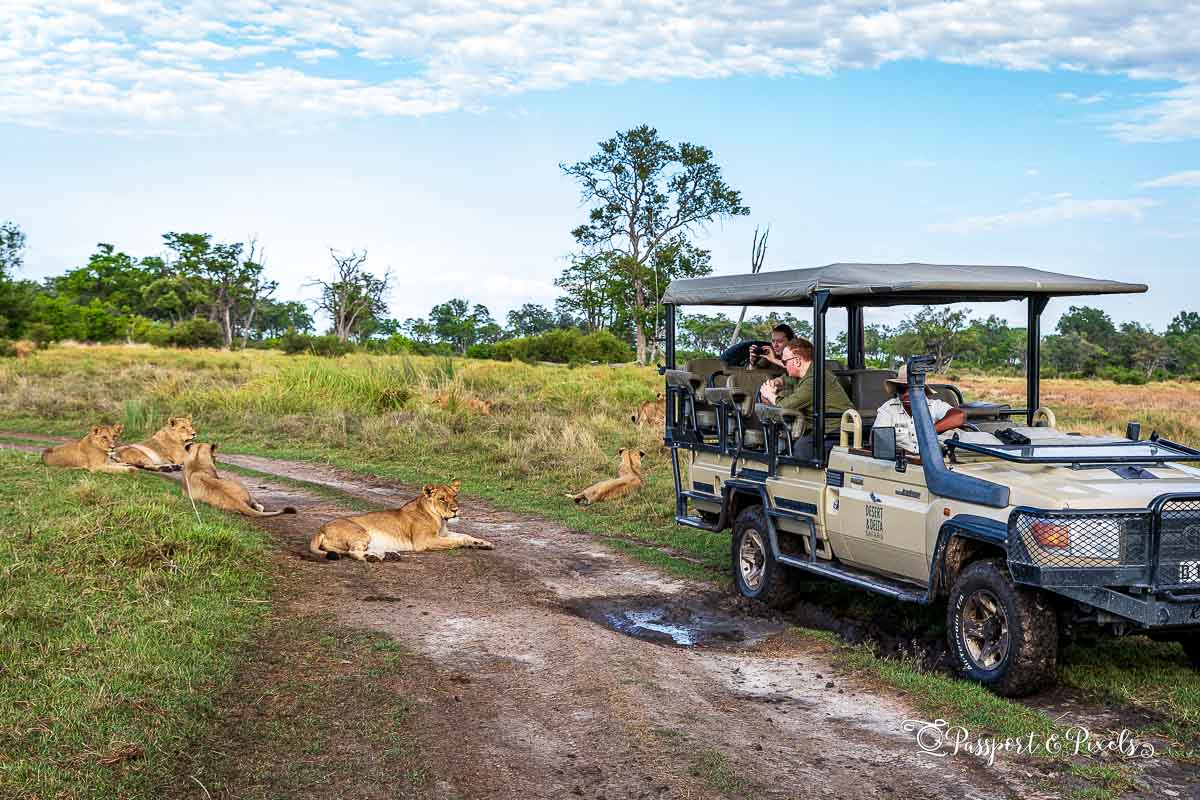
What to wear for safari in Tanzania
If you’re planning your safari in Tanzania or Kenya as part of a trip that also involves climbing Kilimanjaro (or any other mountain), then check out my essential Kilimanjaro packing list here.
Best suitcase for safari
This is important, so pay attention!
Many safaris involve internal transfers by small ‘bush’ plane or even helicopter. If you’re travelling on one of these, they have pretty strict packing rules, often with a maximum of 15 kg weight per person and no hard-shelled suitcases allowed.
Luggage must be soft sided, and don’t overpack! You shouldn’t need to anyway, since you can wash everything when you’re there.
Wheels are OK as long as it’s a soft bag, so I recommend a soft holdall with or without wheels, or a wheely backpack like the one I have and love. This one came to Kenya and Botswana with me with no trouble at all.
Read more: Nature Vacations: 25 Amazing Places For An Outdoors Adventure

Safari packing for photographers
If, like me, you’re travelling with 15 kg of camera gear, don’t stress too much.
The little internal plane operators are used to photographers and will let you put your backpack of gear at the back of the plane. I travelled with 15 kg of hold luggage and another 15 kg of camera gear around Botswana and Kenya, and it was never an issue.
If you want to know what gear I take for safari photography, check out Best Camera For Wildlife Photography: Gear, Lenses And More
Meanwhile, for safari photography tips, check out 40 Safari Photography Tips For Stunning Wildlife Photos.

What should you NOT take on safari?
Now I’ve told you all the things you should bring on safari, here are a few things it’s a good idea to leave at home.
Perfume: No one in your safari car will thank you for dosing yourself liberally with Eau de Whatever, and if you wear a very strong scent it may even allow animals to detect you sooner and run away faster.
Hairdryer: Many safari camps run on solar power and cannot support a hairdryer. Those that can (if they’re on the grid, or running off a generator), will usually provide one that’s suited to the electricity supply. As I said, no one really worries too much about their appearance or cares about what your hair looks like on safari anyway.
Camouflage clothing: This might surprise you, but wearing military-style camo print clothing is a no-no in many African countries, where it’s associated with the military. It’s actually illegal to wear camo gear in Ghana, Uganda, Zimbabwe and Zambia.
Plastic bags: Disposable plastic bags are banned in Kenya, Uganda, and Rwanda. You should be fine with the little zip-lock one for your liquids on the plane, and I’ve used reusable plastic packing bags many times with no problems, but try to keep plastic bags to a minimum or you may get a fine.
A drone: Unless you have special permission, drones are not allowed in most lodges and African National Parks.
Expensive watches, jewellery, and other valuable items: This doesn’t just apply to African safaris but to all travel. Jewellery can easily get lost, damaged or stolen, so if you care about it, leave it at home.
A hard-shelled suitcase: As mentioned above, many safari companies ask you to bring a soft bag or a wheeled soft holdall, as these are much easier to pack into the small luggage spaces on planes and in cars.
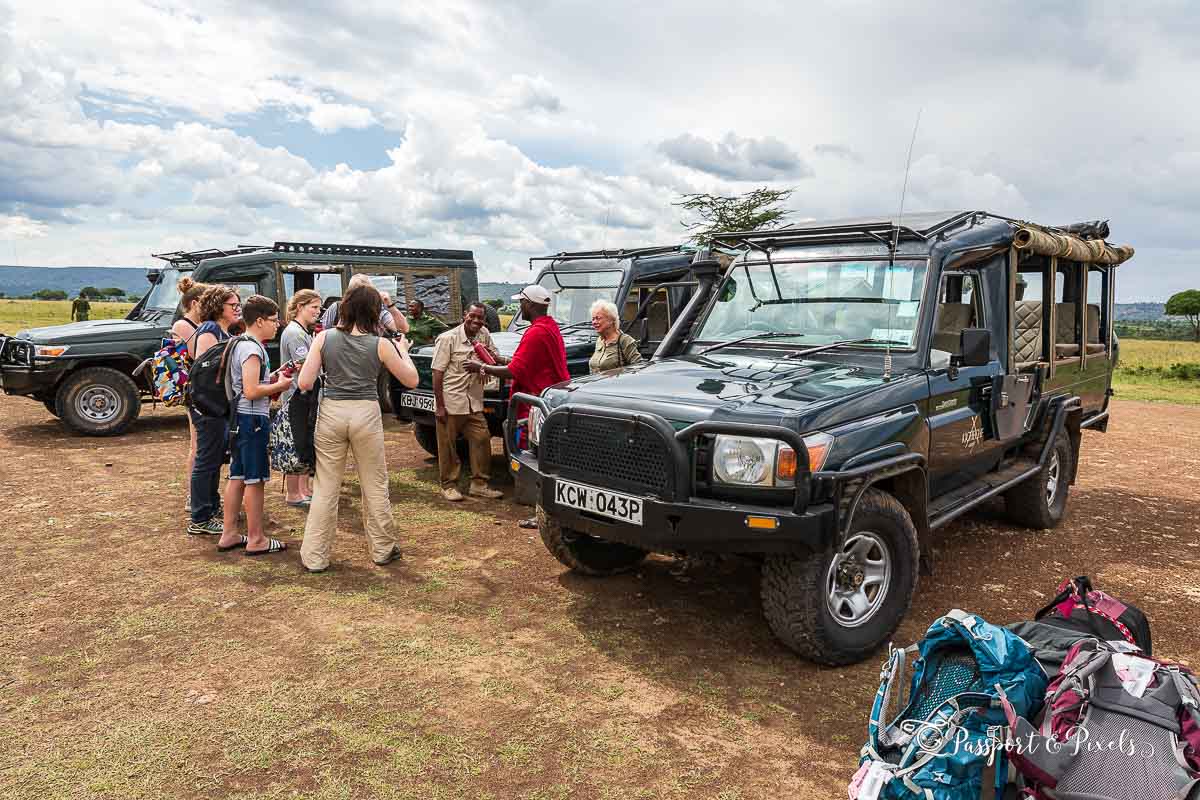
Where to buy safari clothing
For the most part, you don’t need any specialist clothing for safari. You can wear your own normal clothes.
However, there are some great companies that do excellent clothes for travel, in suitable colours, and made from practical fabrics that are sweat-wicking, comfortable and don’t crease.
My favourite brands for travel clothes are The North Face, Patagonia, Rab, Mountain Equipment, Arc’teryx and Craghoppers.
My favourite places to shop in the UK are Ellis Brigham and Cotswold Outdoor, which stock all these brands at competitive prices, have high-street stores where you can get advice and try stuff on, and often have good end-of-season sales too.

Want to see more of my photography or travel writing? Have comments or questions? Come follow me on Instagram, Threads or Bluesky and share your thoughts!
What to wear on safari: my Africa packing list
So now we’ve gone through the details, here’s what I would pack for a 10-day or two-week safari in Africa.
What to wear on safari: Clothes
- T-shirts in neutral or earthy colours x 5. The green t-shirt in the photo above is by Mountain Equipment. I love it so much I bought three!
- Long trousers x 1 pair. I really like my lightweight ones from The North Face.
- Shorts x 1 pair.
- Convertible trousers that zip-off into shorts, or a second pair of shorts. North Face and Craghoppers both do good convertible trousers for men and women.
- Leggings. I’m a big fan of Sweaty Betty.
- Long-sleeved shirt for covering up in bright sunshine.
- Lightweight jumper or cardigan for chilly evenings.
- Lightweight jacket, fleece or mid layer for cold nights. I have a fleece from Arc’teryx and a mine is a Nano puff from Patagonia.
- Waterproof jacket. I have two, a lovely Zeta LT by Arc’teryx and a packable Meridien jacket by Rab.
- Dress or smart shirt for the evening if you’re going to a city or the beach (x2). For packable jersey or lightweight viscose dresses I love Boden, Sugarhill Brighton and Joanie Clothing.
- Gym kit – if you think you’ll need or use it. But many safari camps don’t have fitness equipment and you can’t go for a run in the bush or you might get chased by a predator!
- Sports bras or comfortable wireless bralettes x 3.
- Underwear x 7. If you’re staying for longer you’ll need to handwash. I recommend something quick-drying and non-delicate like these microfibre ones from M&S.
- Swimwear. I get cute bikinis and swimwear from M&S, Next, or Pour Moi.
- Sarong or cover up (if you’re spending time on the beach)
- Sandals or flip flops. I love my walking sandals by Teva.
- Trainers or walking shoes for exercise and walking safaris. Mine are Gore-Tex trail trainers from Asics.
- Soft sneakers for walking round the camp, game drives and boat cruises. I’m a big fan of Skechers Go Walks.
Pro tip: if you’re going to the beach and plan to do a lot of snorkelling, pack a rash vest or t-shirt to swim in. The sun is super strong and we all got very burnt even though we were wearing Factor 50!
What to pack for safari in winter
If the forecast is for cold weather, I would add:
- Another long-sleeved top or baselayer.
- A warmer, packable insulated jacket.
- A pair of jeans.
- Gloves.
- Beanie hat.
What to pack for safari: Accessories
- Sunglasses
- Baseball cap or hat. My cap is this one this one by Buff and I really like it.
- Scarf or buff to keep dust off (and you can dip it in water to cool you down on very hot days)
- Headphones or ear buds (for the plane), you won’t need them on the actual safari! I have these ones which are pretty good and much cheaper than Apple ones.
- Eye mask and ear plugs (if you’re a light sleeper).
- Camera, batteries, memory cards and charger
- Charger cables for all your devices
- Portable phone charger. Mine is this one from Anker.
- Plug adapter for the country you’re going to, or a universal plug adapter
- Plug splitter or 3-way adapter with surge protection
- Refillable water bottle (though some safari companies provide them, so check). An insulated water bottle will keep your water colder for longer on hot days.
- A padlock for your luggage to protect you from airport thieves. If you’re flying through Johannesburg there are frequent thefts from luggage, so I recommend plastic wrapping your bag too.

Safari packing list: Toiletries
As well as all your usual toiletries and medications, don’t forget:
- Suncream. I swear by Riemann P20 because it’s hard wearing and you only need to apply it once a day. Or for the best face SPF you will ever find, that’s non-greasy and non-orange (!), I love this one from the Body Shop.
- Insect repellant (though this is often provided in camp).
- Malaria tablets (check to see if these are required in your destination)
Pro tip: Luggage goes missing more and more frequently these days, so pack your medication or anything else vital in your hand luggage.

READY TO BOOK YOUR Dream SAFARI?
Want to save time, stress and money AND have the best safari experience of your life?
Maybe this post has convinced you, and now you’re ready to book?
Or maybe you’re still overwhelmed by choice and would like help designing your perfect safari?
With my extensive experience and network of trusted contacts, I can help – and it’s FREE!
Simply fill out my safari enquiry form here to get the ball rolling.
I will email you to answer any questions, and then pass your information to up to three of my handpicked, trusted safari partners.
They will then contact you directly to handle your enquiry and provide a free, no-obligation quote.
Buy me a coffee
Did you enjoy this website or find it useful? If you did and fancy showing your appreciation, that would be amazing!
A small token of support helps keep Passport & Pixels going, so I can carry on creating free content for travellers like you. Also, it makes my day! Thank you!
Where to next?
If you liked this post about what to wear on a safari, why not try some of my other safari and Africa posts?
- Leroo La Tau In Botswana: See The Incredible Zebra Migration
- Uganda Animals: The Amazing Wildlife of Uganda
- Ol Doinyo Lengai Tanzania – Climb the Terrifying Mountain of God
- Entebbe Zoo – Uganda’s Wildlife Education Centre
- An Epic Uganda Itinerary In 2 Weeks
My favourite travel tools and brands
To help you organise your trip, here’s a short list of some of the brands and tools I use over and over again when I’m planning my travels. You can see more on my Travel Resources page.
- Booking.com: A huge range of hotels to choose from, often with free cancellation. If you book hotels regularly you can earn discounts. I’m on Genius Level 3 which gets me 20% off!
- Expedia: Another great place to find hotels and Expedia also sell flights, car hire, and loads more all in one place.
- Skyscanner: The only place I ever go to search for flights and compare prices.
- Flight Centre: Booking a more complicated route? Let Flight Centre organise it for you (and deal with the drama when something goes wrong).
- Priority Pass: I love having access to 1600+ airport lounges when I fly, allowing me to enjoy my time at the airport. Buy through my link and you get up to 20% off!
- Airalo: Say goodbye to ridiculous mobile roaming charges. Did you know you can now buy ane-SIM, install it in your phone before you leave home, and then use data abroad at local prices? Game changer. Get US$3 credit with code BELLA5735.
- TourRadar: If you prefer group travel and organised tours, TourRadar has a huge range of fantastic tours from respected operators. They’re very helpful and have 4.5 stars on TrustPilot.
- Viator: Part of the TripAdvisor brand, Viator is another great place to search for group adventures and day trips.
- GetYourGuide: A great place to find local tours and day trips in your destination.
- Wex Photo Video: The UK’s best camera gear store.
- Ellis Brigham: Looking for good quality backpacks, travel clothes and other gear? Ellis Brigham is where I buy almost all of mine.
- Rentalcars.com: Part of the Booking.com family and the world’s largest online car rental service, with 24/7 customer service.
- World Nomads Travel Insurance: I never ever travel without travel insurance and nor should you!
Liked this post?
Social shares help support my hard work! You can share via the buttons at the bottom, or pin this handy Pinterest Pin. Thank you!

