


Hi, my name’s Bella, and I’m a safari addict.
I’ve visited 16 African countries and been on safari or wildlife-spotting in Kenya, Tanzania, Botswana, Uganda, South Africa and Ghana. I loved them all, but one of my favourite safari countries – and one that I’m hoping to revisit for the fourth time this year, is Kenya.
If you’re a wildlife and adventure lover like me, you might be tempted by the idea of doing a Kenya safari holiday. But if it’s your first time, it’s hard to know where to start.
Where should you go? How do you plan? What do you need to look out for? The options can be overwhelming.
To help you get to grips with all the ins and outs, I’ve pulled together this article full of loads of facts about Kenya, things to consider, and stuff I wish I’d known more about before going on my first safari in Kenya.

About my Kenya safari experience
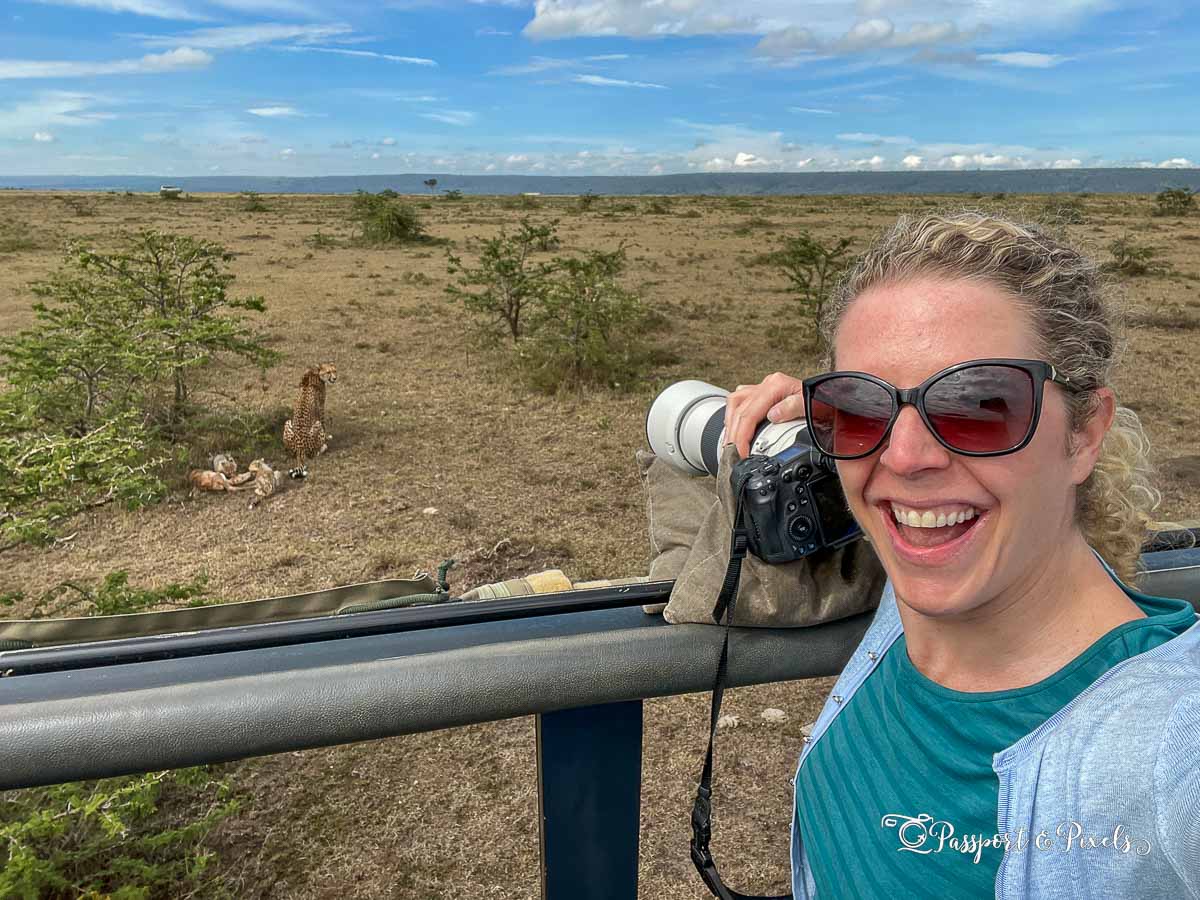
I’ve been on dozens of safaris, including spending a total of six weeks on safari in Kenya.
I’ve been to many of Kenya’s most popular safari destinations, parks and lodges and I’ve written about safaris for many of the UK’s top publications.
All the photos in this post were taken by me on just one Kenya safari holiday, using my Canon R5.
If you like any of them and fancy buying it, you can visit my print store here, and if there’s an image you like that’s not in the shop, contact me and I’ll add it!
And if you’re looking for safari photography advice, check out 40 Safari Photography Tips For Stunning Wildlife Photos.
Right, now let’s dive in!
Need help booking your dream Kenya safari?
Parks, lodges, prices, operators… it’s easy to get overwhelmed before you’ve even started.
That’s where I come in.
Using my first-hand experience and trusted contacts in Kenya and beyond, I’ll help you cut through the confusion and find the right trip for you – at no cost.
Here’s how it works:
- You fill in my safari enquiry form.
- I review your plans and answer your questions.
- Then I pass your enquiry to up to three of my trusted, handpicked safari partners.
- They contact you directly to provide a free, no-obligation quote.
Get the ball rolling on your Kenya safari here!
Save time, avoid stress and confusion AND get a great deal by having an expert do the work for you!
Where should you visit on a Kenya safari holiday?
The first thing you need to decide when planning your safari holiday in Kenya is where you want to go.
Kenya is a huge country, covering 225,000 square miles (582,000 square km), making it about the same size as Texas.
Within that there are 23 national parks as well as a host of other game reserves, wildlife sanctuaries, marine parks and private conservancies, so you really are spoiled for choice when it comes to deciding where to go on safari in Kenya.
Read more: Kenya Vs Tanzania: Travel Experts Decide

Conservancy, National Park or Reserve?
Before I list some of the top places to visit in Kenya, a quick word on the differences between national parks, conservancies and reserves. This is important to understand when planning your Kenya safari holiday because the rules and experience will differ depending on where you go.
National Parks in Kenya
National parks, like the Maasai Mara and Tsavo, are government-managed areas aimed at preserving wildlife and ecosystems. This is public land, no one is allowed to live here, and tourism and research are the only permitted activities.
Visitors must follow strict rules, including sticking to the roads (off-road driving is banned).
Anyone can visit or drive around in the National Parks, including day trippers, and you’re allowed to camp in designated campsites.

National Reserves in Kenya
National reserves are similar to National Parks. This is community land, but managed by the county government and Kenya Wildlife Service.
The main point of the reserves is also to conserve wildlife, but some human activities are allowed, such as controlled grazing of livestock or managed use of some natural resources.
Kenya Conservancies
Conservancies are community land, or private land managed in partnership with local communities. While still a wildlife reserve, local people living in the area are also allowed to use the land in a managed way – and a portion of the money from tourism goes back into the community.
Since the land is free from government control there are fewer rules, and things like walking safaris, night drives, and off-road driving are allowed.
Many don’t allow day-trippers, meaning you’ll get a more private safari experience if you stay in a conservancy.
I much prefer visiting the conservancies because you can usually get much closer to the wildlife, and without those huge queues of traffic you sometimes see in safari photos.
But due to their exclusivity, it typically costs more to stay in a conservancy than around one of the National Parks.

Top places to visit in Kenya
Now that you understand the differences between national parks, conservancies and reserves, here are some of the most popular ones you might want to visit on your Kenya safari holiday.
1/ The Maasai Mara
The Maasai Mara is probably the most celebrated National Park in the world. Spanning over 580 square miles (1,500 square kilometres), it sits in southwestern Kenya, sharing a border with the Serengeti in Tanzania (essentially it’s the same park, just divided between the two countries).
The ‘Mara’, as it’s nicknamed, is a picturesque green landscape, with expansive grasslands and volcanic hills, traversed by the Mara River.
It’s home to a dizzying quantity of animals and bird species and offers sensational wildlife encounters, with a high concentration of big cats, and the spectacular annual wildebeest migration.
While I don’t want to tell you what to do, it has to be said that most people consider the Maasai Mara an essential stop on any first-time safari to Kenya.
Read more: Instinct of the Mara Review: Exclusive Wildlife In Kenya

2/ The Mara Conservancies
Around the edges of the Maasai Mara National Park, you have the Mara Conservancies – community-managed land which shares boundaries with the national park.
There are usually no fences, so the animals are free to come and go – meaning you can see the same wildlife but without the restrictions you get in the Mara proper.
Popular conservancies include Mara North (where I stayed), Olare Motorogi, Olderkesi and Naboisho, but there are others.
Staying in a conservancy lets you get much closer to Africa’s incredible wildlife without the crowds, as well as offering a chance to give back to local communities and engage with them on cultural visits.
I strongly recommend including a conservancy as part of your Kenya itinerary if you can.

3/ Amboseli National Park
You’ve probably seen the iconic images of Kenya, featuring elephants standing on a green savanna plain with Mount Kilimanjaro behind.
Those are all shot in Amboseli, which sits in southern Kenya about 30 miles from Africa’s highest peak (which is actually in Tanzania).
As well as its epic views, Amboseli is well-known for its large elephant herds, and is the second most popular national park in Kenya after the Maasai Mara. If you can manage to fit them both in on your Kenya safari holiday, you’re onto a winner!

4/ Tsavo East and Tsavo West National Parks
Tsavo, in the southeast of Kenya near to Mombasa, is one of Kenya’s largest and oldest protected areas. It’s divided into two national parks – Tsavo East and Tsavo West – both known for their vivid orange soil, dramatic volcanic hills, and hardy wildlife including the iconic ‘red elephants’.
While the Maasai Mara is greener and busier, Tsavo is drier and more raw – a very different and arguably more adventurous wilderness experience.
It doesn’t have the intense, overwhelming abundance of big game that you can see in the Mara, but there’s still plenty of wildlife, including the elusive wild dogs and many hundreds of bird species.
I found that not being constantly on the lookout for cats forced me to notice the smaller stuff, which was fascinating.
Read more: Kipalo Hills Lodge In Tsavo West, Kenya: My Complete Review

5/ Laikipia
The Laikipia region sits about 250 kilometres north-west of Nairobi in the shadow of Mount Kenya, the second highest peak in Africa.
There’s no National Park here; instead there’s a network of smaller conservancies, many of which are former cattle ranches which were taken over and converted into wildlife reserves.
Much less visited than the Mara, Laikipia has become something of a poster-child for conservation and community engagement.
Conservancies work hard to support a sustainable balance between tourism and local livelihoods, and conservation efforts are doing well: the rhino sanctuary at Ol Pejeta, for example, is now home to over 200 rhinos including the last surviving northern whites.
Read more: What Happens On An African Photo Safari: Are They Any Good?

6/ Lake Nakuru and Lake Naivasha
Lakes Nakuru and Naivasha are large lakes in the Great Rift Valley region, about 3-4 hours northwest of Nairobi (depending on which one you visit). Both are beautiful, peaceful lakes, teeming with bird life including pelicans and huge flocks of dazzling pink flamingos.
While Lake Nakuru National Park is more popular and is also home to high concentrations of African animals including lions, leopards, giraffes and hippos, Naivasha is quieter and great for relaxation in stunning surroundings.
But since they’re only an hour apart, it’s easy enough to visit them both on your Kenya holiday.
Read more: Top 50 African Birds: A Safari Photo Guide

7/ Nairobi National Park
You don’t actually need to travel very far at all to see wildlife in Kenya – the capital, Nairobi, has its own National Park right on the doorstep.
It might not have the expansive wilderness of any of the other parks I’ve mentioned, but it’s extremely accessible, and a great chance to take photos of lions, giraffes and rhinos with a backdrop of the city skyline.
If you’re spending a day in Nairobi at the start of your Kenya safari holiday, this could be a cool place to have your first taster of Kenya’s incredible wildlife.
8/ Diani Beach
As well as buckling under the weight of its wildlife, Kenya also boasts some of the best beaches in Africa: long strips of perfect white sand coupled with the warm, turquoise waters of the Indian Ocean.
For this reason, many people choose to combine their Kenya safari holiday with a few days on the beach, and Diani is the most popular place to do that.
With a 10 mile stretch of beach and spectacular coral reefs, Diani is a brilliant place for water sports, including snorkelling and kite surfing.
There’s also a huge range of luxury resorts, boutique hotels and budget accommodation to choose from.
The only downside of Diani is that it’s a little notorious for ‘Beach Boys’, local salespeople who can be very persistent, but they can usually be avoided or put off with a firm ‘no thank you’.

9/ Vipingo
If you want Kenya’s paradise coastal experience but without the hassle or the crowds, head to Vipingo instead.
Located about an hour up the coast from Mombasa, this is a much less-touristy destination, with just a few hotels, and very quiet beaches.
You don’t get nearly as many options here in terms of resorts, restaurants and activities, but what you do get instead is complete quiet and seclusion.
If you want to get away from it all and truly switch off at the end of your Kenya holiday, Vipingo is the place for you!
Read more: Is Cardamom House In Vipingo The Best Beach Hotel In Kenya?

Where to stay: safari lodges or camps
Once you’ve decided the areas you want to stay in, the next thing you need to think about is the sort of accommodation you prefer. Here are the main options:
Safari lodges in Kenya
A safari lodge in Kenya is hotel accommodation located within or very close to the national parks and conservancies, meaning the wildlife is right on your doorstep (and often comes into the camp!).
Lodges are normally gorgeously designed, blending seamlessly with the natural surroundings, with thatched roofs and an open layout that allows guests to connect with the environment.
Safari lodges often boast upscale amenities, including spacious cabins or chalets, fine dining options and often a swimming pool. They can vary in size, levels of comfort and price, with high-end luxury and more affordable options.

Tented camps
Tented camps are very similar to safari lodges – following a similar layout with individual rooms arranged around a central reception and dining area, right in the heart of the bush. The main difference is that accommodation is in large, fixed tents with ensuite bathrooms.
While some can be simple (but still comfortable), many tented camps in Kenya are extremely luxurious: essentially just gorgeous luxury hotel rooms with canvas walls.

Mobile safaris
A mobile safari in Kenya is a thrilling way to truly immerse yourself in nature. Unlike the fixed camps, mobile safaris involve moving the campsite every few days, which allows you to explore a region in almost complete seclusion and visit areas not reachable in a day from the fixed camps.
A mobile camp usually consists of spacious walk-in safari tents with comfortable beds and en-suite facilities – no roll mats or sweaty sleeping bags here.
While more basic than permanent lodges, mobile safaris still offer a fully catered experience, meaning you can enjoy the back-to-nature experience while someone else does all the hard work for you!
Read more: First Time Safari Facts: 18 Surprise Things To Know Before You Go

Campsites in Kenya
You probably don’t need me to tell you what a campsite is! Bring your own car, your own tent, cook your meals over a camping stove, you know the drill.
The difference in Kenya is that the campsites are in the National Parks (and occasionally some of the conservancies) and that means you really are at the heart of the action, with the chance of an animal encounter at any moment!
Facilities are minimal, including communal areas, shared bathroom facilities, and sometimes open-air dining spaces.
Camping in a Kenyan National Park is not for the faint-hearted, but what you lose in luxury you gain in cost-efficiency and the chance to really immerse yourself in the Kenya wildlife experience.

Sustainability and responsible travel
Something it’s really important to think and ask questions about when planning your Kenya safari holiday is responsible and sustainable tourism.
Being able to afford to travel is an incredible privilege, but gone are the days when you could just hop on a long-haul flight with no thought for the environment or local people.
Travel can be a brilliant force for good, but it can also be destructive and damaging. We all need to make sure that whatever we do and wherever we go, we’re sitting on the right side of that scale.
Many safari companies are leading the way in environmentally-friendly initiatives and projects that support and give back to local communities – but not all of them are as good, so check before you book.

Here are some things to think about or questions you can ask your tour operator or safari company:
- Conservation: What conservation initiatives does the company support or participate in? How do they contribute to wildlife conservation and habitat protection?
- Community support: How does the company engage with local communities near safari destinations? Do they support any community development projects or initiatives?
- Wildlife protection: What measures do they take to minimize the impact of tourism on wildlife? How do they educate clients about responsible wildlife viewing and behaviour during safaris?
- Sustainability: Can they provide information about the eco-friendly practices of the lodges or camps? Do they follow environmental guidelines, such as waste reduction, recycling, energy conservation, using fuel-efficient vehicles and water management?
- Guides and staff: Are guides and staff trained in responsible tourism practices? Do they make efforts to hire and train from the local community? Are staff paid a fair wage and looked after properly?
- Client Education: How do they educate guests about how to be responsible before and during the safari? Are there guidelines provided regarding ethical behaviour and environmental responsibility?

Some companies try to get away with ‘greenwashing’ – making big claims about their eco credentials that they don’t really put into practice – so it’s really important to push back on this stuff and listen carefully to the answers.
And let me tell you, it’s a really rewarding feeling when you do go somewhere where things are being done right, and you can relax with that warm fuzzy feeling of knowing that your lovely holiday is also helping to conserve wildlife and support local communities. Win-win!

Getting around Kenya
Another thing to consider in your planning is how you want to get around.
By road: Kenya is a huge country and some of the main National Parks are pretty far apart. While you can drive and the main roads are good, the long journeys will eat into your game viewing and relaxing time! For shorter distances though, there are no problems with travelling by road.
By plane: Many people choose to make short transfers between parks and lodges by light aircraft. There’s a huge network of small internal airports and airstrips connected by short hop internal flights run by companies like SafariLink and Mombasa Air. If you’re travelling solo or in a couple, these may well work out cheaper than having a private car and driver.

By train: Kenya also has some pretty decent trains, including ones that run between Nairobi and Mombasa, Nairobi to Naivasha and Nakuru, and you can even travel by train all the way to Kampala, Uganda!
I caught the train from Nairobi to Voi (to visit Tsavo West) and then from Voi to Mariakani (to stay at Cardamom House near Vipingo) and both journeys were air-conditioned, comfortable and on time.

What activities can you do on a safari holiday in Kenya?
Another very important thing you’ll want to consider is what sort of activities you want to do on your safari in Kenya. While heading out to spot wildlife is the main reason you’re there, there are lots of other things you might want to throw into the mix. Here are some options:
Game drives
Game drives are the main activity on safari, and you’ll want to do a lot of these (if not, why are you doing a safari?).
They take place in the early mornings and late afternoons when the weather is cooler and animals are more active, and essentially consist of driving around in converted jeep or land cruiser with an expert guide who knows how to look for wildlife.
Unless you’re self-driving, you’ll either be with your group, or a few other people staying in the same lodge, but there are usually no more than six to a vehicle so everyone gets a window seat.

Guided nature walks
Some safari destinations offer guided nature walks or walking safaris, allowing you to explore the flora and fauna on foot with an experienced guide (who is usually armed in case of emergency encounters with aggressive wildlife).
This is a really cool way to learn more about the environment and notice the smaller things that you’d usually miss from the back of a car.
Read more: 46 Amazing African Safari Animals – A Photo Guide

Cultural visits
Don’t forget that as well as having incredible wildlife, Kenya has wonderful people: friendly helpful, enthusiastic, and with vibrant culture that they’re keen to share.
Many lodges work with local communities to offer well-thought-out, sensitive visits to local villages where you get a chance to meet them and learn about how they live. Others let you visit the community projects they support, so you can see how your money is being spent.
The Maasai, with their eye-catching red dress, are the most famous, but there are actually more than 40 tribes in Kenya with their own lifestyles, customs and languages.
A visit to meet them is a really interesting and inspiring thing to do, so I highly recommend including at least one cultural visit on your Kenya safari itinerary.

Hot air balloon safaris
Not for the broke or the faint-hearted, hot air balloon rides are a bucket-list thing to do in the Maasai Mara, allowing you to fly low and quietly over herds of animals and admire the wide open landscapes from the air.
They’re particularly popular with honeymooners for that once-in-a-lifetime, memorable experience (which might possibly be why I’ve never done one!)
Photography safaris
If you’re anything like me, one of things you’ll be most excited about in Kenya are the photography opportunities.
With glorious landscapes, mind-blowing wildlife and stunning sunrises and sunsets, Kenya is one of the best nature photography destinations in the world.
Some safari companies have leant into this, with cars specially kitted out with mounts or beanbags for your camera, schedules that make the most of the best light, expert photography guides who can help you with your framing and settings, and some will even lend you gear.
If you want to come home with dazzling wildlife photos to wow your friends and family, this could be just the thing for you.
Prepare your wallets though, because these are among the more expensive types of safari holidays in Kenya.
Read more: 40 Safari Photography Tips For Stunning Wildlife Photos

Bush Dinners and Breakfasts
If you’re celebrating a special occasion, are planning a proposal, or just want to do something a bit different, some safari lodges arrange meals in creative outdoor settings, for a unique and memorable dining experience.
Conservation and research experiences
Conservation is at the forefront of the entire safari experience – without it, there would be no safaris! So what better way to make the most of your Kenya trip than by visiting a wildlife sanctuary or conservation project.
For example, in Nairobi National Park you can visit the Sheldrick Wildlife Trust’s elephant orphanage; or in Ol Pejeta conservancy you can visit both a chimpanzee sanctuary and the last two remaining northern white rhinos (who I wrote about for BBC Travel).
These are just two examples of many, so ask your tour operator or lodge what else is available near you.

Hiking
This isn’t really a ‘safari’ activity but I’m just putting it out there – if you want to do something a bit more fit and active during your Kenya holiday, there are plenty of hiking opportunities too.
Not least, if you’re heading to Laikipia or Samburu, hiking around the mighty Mount Kenya, or if you’re feeling more adventurous, even attempting the summit, the second highest peak in Africa after Kilimanjaro.
Read more: Hiking Kenya’s Beautiful Loita Hills On A Walking Safari

Need help booking your dream safari?
If you’re ready to plan your dream African adventure but don’t know where to start, I can help.
I’ve travelled extensively throughout Africa and have a great network of personally-vetted and trusted safari operators.
Now I use those connections to help you plan your perfect trip.
Fill in my safari enquiry form and I’ll:
- Answer your questions personally
- Help you decide which options are right for you
- Match you with up to three trusted partners with decades of experience
- They will provide you with expert advice and FREE personalised, no-obligation quotes.
Simply fill out my safari enquiry form here to get the ball rolling.
Save time, avoid stress AND get a great deal by having an expert do the work for you!
Kenya safaris FAQs
Is Kenya the best place to go on safari for the first time?
The first place I went on safari was South Africa, followed by Tanzania, and they were both brilliant. But Kenya is also an excellent choice. It’s the world’s top safari destination, with a huge range of places to visit and things to see and do, at prices to suit all budgets. If you book a safari in Kenya with a reputable operator, you really can’t go wrong.

Read more: 19 Easy Wildlife Photography Tips For Beginners
What is the weather like in Kenya?
Being on the equator, Kenya doesn’t have summer and winter, it has wet and dry seasons.
The country has two distinct rainy seasons: the ‘long rains’ from March to May, with heavy rainfall, and the ‘short rains’, from October to December. In between, dry seasons are June to October (typically a little cooler) and January to March (with hotter temperatures).
However the rains are very unpredictable and may arrive early or late, or not at all!
Temperatures can vary a lot depending on the time of day and also if you’re at altitude. The Laikipia District, for example, is on a plateau in the Rift Valley at about 1500 m above sea level, so it’s cooler. The same goes for Nairobi, which is at 1,795 m asl. Nights can be cold and you should pack some warm layers, but days can warm up very quickly when the sun comes up.
When I visited in October, nights were cool with temperatures around 15 degrees C (59 F) and days warmed to about 30 degrees C (86 F). There was some rain in the afternoons, but not much.

When is the best time to go to Kenya?
The best time to go on safari in Kenya depends on what you prefer and what kinds of experiences you’re looking for. It isn’t really as simple as saying ‘go during the dry season!’
Dry Season
This is considered the best time for wildlife viewing as the vegetation is sparse and animals are forced to come to waterholes to drink, making it easier to spot them. It’s also the migration period for wildebeest and zebras in the Maasai Mara, typically occurring from July to October.
BUT – as a consequence the dry season is more expensive and more crowded, so if your budget is tight you’ll get more bang for your buck if you go in shoulder or low seasons.

Wet Season
The rains bring vibrant green landscapes, baby animals, and abundant migratory birds. It’s also cheaper and quieter, with fewer tourists.
BUT – wildlife can be harder to see due to dense vegetation, and roads can become muddy and impassable.

How many days do you need for safari in Kenya?
Kenya is truly magical, so I’d say go for as long as you can afford and have time for! But being more realistic, most people find that somewhere between 1-2 weeks is a good amount of time. A week will be cheaper and will certainly leave you wanting more; ten days to two weeks will allow you to visit 3-4 different destinations for a really packed trip.
That said, I spent three weeks in Kenya and it still wasn’t enough for me!

Is Kenya safe?
Kenya is generally considered a safe destination for safaris, and millions of tourists visit the country each year without encountering issues. The safari destinations, including national parks and wildlife reserves, are well-regulated and secure.
If you’re worried about the animals – don’t be. Animals are used to the cars and guides are fully trained. As long as you follow their instructions at all times and don’t do anything stupid like get out of the car or wander alone at night, you’ll be fine.
There are some areas of Kenya that are considered more risky due to potential security concerns, and should be avoided. This includes areas along the borders with Somalia, South Sudan, and Ethiopia. However these aren’t safari destinations, so are unlikely to be an issue for you.
In more crowded areas like Nairobi and Mombasa you may be at risk of the same security issues as in any big city, so be careful, don’t go out alone after dark, and don’t flash valuable items about.

Want to see more of my photography or travel writing? Have comments or questions? Come follow me on Instagram, Threads or Bluesky and share your thoughts!
How much does a Kenya safari cost?
Ahh, the big question. And being totally upfront, a safari is not a cheap holiday. Even if you stay in lower cost accommodation options, by the time you add in food, transport, park fees, and activities, the costs can soon rack up.
However, of all the different safari countries, Kenya is actually one of the cheapest, and you do get a lot of value for money here.
Of course, there are tonnes of variables, including how long you stay, the type of accommodation you choose, the specific destinations visited, the time of year, and the level of luxury you go for.
Most packages are all-inclusive so there are no hidden surprises – apart from tips and any personal things you may want to buy, all accommodation, food, drinks, transport and activities are usually included in the price.

But I know you want the full deets, so here’s a very general, ballpark kind of idea. Prices are correct at the time of writing but if you want to know more, fill in my enquiry form and I can put you in touch with one of my trusted partners who will give you a free, no-obligation quote.
Budget safaris, often using more basic accommodation and transport, can start from around $150 to $250 per person per day. These safaris may have shared facilities and less luxurious amenities.
Mid-range safaris, which typically include comfortable accommodation, transport, and guided tours, can range from $250 to $600 per person per day.
Luxury safaris, offering high-end lodges or tented camps, premium services, and exclusive experiences, can start from $600 per person per day and go up to several thousand dollars per day.
Group safaris. If you’re a solo traveller or a couple, a group safari can be much more cost-effective than a private or customized safari. Check out companies like Intrepid or G Adventures for group options.

How to book your Kenya safari holiday
Safaris are complicated things with many moving parts. While in theory you can organise it all yourself, that would involve a lot of time and research, and if one part of the jigsaw falls down, you’re on your own.
So a safari is the one type of holiday where unless you’re an expert, it’s almost always better and less stressful to book a package through a reputable tour operator or safari specialist.
In many cases the package deals they can get you will be better than anything you could arrange yourself anyway.
Some companies offer bespoke packages designed to fit your exact specifications, while others offer ‘off-the-peg’ trips already priced up, so you can see exactly what you’re getting.
With any safari package it’s important to make sure you check what’s included in the price, such as accommodation, meals, flights, ground transport, park fees, and activities.
Get help booking your dream Kenya safari
That’s where I come in.
Using my first-hand experience and trusted contacts in Kenya and beyond, I’ll help you cut through the confusion and find the right trip for you – at no cost.
Here’s how it works:
- You fill in my safari enquiry form.
- I review your plans and answer your questions.
- Then I pass your enquiry to up to three of my trusted, handpicked safari partners.
- They contact you directly to provide a free, no-obligation quote.
Get the ball rolling on your Kenya safari here!
Save time, avoid stress and confusion AND get a great deal by having an expert do the work for you!

Buy me a coffee
Did you enjoy this website or find it useful? If you did and fancy showing your appreciation, that would be amazing!
A small token of support helps keep Passport & Pixels going, so I can carry on creating free content for travellers like you. Also, it makes my day! Thank you!
Where to next?
Why not try some of my other Africa and wildlife posts?
- Visiting The Magical Ziwa Rhino Sanctuary in Uganda
- Seeing Wildlife In Uganda: A Murchison Falls Safari
- Leroo La Tau In Botswana: See The Incredible Zebra Migration
- Chobe Safari Lodge In Botswana: A Complete Review With Photos
- A Magical Trip Whale Watching in Mirissa, Sri Lanka
- Alphonse Island Seychelles: A Review Of My Week In Paradise
Liked this post?
Social shares help support my hard work! You can share via the buttons at the bottom, or pin this handy Pinterest Pin. Thank you!

My favourite travel tools and brands
To help you organise your trip, here’s a short list of some of the brands and tools I use over and over again when I’m planning my travels. You can see more on my Travel Resources page.
- Booking.com: A huge range of hotels to choose from, often with free cancellation. If you book hotels regularly you can earn discounts. I’m on Genius Level 3 which gets me 20% off!
- Expedia: Another great place to find hotels and Expedia also sell flights, car hire, and loads more all in one place.
- Skyscanner: The only place I ever go to search for flights and compare prices.
- Flight Centre: Booking a more complicated route? Let Flight Centre organise it for you (and deal with the drama when something goes wrong).
- Priority Pass: I love having access to 1600+ airport lounges when I fly, allowing me to enjoy my time at the airport. Buy through my link and you get up to 20% off!
- Airalo: Say goodbye to ridiculous mobile roaming charges. Did you know you can now buy ane-SIM, install it in your phone before you leave home, and then use data abroad at local prices? Game changer. Get US$3 credit with code BELLA5735.
- TourRadar: If you prefer group travel and organised tours, TourRadar has a huge range of fantastic tours from respected operators. They’re very helpful and have 4.5 stars on TrustPilot.
- Viator: Part of the TripAdvisor brand, Viator is another great place to search for group adventures and day trips.
- GetYourGuide: A great place to find local tours and day trips in your destination.
- Wex Photo Video: The UK’s best camera gear store.
- Ellis Brigham: Looking for good quality backpacks, travel clothes and other gear? Ellis Brigham is where I buy almost all of mine.
- Rentalcars.com: Part of the Booking.com family and the world’s largest online car rental service, with 24/7 customer service.
- World Nomads Travel Insurance: I never ever travel without travel insurance and nor should you!
