


** This post has been newly revised and updated as of November 2025 **
Uganda! A country of rolling green hills, misty valleys and craggy mountains.
Where lions stalk their prey through grasslands, hippos soak lazily in the shallows, and mountain gorillas move purposefully though tangled forests.
Where the calm waters of Lake Victoria transform into the thundering rapids of the River Nile as it makes its way across Africa.
Less well-known, less-well travelled, but no less enchanting than its East African neighbours, Uganda is a country of surprises and highlights.
But you already know that, otherwise you wouldn’t be reading this blog.
You’re here because you’re thinking of going – or perhaps you’ve already booked your trip – and you want to know what are the top things to do in Uganda.
Well you’ve come to the right place.

About my Uganda experience
I’ve been to Uganda twice.
I spent four months living and volunteering there back in 2018, and I got to know the country pretty well.
During that time I did weekend trips from Kampala to visit as many of the tourist attractions in Uganda as possible, and at the end of the trip I did a big two-week adventure, taking in all of Uganda’s highlights.
More recently, at the end of 2025, I visited again, this time on a 9-day tour, revisiting some favourite places and adding some new ones.
I’ve written about Uganda for Lonely Planet, the Independent, Luxury Travel Magazine and Uganda Airlines. I’ve also written about and photographed other African safari destinations for Travel Africa, BBC Wildlife Magazine, Selling Travel and many more.
And since this post was originally written in 2018 (though updated in 2025) you can rest assured that NO AI was used and these recommendations are as real and honest as it gets.
So here, in no particular order, is my list of the Best Things To Do In Uganda.

1/ Chimpanzee Trekking
If you’ve read other Uganda travel blogs, you may already know that this is one of the last places in the world where you can see endangered mountain gorillas.
But less well-known is the fact that you can also spend time hanging out with our closest relatives: chimpanzees.
These guys might not get as much glory as their larger cousins, but visiting them is just as thrilling an experience, and costs less than a third of the price.
Several of Uganda’s parks and forests, including Kibale Forest and Queen Elizabeth National Park, have habituated chimpanzee families, which have been gently trained to tolerate the presence of humans.
Chimpanzee tracking is usually a half-day experience, during which you’ll hike through the forest to find the group, before spending one hour observing them in the wild.
I’ve been chimpanzee trekking twice, once in Kibale and once in Kyambura Gorge, and this was definitely one of my most intense and thrilling must see Uganda experiences.
Read More: Chimpanzee Trekking In Uganda: A Complete Guide With Photos


2/ Gorilla Trekking in Bwindi Impenetrable Forest
That’s not to say that you shouldn’t also visit the world-famous gorillas.
There are only just over 1000 mountain gorillas left in the world, of which about half live in Uganda’s Bwindi Impenetrable Forest and the rest live just across the border in Rwanda and the DR Congo.
That means the chance to see them is rare and special, and is the main reason why this is the number one tourist attraction in Uganda.
Like visiting the chimpanzees, gorilla trekking involves hiking through thick jungle to find your allocated gorilla family – one of just 27 which have been habituated to the presence of humans.
Read more: Demystifying Gorilla Trekking: Permits, Planning And Packing
Once you’ve found them, you’ll spend a magical hour observing these magnificent creatures in the wild.
The price tag may be eye-watering (as of July 2024 it costs $800 per person) and the going can sometimes be a bit challenging, but when are you ever going to come back to Uganda or have the chance again?
What’s more, the cost of your gorilla permit directly goes towards conservation, so by visiting them, you’re helping to ensure their survival.
Read More: Gorilla Trekking In Uganda – The Real Inside Story


3/ Wildlife Safaris
Uganda may not be as famous as Tanzania’s Serengeti or Kenya’s Masai Mara, but wildlife spotting is still one of the top tourist attractions in Uganda, and there are more than enough safari animals here to delight even the most picky animal lover.
What’s more, because Uganda is less crowded, you’ll often have the animals all to yourself – and it’s cheaper too!
Uganda has 10 national parks, which are collectively home to more than 350 different mammals, including lions, leopards, hippos, elephants, giraffes, zebras, hyenas and buffalos, as well as over 1000 species of birds.
Private safaris can be organised through one of Uganda’s many safari companies, or if you want to save money and travel with a group, try a small group tour company like G Adventures.
Read more: 46 Amazing African Safari Animals – A Photo Guide

4/ Queen Elizabeth National Park
The largest and many would say the best of Uganda’s National Parks, Queen Elizabeth is one of the most beautiful wild places in Uganda.
Located on the western border with the Democratic Republic of Congo, and right on the equator, the park covers nearly 2000 square kilometres and is home to all of Uganda’s wildlife big-hitters. If you only have time to visit one park, make it this one.
You can easily fill a couple of days here with game drives: try an evening drive to spot elephants feeding or big cats on their way out to hunt, and then get up before dawn to enjoy the sunrise and see the hippos returning to the water after a night grazing.
Nearby, Kyambura Gorge is a great place to go chimpanzee trekking.
At night, sleep in a safari tent so you can hear the sounds of the park at night as you drift off, and if you’re lucky your camp might even receive a nocturnal visitor or two – a slightly terrifying but exhilarating experience.
Read More: The Amazing Animals Of Uganda: A Photo Guide

Need help booking your dream Uganda safari?
Parks, lodges, prices, operators… it’s easy to get overwhelmed before you’ve even started.
That’s where I come in.
Using my first-hand experience and trusted contacts in Uganda and beyond, I’ll help you cut through the confusion and find the right trip for you – at no cost.
Here’s how it works:
- You fill in my safari enquiry form.
- I review your plans and answer your questions.
- Then I pass your enquiry to up to three of my trusted, handpicked safari partners.
- They contact you directly to provide a free, no-obligation quote.
Get the ball rolling on your dream safari here!
Save time, avoid stress and confusion AND get a great deal by having an expert do the work for you!
5/ Kazinga Channel wildlife trip
While you’re in Queen Elizabeth National Park it would be a mistake not to do a boat trip on the Kazinga Channel, a 20-mile-long shallow river that flows between Lake George and Lake Edward.
Animals of all shapes and sizes come down to the water’s edge to drink and bathe, so on any given day you’re guaranteed to see everything from elephants, hippos and buffalos, to – if you’re lucky – a pride of lions.
The beauty of wildlife spotting by boat is that the animals don’t seem to be bothered by its presence, meaning you can get much closer than you might be able to by car.
On a sunny day a lazy boat journey down any river is a wonderful thing, but when you add in more wildlife than you’ll have room for on your memory card, this particular journey becomes one of the most fun activities to do in Uganda.
Kazinga Channel boat trips last two hours and cost around $30-50 per person.
Top tip: if you can, sit on the left hand side, as that’s the one closer to the shore.
Read more: A Boat Trip on the Kazinga Channel

6/ Sail a dhow on the Kazinga Channel
If you prefer a more leisurely pace, another way to see the Kazinga Channel is on a sunset dhow cruise.
This activity is only available if you stay at either River Station or Honey Bear Lodges with WildPlaces Africa, but both camps are stunning, with river views and wildlife right on the doorstep.
Their dhow is the only one in Uganda – a traditional wooden sailing boat specially imported from Kenya. It allows you to cruise gently along the waterway at sunset, a glass of wine in hand, while you relax and watch the landscape float by.

7/ Great Rift Valley
As well as amazing wildlife, Uganda boasts some of the most stunning landscapes to be found anywhere in Africa. Seriously, no exaggeration.
I was really reminded of this on my most recent visit. I was excited about the animals, but I was blown away all over again by the landscapes as we drove across the country.
Uganda sits on the Great Rift Valley, a vast crack in the earth’s crust created as two tectonic plates move apart from one another, creating an enormous 4000-mile long trench that’s widening by a few centimetres every year.
Over millions of years, as the continent slowly tears itself in two, these powerful forces have formed dramatic peaks and troughs, creating some of the highest mountains (including Uganda’s Rwenzori mountains), violent volcanoes, and some of the deepest lakes in Africa (Lake Victoria, for example).
You’ll glimpse the effects of the Great Rift as you travel throughout Western Uganda.
From the many huge lakes, to the vast flat plain of the rift itself, to the peaks of the surrounding mountains, these are views you won’t forget in a hurry.
Read More: 19 Wildlife Photography Tips for Beginners

8/ Volcanic Craters
Thanks to all that volcanic activity, Uganda is home to some spectacular craters and crater lakes.
Millions of years ago all this scenery would have been scorched and black, but today the fertile volcanic soil has given life to rolling green landscapes dotted with sparkling water holes.
There’s something extra special about the perfectly round shape and sharp outline of a crater lake, and the way the water, unruffled by currents and sheltered from the wind, reflects the sky as sharp as a mirror.
There are stunning craters and crater lakes all across Western Uganda, but some of the best ones are the Katwe Craters in Queen Elizabeth National Park – do a late afternoon crater drive to really see them at their sparkling best.
Or, if your budget will stretch, try spending a night at either Crater Safari Lodge in Kibale, or at Kyaniga Lodge in Fort Portal: both are stunning luxury hotels perched right on the edge of crater lakes with views to die for.

9/ Tree-climbing Lions
Another thing that Uganda is known for is its tree-climbing lions.
These are not a unique subspecies of lion – all lions can climb trees – but most choose not to. But some areas of Uganda, including the Ishasha sector of Queen Elizabeth National Park, have some very climbable trees, and the lions here aren’t slow to take advantage.
Another great place to see them in trees is certain areas of Murchison Falls National Park, such as in the private low-use zone around Papa’s Camp and Kulu Ora, where you’ll have the lions all to yourself.
The wonderful thing about lions in trees is they’re much easier to spot and photograph.
Hidden in tall, dry grasses at ground level, a lion is virtually invisible, but up in a tree he’s on full display, and likely to rest there for several hours.
Read more: Queen Elizabeth National Park Uganda: Is It Overhyped?


10/ Murchison Falls
Murchison Falls is where the River Nile, the world’s longest river, squeezes its entire force through a tiny 7-metre crack and plunges over a 45-metre drop at 300 cubic metres per second.
Which is pretty noisy and impressive to behold, and is what makes it another of the top Uganda places to see.
What’s more, there are actually two sets of waterfalls at Murchison Falls: the main falls themselves, and another magnificent waterfall just alongside, called Uhuru (or Freedom) Falls.

There are two ways to see the Falls – and I recommend you do both.
Take a boat trip along the River Nile to see the Bottom of the Falls, front on, and then walk around the Top of the Falls to see the views and churning, tumbling water close up.
When you get close, you will get wet, so be prepared!

11/ Murchison Falls National Park
Murchison Falls sit inside Murchison Falls National Park, which is about five hours’ drive north of Kampala and at a massive 4000 square kilometres is Uganda’s largest national park.
Not only does it boast those amazing waterfalls, it’s also home to about 500 bird and 75 mammal species including lions, hippos, elephants, giraffes, buffalo and much more.
Do a game drive in the park and admire the glorious landscapes, before relaxing in one of the area’s many beautiful lodges and camps that sit on the banks of the River Nile.
Read more: Murchison Falls National Park Uganda: A Complete Photo Guide

12/ Ziwa Rhino and Wildlife Ranch
If you’re heading from Kampala up to Murchison Falls, don’t miss Ziwa Rhino and Wildlife Ranch (formerly Ziwa Rhino Sanctuary) on your way through.
Located just three hours from the capital (so it’s also doable in a weekend), Ziwa is the only place in Uganda to see rhinos in the wild – and not just see them, but get close to them on foot.
Because of poaching, rhinos became extinct in Uganda in 1983.
Ziwa Rhino and Wildlife Ranch was set up 15 years later to reintroduce them. They started with just six animals, but thanks to a successful breeding programme they now have more than 40, with more on the way.
You can see the rhinos by taking a guided walk with an armed ranger. These last about two hours and cost $60 per person for a non-Ugandan.
If two hours isn’t enough for you, you can also stay overnight in the park – another of the unique things to do in Uganda.
Read more: A Visit To Ziwa Rhino Sanctuary

13/ Go Hiking In Sipi Falls
Situated at 1,775 m above sea level in the foothills of Mount Elgon in Eastern Uganda close to the border with Kenya, Sipi Falls is a relaxed hill town that makes a great location for a weekend break away from Kampala.
Thanks to its fresh mountain air, rolling hills and craggy cliffs it’s popular with adventure enthusiasts, especially hikers, climbers, and hill runners.
The area gets its name from three pretty waterfalls – and a hike to see them, which takes the best part of a day, is the area’s main attraction.
But there are plenty of other outdoor adventures to be had too, from tours of the local coffee plantations, to birdwatching walks, to hill running, to rock climbing on one of 14 bolted sport routes and even abseiling down the side of the main 100m waterfall – which I didn’t do because it sounds terrifying!
Read More: What To Do In Sipi Falls

14/ Kampala
Although most people (including me) come to Uganda for the wildlife and scenery, many trips will start or end in Kampala, and no guide to things to do in Uganda would be complete without mentioning it.
Kampala has a reputation for being noisy, dirty and crowded, but it’s also the beating heart of the country: full of vibrancy, hustle and bustle, noise and colour.
Originally built on seven hills, and now sprawling out over many more, Kampala can be confusing to navigate, but the centre is compact and well-organised, with plenty to see and do for a day or two.
Learn about Uganda’s history and the brutal regime of Idi Amin at Mengo Palace, also known as Kabaka Palace – where you can see Amin’s chilling former torture chambers – or check out the Old Kampala National Mosque, the 5th largest mosque in Africa, with space for around 16,000 people.
Shop for souvenirs or African art in one of the many craft markets and art galleries, or avoid the traffic by hopping on the back of a boda-boda (moped taxi) and whizzing across the city (not for the faint-hearted, but an excellent and cheap way to get around).
The city also has great nightlife – it’s known as the party capital of East Africa – so don’t miss the bars and restaurants of Acacia Avenue or Bugolobi.
Read More: A Perfect Day in Kampala

15/ Lake Bunyonyi
Located in the far west of Uganda close to the border with Rwanda, Lake Bunyonyi is a charming place to spend a day or two relaxing.
This pretty lake is dotted with dozens of islands, some of which have fascinating dark stories.
Take a ride in a small dugout canoe to learn about some of them, from Punishment Island, where girls who got pregnant out of wedlock were abandoned to die, to Leprosy Island, which used to be a leper colony run by a Scottish missionary.
A great place to stay is Byoona Amargara, a peaceful island retreat run as a not-for profit enterprise that supports community development at Lake Bunyonyi.
Choose between a budget cabin or one of their amazing open-sided ‘geo domes’ with views out over the lake. Fall asleep to the gentle sounds of nature, wake to birdsong, relax during the day with short walks or swimming in the lake, and stuff yourself silly with the restaurant’s amazing food.
Fun fact: even though it’s relatively small, Lake Bunyonyi is the second deepest lake in Africa and the fourth deepest lake in the world, at 900 m at its maximum depth.

16/ Visit the Batwa People
While you’re in Bwindi or Mgahinga National Parks, it’s worth taking time to visit one of the Batwa communities. The Batwa people are a hunter-gatherer tribe, who for thousands of years lived a nomadic lifestyle in the forests of Western Uganda.
But in 1991 the area they live in was turned into a national park, and the Batwa were forcibly evicted. Now they live in settlements on the edges of the forest, where they survive by subsistence farming and offering cultural experiences to tourists.
Visits to the Batwa include the chance to learn about their traditional way of life and watch displays of music and dancing. It’s a great way to support this displaced and marginalised community who really need our help.
Tours can be organised through the Uganda Wildlife Authority or the Batwa Development Programme – but make sure you only do an official visit, as these are culturally sensitive and your ticket price goes back to support the community.
Read more: The Batwa People: How To Visit Uganda’s Displaced Community

17/ Stand On The Equator
If you’re still wondering what to see in Uganda, another popular attraction is the Equator.
Uganda sits right on this magical line, providing a rare opportunity to stand with one foot in the Northern and one foot in the Southern Hemisphere – a slightly surreal but fun experience if you’ve never done it before.
The points where the Equator crosses major roads are all marked with circular monuments, but one place to see it is at Kayabwe, on the Masaka-Mbarara highway, about 45 miles from Kampala.
Here there are craft stalls and cafes, and you can watch a demonstration that proves that water does indeed circle down a plug hole in opposite directions on either side of the Equator. I’d heard this but I didn’t know if it was true or not, so it was fascinating to see it for myself!
On my return visit in 2025 I discovered that one of the old-school monuments has been replaced with this shiny new one. I’m not sure if there are plans to replace the rest of them – but I think I prefer the traditional ones!
Read More: A Video Producer in Kampala: The Story of Safi and Amir


18/ Lake Mburo National Park
About five hours’ drive west of Kampala, Lake Mburo National Park is the smallest of Uganda’s savannah national parks.
It’s mostly home to herbivores like antelopes, zebras and buffalo, but there are no elephants or lions here.
This means that it’s a much safer place to roam around than the other parks, making it the ideal spot for outdoor activities like horseback riding, mountain biking or bird-spotting walks, without running the risk of being trampled on or turned into a tasty meal for a big cat.
Lake Mburo is a great place to stop for night on your way back to Kampala from the west.
If your budget will stretch, stay at the stunning Mihingo Lodge, one of the Uganda’s most spectacular lodges, which boasts luxury boutique log cabins with private verandas overlooking the park, and a swimming pool with one of the best views I’ve ever seen!
Read More: Top Weekend Trips from Kampala

19/ Lake Victoria
Uganda may be landlocked, but what it lacks in sea views it makes up for with the mighty Lake Victoria. This huge body of water sits on the south side of the country, across the borders with Kenya and Tanzania, and at over 23,000 square miles is the largest lake in Africa.
The best departure point to see Lake Victoria is Entebbe (about which, more below).
Enjoy a sunset cruise to enjoy the calm waters, or take a trip out to some of the many islands. The main highlight is the Ssese Islands, an archipelago of 84 islands featuring blue waters, soft white sands, and thick forests – which make for a fantastic off-the-beaten-track tropical island experience.
The main island, Buggala Island is easily accessible by ferry from Entebbe, and is a popular weekend destination for Kampala residents, with a string of beachfront hotels and bars.
Read more: Top 34 African Birds: A Safari Photo Guide

20/ Entebbe
If you’re travelling by plane, Entebbe is where your trip to Uganda will start and end.
But the town is more than just a hub for the airport – it’s also a peaceful retreat right on the shores of Lake Victoria just an hour from Kampala, and it’s a great way to spend a day or two at the start or end of your holiday, or as a weekend away from the capital.
In fact, many people prefer to skip Kampala’s noise and traffic altogether and just stick to quieter Entebbe.
During the day, enjoy the peaceful greenery and bird life of the Botanical Gardens, parts of which are so perfectly lush and jungly they were used in the 1940s as a location for the original Tarzan movies.
If snakes or crocodiles are your thing head for the Reptiles Village where you can see some of the many poisonous snakes carefully rescued when they show up uninvited in people’s homes across the country.
Or visit the Uganda Wildlife Education Centre – about which, more below.
In the evening, wander along the shores of Lake Victoria and have a meal at a lakeside restaurant while enjoying the fresh air and maybe the sound of a local band.
Read More: Things To Do In Entebbe

21/ Uganda Wildlife Education Centre
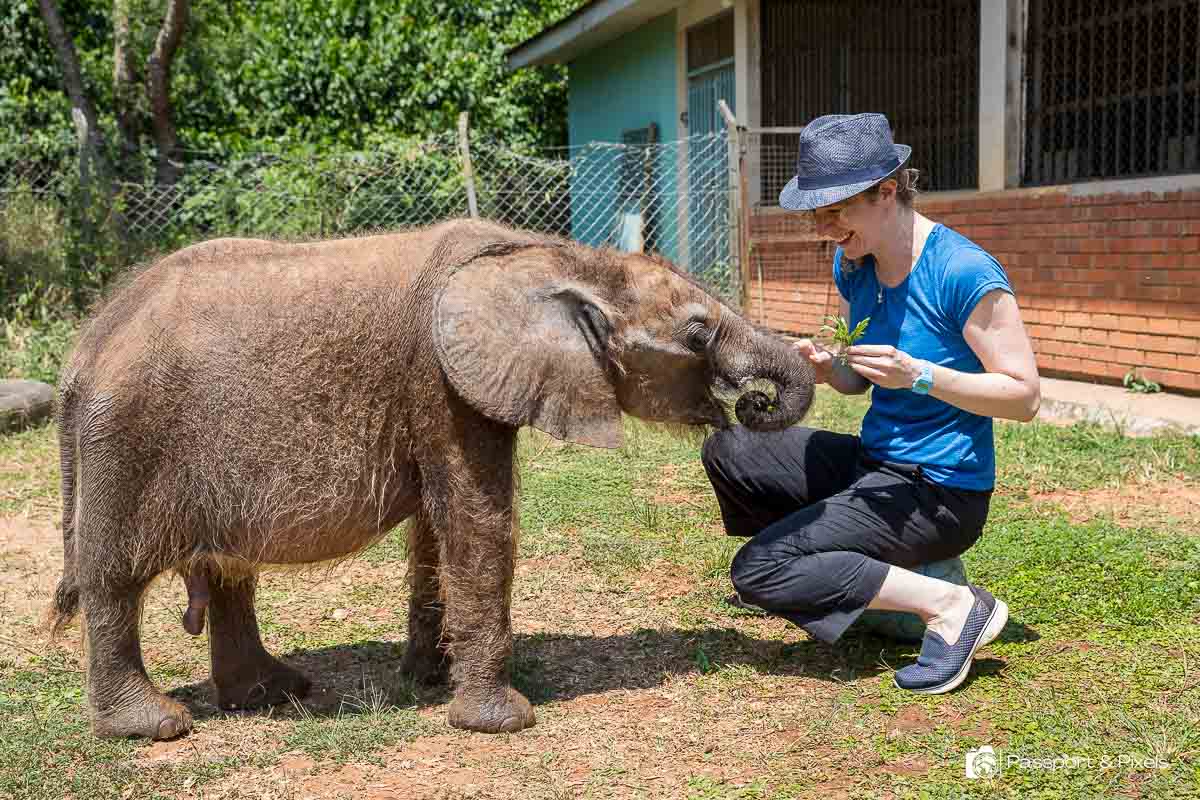
One of the highlights of my first trip to Uganda was my visit to Uganda Wildlife Education Centre (or Entebbe Zoo as it’s sometimes known) and the chance to come nose-to-nose with some of the planet’s most incredible creatures.
Far more than just a zoo, UWEC is a wildlife sanctuary where animals rescued from poachers or the illegal pet trade are brought to be cared for until they can be released back into the wild.
Those that would be unable to fend for themselves – often because they were only babies when they were found – are kept permanently.
These animals have been hand-raised by humans, and that means you can get close to them without fear.
Do the Behind the Scenes tour for the chance to feed a giraffe, stroke a cheetah, or make friends with an elephant – at $70 for adults and $35 for kids it’s not cheap, but it’s worth it! They also do Keeper for a Day and VIP close-up experiences.
Read more: A Day At Uganda Wildlife Education Centre
22/ Mabamba Swamp
Just an hour west of Entebbe on the shores of Lake Victoria, Mabamba Swamp is one of Uganda’s most important wetlands and a paradise for birdwatchers.
It’s one of the best and most accessible places in Africa to see the rare shoebill stork, a prehistoric-looking bird with a massive beak and a slow, deliberate flight.
Local guides navigate narrow channels through the papyrus in dugout canoes, pointing out a dazzling range of species including African jacanas, malachite kingfishers and purple herons.
The swamp is part of the Ramsar network of globally important wetlands and provides a vital habitat for both migratory and resident species — a worthwhile detour before or after a flight from Entebbe.

23/ Source of the Nile
The River Nile is the longest river in the world – over 4000 miles long – and runs all the way from Uganda at its most southern end to the Mediterranean sea in Egypt.
In the 19th century, during the golden age of exploration, a small group of intrepid British adventurers was determined to find the source of this mighty waterway.
After several years of searching, punctuated no doubt by run-ins with hostile locals and the occasional bout of one tropical disease or another, it was eventually – and controversially – claimed in 1858 by a man named John Hanning Speke at Jinja, about 80 km east of Kampala.
The historic discovery of the Source of the Nile (or one of them, at least) is commemorated at the Source of the Nile monument just outside Jinja.
Take a guided boat ride upstream and onto Lake Victoria, where it’s said you can actually see the bubbles as the water rises out of the lake and begins its journey north.

24/ Whitewater Fun in Jinja
As well as being the place where the River Nile begins, Jinja is also Uganda’s whitewater adventure capital.
The foaming waves and thundering rapids of the world’s longest river are a huge draw for adrenalin junkies, who come to enjoy the thrills of whitewater kayaking and rafting on rapids that reach a terrifying Grade 6 in some areas.
Head to the Nile River Explorers base for all the adventures you can handle – from extreme rafting to tandem and solo kayaking to quad biking.
For those of a more nervous disposition, NRE also offers more sedate activities like stand-up paddleboarding or horseback riding.
With plenty of places to stay, eat, and drink, and a fun, relaxed vibe, it’s not surprising that Jinja is now the second top tourist attraction in Uganda after the gorillas.
A word of caution though: flowing water is fine, but avoid swimming in still water at the river’s edge as the area is known for carrying the waterborne parasite bilharzia – which won’t kill you but may well ruin several days of your holiday.
Read more: Jinja and the Nile River Kayak Festival

25/ Kidepo Valley National Park
In Uganda’s far northeast, Kidepo is the country’s most remote national park — and one of its most rewarding. The journey takes a full day from Kampala, but the long drive is worth it for the vast open plains framed by the rugged Morungole Mountains.
The park’s isolation has kept it wild and unspoiled, home to more than 70 mammal species including cheetahs, ostriches, elephants and some of Africa’s largest buffalo herds.
Lions are often seen lounging on rocky outcrops, and you’re more likely to share a sighting with a local ranger than another tourist. With just a handful of lodges and no traffic jams of safari jeeps, Kidepo offers a glimpse of what African safaris must have been like half a century ago.

26/ Rwenzori Mountains
If you thought Uganda was all savannah and gorillas, think again. Rising along the border with the Democratic Republic of Congo, the Rwenzori Mountains — the fabled “Mountains of the Moon” — are Africa’s tallest mountain range after Kilimanjaro.
The peaks reach 5,109 metres, and even on the equator they’re capped with permanent snow and glaciers.
The park is a UNESCO World Heritage Site, recognised for its exceptional biodiversity and dramatic scenery. Multi-day treks take climbers through a series of distinct vegetation zones, from tropical rainforest and bamboo forest to giant lobelias and high-altitude moorland.
The full summit trek to Mount Stanley takes about a week, but there are also shorter day hikes that offer sweeping views of the valleys and the distant Albertine Rift. If hiking and mountains are more your bag, this is one of the top places in Uganda for you.
27/ Semliki Wildlife Reserve
Tucked between Lake Albert and the foothills of the Rwenzoris, Semliki Wildlife Reserve is Uganda’s oldest protected area. It sits at the meeting point of Central and East Africa’s ecosystems, with patches of rainforest giving way to open savannah and acacia woodland.
This unique mix supports a diverse range of wildlife including chimpanzees, forest elephants, leopards, and more than 400 species of birds; many found only in the Congo Basin.
The Sempaya Hot Springs are a local landmark, where boiling water bubbles from the ground at nearly 100°C.
Take a guided walk through the forest or a boat trips on Lake Albert, where you’ll see hippos, crocodiles, and maybe even the iconic shoebill stork.

28/ Boutique Lodges and Safari Camps
Another of the top highlights of Uganda is the chance to stay in one of the country’s many spectacular safari lodges.
Far more than just a hotel, these places are experiences in themselves, often featuring sympathetically-designed wood cabins with private terraces overlooking stunning views, and offering delicious three-course meals all included in the price of your stay.
While they’re not as cheap as a campsite or a less luxurious hotel, I definitely recommend you treat yourself to a night or two if you can stretch to it.
Here are a few options:
1/ The River Station
This is where I stayed on my second Uganda trip. The River Station is an absolutely stunning high-end luxury lodge right on the Kazinga Channel, with huge, chic rooms, incredible wildlife right on the doorstep, and top-level food and service. A must if it’s within your budget!

There are plenty to choose from, but here are a few more recommended ones:
2/ Rushaga Gorilla Lodge
Located near the Rushaga sector of Bwindi Impenetrable National Park, Rushaga Gorilla Lodge is more of a budget option and is perfect for gorilla trekking. The lodge offers comfortable rooms with stunning views of the surrounding forest and can arrange gorilla treks, forest walks, and Batwa community visits.
3/ Clouds Mountain Gorilla Lodge
This is where I stayed on my second visit. Clouds is a stunning luxury property perched on top of a ridge with amazing views of the Virunga volcanos. The interior is chic and cosy with log fireplaces in every room, and the food and service were exceptional. It’s very close to the Nkuringo base for gorilla trekking, and was built in partnership with the local community so part of your guest fee goes directly to conservation and community projects.

4/ Lake Bunyonyi Eco Resort
Located on an island, Lake Bunyonyi Eco Resort is a peaceful retreat, known for its lush landscape and birdwatching opportunities. Get away from the hustle and bustle, relax in the quiet of nature and enjoy activities like canoeing, island-hopping, and hiking.
5/ Crater Safari Lodge
Crater Safari Lodge sits above Nyinabulitwa Crater Lake, a short drive from Kibale Forest. It’s relaxed and unfussy, with big views, good food and plenty of space to unwind after chimp trekking. The cottages are comfortable, the staff friendly, and the setting couldn’t be more peaceful.
6/ Papa’s Camp, Murchison Falls
Another one by WildPlaces, Papa’s Camp is a small and private tented camp right on the bank of the River Nile in a totally private area of Murchison Falls National Park. The surround land is an exclusive low-use zone so no other tourists come here, and the area has its own pride of habituated lions who are seen almost every day. A sister luxury lodge, Kulu Ora, is due to open in 2026.
Read More: An Afternoon in Kibale, Uganda

29/ Rolling Green Landscapes
As you travel round Uganda, one of the things you cannot fail to notice is how green the country is.
If you’ve only ever seen Africa on the news you’d be forgiven for thinking it’s a dry, dusty continent, but that couldn’t be further than the truth.
Uganda is actually about as rainy as the famously damp United Kingdom, with over 1 metre of rainfall every year, so there’s no shortage of water to provide the necessary juice for things to grow.
And – wow! – does stuff grow! Bananas, cassava, potatoes, corn, beans, coffee, cotton, tea, tobacco… these are just some of the things they produce, which means you won’t struggle to find delicious fresh fruit and veg with almost zero food miles.
Many people make a living from subsistence farming, each family owning a small plot of land where they grow crops to feed their families and then sell any extra at the local market.
As a result Uganda’s rolling landscape has become a patchwork of terraces and squares, each one a slightly different shade of green.
Look out for them particularly as you drive through Western Uganda’s volcanic region – you’ll definitely be stopping the car to take pictures – and it’s what makes the landscape another one of Uganda’s many tourist attractions.
Read More: Two Weeks In Uganda – A Suggested Itinerary

30/ Ugandan Music
Uganda has a vibrant music scene, which is influenced not only by local and African sounds, but also by the wider international music industry.
Two of the most popular traditional genres are Kidandali, which features the use of typical Ugandan sounds and samples, and Kadongo Kamu, which means ‘one little guitar’ and is based around the acoustic guitar.
In Kampala especially there are plenty of opportunities to hear live bands performing all kids of music – try Ndere Cultural Centre for local bands, or JazzVille in Bugolobi for really fun and accessible Jazz.
Want to see more of my photography or travel writing? Have comments or questions? Come follow me on Instagram, Threads or Bluesky and share your thoughts!

31/ Arts and Crafts
If Ugandan art is what you’re after, Kampala also has a colourful art scene with at least half a dozen galleries representing both local and internationally-known artists. AfriArt and AKA gallery are probably the best-known, but there are several of others, all offering unique and stylish paintings and textiles that’ll look great on your wall back home.
There is also the supposed ‘National Gallery’, Nommo Gallery, but at the time of updating this post it was variously either closed, relocated, or embroiled in scandal of some sort, so if you fancy checking it out you might need to ask around (and please let me know what you find!)
For souvenirs and crafts you’ll find roadside stalls at every tourist destination, but for the best prices and the most choice save your shopping for Kampala.
Here there are two main permanent markets: the Exposure Africa craft market on Buganda road and the African Craft Village behind the National Theatre.
Everything from carved wooden figures and animals and leather to jewellery and textiles are on offer here – some are imported from Kenya but there are plenty of local items too.
On Fridays there’s also a craft market in Nsambiya along Ggaba Road where you can buy items directly from the artisans who made them – and the prices are often better too.
If you prefer not to have to haggle, a great place to shop for unique local souvenirs is one of the three branches of Banana Boat.
This carefully-curated store works directly with local artisans to source and sell unique products you won’t find anywhere else, so not only will you come home with something beautiful, you’ll also be helping to support local businesses.

32/ Meet the People
One of my favourite things about Uganda – that makes it such a joy to travel in – is its people. Rarely have I travelled anywhere where the locals are so warm, welcoming and helpful.
As I travel I often stop people and ask for photos – sometimes I’m refused, sometimes they ask for money, but in Uganda almost everyone I met was happy to oblige and asked for nothing in return.
Wandering around by myself with my camera I never felt unsafe or threatened, and although a blonde white woman is often the subject of curiosity, people’s glances almost never felt aggressive or intrusive as they have done in other places I’ve visited.
It also helps that English is one of the national languages, making Uganda a very easy and enjoyable country to travel in.
Read More: Two Weeks In Uganda – A Suggested Itinerary

So there you have it – my 32 top things to do in Uganda. Do you think I’ve missed something? Let me know and I’ll add it in!
And if you’re going to Uganda – happy travels!
Need help booking your dream safari?
If you’re ready to plan your dream African adventure but don’t know where to start, I can help.
I’ve travelled extensively throughout Africa and have a great network of personally-vetted and trusted safari operators.
Now I use those connections to help you plan your perfect trip.
Fill in my safari enquiry form and I’ll:
- Answer your questions personally
- Help you decide which options are right for you
- Match you with up to three trusted partners with decades of experience
- They will provide you with expert advice and FREE personalised, no-obligation quotes.
Simply fill out my safari enquiry form here to get the ball rolling.
Save time, avoid stress AND get a great deal by having an expert do the work for you!
Buy me a coffee
Did you enjoy this website or find it useful? If you did and fancy showing your appreciation, that would be amazing!
A small token of support helps keep Passport & Pixels going, so I can carry on creating free content for travellers like you. Also, it makes my day! Thank you!
My favourite travel tools and brands
To help you organise your trip, here’s a short list of some of the brands and tools I use over and over again when I’m planning my travels. You can see more on my Travel Resources page.
- Booking.com: A huge range of hotels to choose from, often with free cancellation. If you book hotels regularly you can earn discounts. I’m on Genius Level 3 which gets me 20% off!
- Expedia: Another great place to find hotels and Expedia also sell flights, car hire, and loads more all in one place.
- Skyscanner: The only place I ever go to search for flights and compare prices.
- Flight Centre: Booking a more complicated route? Let Flight Centre organise it for you (and deal with the drama when something goes wrong).
- Priority Pass: I love having access to 1600+ airport lounges when I fly, allowing me to enjoy my time at the airport. Buy through my link and you get up to 20% off!
- Airalo: Say goodbye to ridiculous mobile roaming charges. Did you know you can now buy ane-SIM, install it in your phone before you leave home, and then use data abroad at local prices? Game changer. Get US$3 credit with code BELLA5735.
- TourRadar: If you prefer group travel and organised tours, TourRadar has a huge range of fantastic tours from respected operators. They’re very helpful and have 4.5 stars on TrustPilot.
- Viator: Part of the TripAdvisor brand, Viator is another great place to search for group adventures and day trips.
- GetYourGuide: A great place to find local tours and day trips in your destination.
- Wex Photo Video: The UK’s best camera gear store.
- Ellis Brigham: Looking for good quality backpacks, travel clothes and other gear? Ellis Brigham is where I buy almost all of mine.
- Rentalcars.com: Part of the Booking.com family and the world’s largest online car rental service, with 24/7 customer service.
- World Nomads Travel Insurance: I never ever travel without travel insurance and nor should you!
Read more about the amazing things to do in Uganda
If you enjoyed this, find out more about some of the beautiful places in Uganda here:
- 7 Best Weekend Trips from Kampala, Uganda
- A Perfect Day in Kampala
- What Happens On A Chimpanzee Trekking Safari In Uganda
- What To Do In Sipi Falls, Uganda
- The Rewards Of Visiting Uganda’s Batwa Tribe
Liked this post about Uganda tourist attractions?
Social shares help support my hard work! You can share via the buttons at the bottom, or pin this handy Pinterest Pin. Thank you!

