


NOTE: My African photo safari in Botswana was gifted by Pangolin Photo Safaris in exchange for this blog post and some social media. They did not tell me what to write – this is my own, honestly-held opinion, written entirely by me with no help from AI.
I don’t accept freebies or payment in exchange for positive coverage. All prices are correct at the time of writing. This post may contain affiliate links.
All safaris involve some form of photography.
Whether you’re loaded with a top-of-the-range mirrorless and huge lenses, or happy to capture moments with just a mobile phone, it’s impossible to go on an African safari and not come home with a memory card or camera roll full of incredible wildlife images.

But for many of us, safari photography isn’t just a by-product of the trip: it’s the aim of the trip.
We’re not going to Africa and taking photos on the side, we are going to Africa precisely TO take photos.
That’s why an entire industry has sprung up, with tour companies and photography guides offering curated Africa photo safaris where the trip is designed with the goal of helping you scratch that photography itch and get gorgeous wildlife photos.

Photo safaris and wildlife tours
I just returned from a wildlife photography tour in Botswana with leading company Pangolin Photo Safaris, and now I’m going to share that experience with you.
In this post I will…
- Explain what happens on an African photo safari and how it differs from a regular safari.
- Reveal what you can expect from the trip and what’s included.
- Answer questions about who wildlife photography tours are for and who they are not for.
- Review my trip with Pangolin Photo Safaris, one of the top African photography safari operators.
- Share some of my favourite images I took on this trip – to show you what you can achieve!

About my African wildlife photography experience
I’m a wildlife photographer, travel writer, and passionate African safari lover.
I’ve been on many safaris in Kenya, Botswana, Tanzania, Uganda and South Africa and even a ‘blue safari’ in the Seychelles, as well as visiting 11 other African countries.
Most of the time I travel with non-photographers, which means that my photography experience is sometimes compromised by what other people in the group prefer.
Not everyone wants to spend hours waiting for a leopard to come down from a tree!
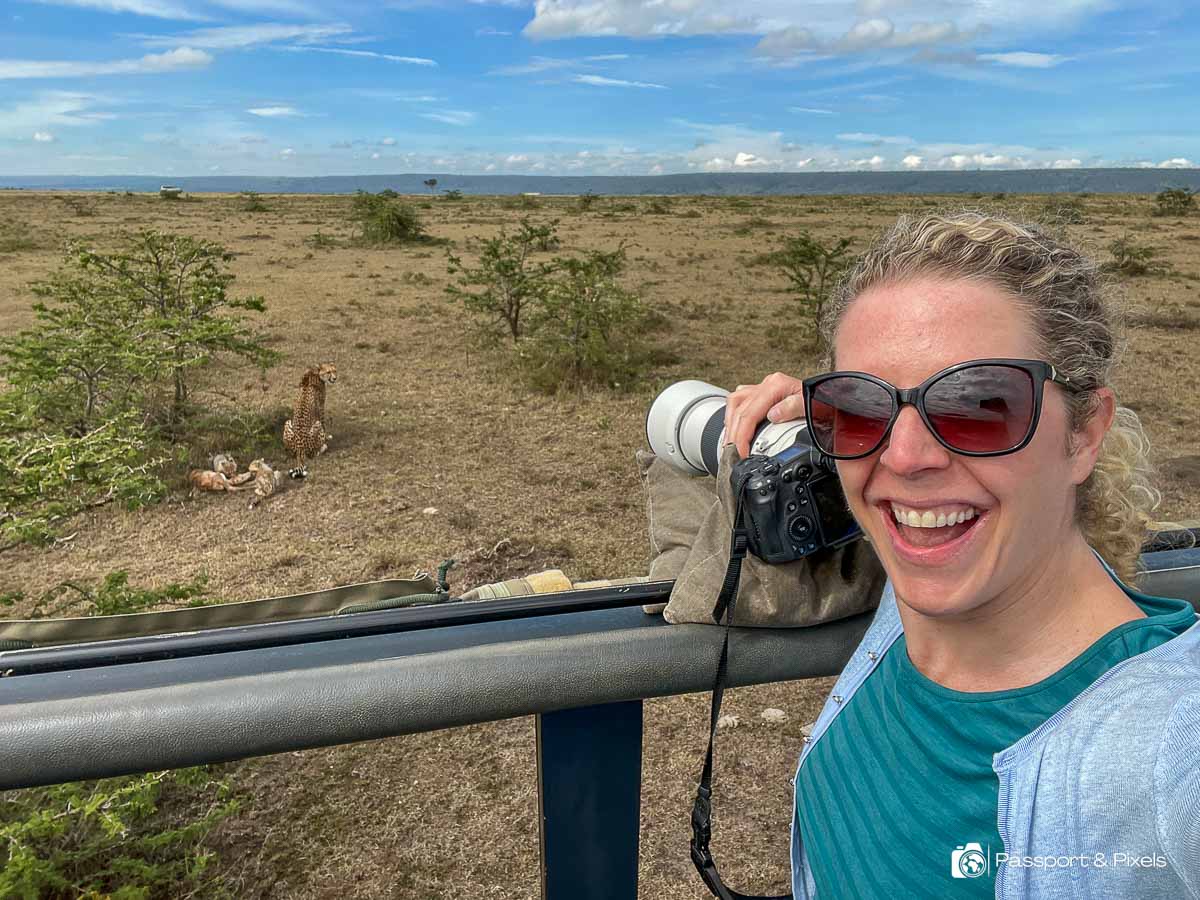
That’s why I wanted to do a dedicated African photo safari with like-minded photographers, and I recently got my chance to do one in Botswana with Pangolin Photo Safaris.
I did their 7-day Chobe photo safari, which included six nights at their hotel in Kasane, with boat excursions on the Chobe River and game drives in Chobe National Park.
I travelled in January, which is rainy season and therefore quieter and cheaper. So you may notice that there’s a lot of greenery in my photos!
Read to the end to find out why I think rainy (or green) season may actually be the best time to visit Botswana for photography.
Need help booking your dream PHOTO safari?
Countries, lodges, parks, operators… it’s easy to get overwhelmed before you’ve even started.
That’s where I come in.
Using my first-hand experience and trusted contacts across Africa and beyond, I’ll help you cut through the confusion and find the right trip for you – at no cost.
Here’s how it works:
- You fill in my safari enquiry form.
- I review your plans and answer your questions.
- Then I pass your enquiry to up to three of my trusted, handpicked safari partners.
- They contact you directly to provide a free, no-obligation quote.
Get the ball rolling on your dream safari here!
Save time, avoid stress and confusion AND get a great deal by having an expert do the work for you!

What is an African photo safari?
So how do wildlife photography tours in Africa differ from regular safaris?
The big difference is that – whether you’re travelling with a company like Pangolin, with another company or with an independent wildlife photographer – the goal of the trip is photography.
- As well as an expert local driver/guide who knows the area and can find animals and tell you about them, you also get a photographyguide whose job is to help you take great photos, from offering tips and teaching you new techniques or settings, to troubleshooting.
- The itinerary is dedicated to photography. You’ll be taken to the best photographic locations and positioned for the best light at the best times.
- No stopping for a sundowner G&T and snacks in the hour before sunset – that’s the perfect time to be shooting! And no staying inside when it’s raining – that’s the chance to practice rain photography!
Read more: 9 Tips For A Botswana Budget Safari Without Luxury Prices

- During the afternoon breaks there are often photography talks or the chance to get help with your editing.
- Some companies (including Pangolin) allow you to borrow or rent gear so you can try out new cameras and lenses.
- Groups are generally smaller, so you’re guaranteed a window seat and plenty of attention from your guide.
- And of course you’ll be travelling with like-minded photography lovers, so you can swap tips and inspiration and make new friends.
- Because of all these added extras, wildlife photography tours are usually more expensive than standard safaris, though prices vary a lot depending on where and when you go, the type of accommodation, and who your guide is.

Where do you find the best photo safaris in Africa?
Many Africa photo safaris are run by professional wildlife photographers. Wildlife photography is a difficult business to earn a living in, so leading tours is one way experts can bring in some income.
Most of them partner with local operators, so you get a great safari with the bonus addition of an expert photo guide on hand to teach you.

If you have a favourite wildlife photographer, check to see if they run tours and sign up! And if not, start following wildlife photographers on Instagram and visiting wildlife photography exhibitions to discover new talent.
The slight issue with this is that most pro wildlife photographers only run a few tours a year, groups are very small, and they book up fast. Also, if you want to learn from a top name, you’ll pay top prices!
That’s one of the many reasons why Pangolin Photo Safaris are a great alternative.

Who are Pangolin Photo Safaris?
Pangolin Photo Safaris is based in Chobe National Park, Botswana – one of Southern Africa’s top wildlife-viewing destinations.
They offer small-group trips of up to eight guests, with departures throughout the year, led by their team of expert Photo Hosts.
While these guys might not be celebrities – though some of them are now becoming celebrities thanks to their work with Pangolin – they are all amazing photographers, trained guides and experienced teachers.
Read more: How To Make A Stunning Photo Gallery Wall: My 7-Step Guide

Pangolin have five permanent professional hosts, and also partner with other freelance wildlife photographers on a select number of trips.
They offer African photographic safaris in Botswana, Kenya, South Africa, Zambia, Zimbabwe and Uganda, and are now branching out into non-African wildlife photo tours in top wildlife destinations like Patagonia or India.
With so many trips and guides to choose from, you’ll have no problem finding a date and destination to suit you.
And because they’re a bigger company and their group sizes are slightly bigger, their prices tend to be a little cheaper than travelling with an independent wildlife photographer.
So what happens on a photo safari in Africa with Pangolin?
Read more: 10 Unmissable Wildlife Adventures In Africa – By Travel Experts

Want to know more about photo safaris?
Maybe this post has convinced you, and now you’re ready to book?
Or maybe you’re still confused and would like unbiased information – without the sales pitch?
With my extensive experience and network of trusted contacts, I can help – and it’s FREE!
Simply fill out my safari enquiry form here to get the ball rolling.
I will email you to answer any questions, and then – when you’re ready – pass your information to up to three of my handpicked, trusted safari partners.
They will contact you directly to handle your enquiry and provide a free, no-obligation quote.
An Africa photo safari: the itinerary
I did Pangolin’s green season trip in Chobe National Park. The tour lasts six nights and seven days, and is based at the Pangolin Chobe Hotel in Kasane.
Between March and November Pangolin also offer a ‘Best of Chobe’ trip which is similar, except you’ll stay three nights in the hotel and three nights on the Pangolin Voyager houseboat / floating lodge, waking up to hippos and bird life all around you.

- Every morning you’ll get up at 5 am, have a light breakfast, and then by around 5.30 or 6 am you leave for your morning excursion.
- This will either be a boat trip on the Chobe River, or a game drive in Chobe National Park.
- You return to the hotel at around 11 am for a huge and delicious brunch, after which you have about four hours of editing or relaxing time before afternoon tea is served at 3.30 pm.
- At 4 pm you head out again to either the river or the park, returning just after sunset at about 7 pm.
- Dinner is served in the hotel at 7.30 pm, and then there’s more time to edit, charge batteries, and chat to your guides and fellow guests before an early night, ready for another 5 am start!
Days are long! I noticed that we spent a fair bit longer on game drives and less time in camp than on other safaris I’ve been on. Pangolin really do maximise the wildlife photography time!
Note that everything runs punctually and if you’re late you’re keeping the rest of the group from the wildlife which will make you deeply unpopular, so you need to make sure you’re on time!


Want to see more of my photography or travel writing? Have comments or questions? Come follow me on Instagram, Threads or Bluesky and share your thoughts!
The wildlife photography boat
The star feature of Pangolin’s Botswana photo safaris are their three photo boats on the Chobe River.
Each boat seats eight photographers plus a driver and guide, and is purpose-built for photography. Your seat rotates for 360-degree viewing, and is fitted with a gimbal mount to support your camera and lens.
The boats are shaded from the sun and the rain, and sit low to the water with low sides, so you are at eye level with safari animals as they come to drink or beautiful African birds perched on the reeds.

It’s the most comfortable and accessible wildlife photography I’ve ever done. You just sit, enjoy the views, and the driver steers you towards amazing things to photograph!
Note that there are no toilets on board, but if you need a break the driver can pull over to a safe spot on the riverbank for you to hop out.
Want me to put you directly in touch with Pangolin for a no-obligation quote? Fill out my free safari enquiry form here!

What wildlife can you photograph on the Chobe River in Botswana?
During my African photo safari with Pangolin we did at least one wildlife photography trip a day on the Chobe River.
During that time I got the chance to photograph dozens of amazing African animals including hippos, elephants, crocodiles, kudu, and impala, alongside countless species of birds, from magnificent African fish eagles and majestic grey herons to cute malachite kingfishers and busy weaver birds.
Here are just a few of my favourite images:
Read more: Using The Canon R5 For Wildlife Photography: A Full Review


You can find more on my Instagram (there are loads still to come so please follow me if you’d like to see, and hit ‘like’ on a few posts so the algorithm knows you’re interested!).
Read more: 19 Easy Wildlife Photography Tips For Beginners
Buy my prints
Did you know I have a print store? Printing is by top UK print company Loxley Colour who also handle the shipping. Images from this trip will be going up soon, but in the meantime why not have a look and see what else is there?
Any image you see on this site can be added, just contact me and ask.


Wildlife photography in Chobe National Park
When you’re not on the river, the other place you will be taken to photograph wildlife in Botswana is Chobe National Park.
Covering 4,500 square miles, Chobe National Park surrounds the Chobe River and is jam-packed with wildlife, including all the animals I mentioned above, plus Big Five animals like lions and leopards, alongside giraffes, zebras, wild dogs and more.

The Pangolin photo cars
Photography game drives are done in fairly spacious safari cars with space for eight passengers in four rows, plus a driver and guide in the front. Everyone gets a window seat, and there are padded rests for your camera that move up and down.
While the cars are bigger and more spacious than some vehicles which have rows of three or even four (so some people have to sit in the middle), they still felt a bit cramped and with eight of us there wasn’t much space for us and all our gear.
Whoever was on the side of the car away from the animal sometimes struggled to get a good shot, and the gap between the seats wasn’t big enough to sit or crouch for a low angle.

And because the car is so long, sometimes the person at the back couldn’t see, or the driver couldn’t hear when they asked a question.
In Kenya I’ve seen amazing photography vehicles with a single row of seats so everyone can shoot both sides, as well as space to sit on the floor or even lie down to get closer to the animal’s eye level.
When I fed this back to Pangolin, they told me that from April 2025 they will be moving to a policy of only four people per vehicle unless a larger group or family want to stick together – which is great news!
And we still had some incredible sightings in Chobe National Park, so you’ll still have a fantastic experience no matter how many people are in the car.
Read more: 41 Safari Photography Tips For Stunning Wildlife Photos

What wildlife can you see in Chobe National Park
Chobe National Park is recognised as one of the most abundant places to see wildlife in Africa. Although you are not allowed to go off-road, the animals are well habituated to vehicles, so they don’t run away nearly as much as in some other places.
Despite the rain the wildlife was out in force when we visited. One morning we saw three separate leopards!
We also saw lions, masses of impalas with their babies (a great feature of visiting in rainy season is all the baby animals), giraffes, baboons, zebras, warthogs and dozens of beautiful African birds.
I also got obsessed with the gorgeous yellow devil’s thorn flowers which were everywhere like a golden carpet – yet another good reason to visit in the green season.
Here are some of my favourite images from my African photo safari in Chobe National Park.


If you’d like to buy a print of any of these images, check out my photo print shop, and contact me!
Enjoying my wildlife photography?
Why not come follow me on Instagram?
The Pangolin Chobe Hotel
If you do the Best of Chobe trip, you’ll stay at the heart of Pangolin’s operations, the Pangolin Chobe Hotel in Kasane.
Built to look like a pangolin, and located about a 10-minute drive from the National Park entrance on a hillside overlooking the park, this is a welcoming and comfortable hotel.

Rooms are huge and quiet, with enormous beds and bathrooms, hot powerful showers, endless charging points with all different types of plugs, and a balcony with park views.
There’s also a swimming pool, a bar, a fire pit, an editing room, and a photography hide overlooking a small waterhole which animals sometimes visit.
The main feature of the hotel is the photo gallery, showcasing images from Pangolin Photo Hosts and top wildlife photographers to inspire you.
Read more: Wildlife Hide Photography Tips For Safari Photos Like A Pro

The Pangolin Houseboat
Pangolin recently launched a brand new houseboat on the Chobe River – the Pangolin Voyager II.
It’s fully solar-powered, running off four motors powered by solar panels on the roof – making it quiet and environmentally friendly!
Downstairs there are five guest bedrooms as well as the staff area, and upstairs there’s a big dining and living area, an outside deck with sunloungers, and a small editing room.
The best part about the houseboat is that you can travel so much further, into the channels on the Namibian side where the little tourist boats cannot reach.


Food on an African photo safari with Pangolin Photo Safaris
A surprise win on my African wildlife photography tour was the food, which was plentiful, fresh and delicious.
- Breakfast is a light meal of fruit, cereals, toast and yoghurt, served at about 5 am. Around mid-morning you’re also offered a tea and coffee break, with small cookies to keep you going until brunch.
- Brunch is served back at the hotel at about 11.30 am, and is an epic spread of both breakfast items like bacon and eggs or shakshuka, alongside lunch dishes like pulled chicken, moussaka and a range of interesting salads. There’s fruit and two different types of cake for dessert.

- At 3.30 pm you get afternoon tea, which is a light snack with a choice of savoury bites (chicken skewers or mushroom tarts) or sweet cake (or have both if you like!).
- Dinner is at 7.30, and is a three-course affair with starters including soup or fried cheese balls with salad, mains like barbecued meats or pizza from the pizza oven, and tiramisu or sponge pudding for dessert.
Dietary requirements can be catered for, but you need to discuss this with the team in advance.
All meals, snacks, and drinks are included in the cost of your trip.
Read more: First Time Safari Facts: 18 Surprise Things To Know Before You Go

Who are Pangolin Photo Safaris for?
While some independent photographic safaris in Africa will be packed with expert photographers, Pangolin Photo Safaris pride themselves on being accessible to everyone of all ages and all abilities.
Whether you’re a pro with loads of experience who just wants to visit Botswana and shoot with like-minded people, or a complete beginner, everyone is welcome.
Even if you only have an iPhone and no idea about aperture or shutter speed, you can still do an African photo safari because Pangolin have cameras and lenses you can borrow, and guides on hand to teach you what to do.
This makes them great for couples where one half is more into photography than the other, as the non-photographer can have a go as well.
As long as you enjoy wildlife-watching and are happy to be surrounded by people clicking shutters, you’re welcome!
Want me to put you directly in touch with Pangolin for a no-obligation quote? Fill out my free safari enquiry form here!

What camera do I need for my Africa photo safari?
You don’t need to rush out and buy a new camera for your photographic safari with Pangolin because you can borrow one from them.
They offer the Canon R6 Mark II and RF 100-500 lens, which is a fantastic setup for wildlife photography (I know because I own both!).
They also have a small selection of other pro lenses, like the beautiful Canon 600 mm f/4 II prime, which I borrowed during my stay.
Read more: Travel Photography On The Road – My Photo Editing Workflow Tips

This is a huge, heavy and expensive lens that I could never buy or travel with, so it was wonderful to have the chance to use it in Botswana and it delivered me some of the most stunning images I’ve ever taken.
Note that cameras are only available to borrow on trips starting and ending at their base in Chobe, and that if you want to borrow specific lenses you need to request them in advance – though unfortunately they’re not always guaranteed.
For other trips, Pangolin can offer you discounted rates with their partner kit hire companies.
For more on what gear I travel with for safari photography, check out My Camera Equipment List: What’s In My Gear Bag?
It’s also worth looking at The Best Camera Gear For Antarctic Photography – while you can ignore the cold weather mentions for an African wildlife photography trip, most of the rest of the advice still applies.

Are African wildlife photo safaris ethical?
It’s really important that we think about the impact we’re having when we travel. And unfortunately in wildlife tourism, there are still many unethical operators treating animals very poorly.
As a tourist or wildlife photographer, you can help by not supporting projects or operations where animals are caged, baited, abused, drugged, or made to perform for visitors’ entertainment.
Happily, wildlife photography safaris are among the most ethical type of wildlife tourism there is !
The animals are completely wild, and are not trained or baited. They are free to come and go as they please – though this does mean that on some days you may not see anything, and you may see injuries or death, but that’s nature for you.

Guides are trained not to get too close to the animals, and you are not allowed to provoke or disturb them to get a good shot. If you ever see this happening, make sure you call it out and report it if necessary.
In some National Parks where overcrowding and traffic jams are becoming a problem, photography groups tend to steer clear. No one wants 50 cars in the back of their shot anyway!
What’s more, going on a wildlife photography safari helps support conservation in Africa. Your visit helps to create jobs for local people, fund the upkeep of parks and reserves, and incentivises communities to care for the wildlife and environment.
As well as following all the usual rules of ethical conduct, Pangolin also has a not-for-profit conservation project that helps to protect the endangered pangolin. You can find out more about that here.

Do Pangolin teach wildlife videography?
While the main goal of most African wildlife photographic safaris is stills photography, more and more people are starting to branch into video and Pangolin’s guides can help you with that too.
If your goal is video rather than stills, just ask your guide for help, or watch their fantastic YouTube channel for tips (you can also find loads of gear reviews and photography tips here too).

What should you pack for a wildlife photography safari in Africa?
There’s no dress code on an African photo safari, so you can leave the high heels and three piece suits at home.
- On boat trips and game drives, dress comfortably in neutral colours and lightweight fabrics.
- While you might want to put on something smarter for the evening, most people dress casually.
- Bring a raincoat in case of wet weather, and a light jacket for cooler evenings. And don’t forget a hat and sunscreen!
- If your trip involves internal flights, there are strict weight limits on the small bush planes, so pack light!
There loads more detail on what to pack for safari in What To Wear On Safari: My Detailed Safari Packing List With Photos.

When is the best time to do Africa photo safaris in Botswana and Southern Africa?
There’s no bad or best time to do an African photo safari.
The most popular time to travel is during the dry season. This is when animals congregate around waterholes, making them easier to spot. It’s also usually cooler and (unsurprisingly) drier. But because this is a popular time to travel, prices rise and places book up faster.
If you travel in the wet season, you may get rained on and you rarely see blue skies. Instead, you get vivid foliage and flowers, gorgeous soft light, baby animals, no dust, dramatic sunsets, cheaper prices and fewer crowds.
I travelled in rainy season and as you can see I saw masses of wildlife and had a fantastic time (though yes I did get rained on a bit).
Read more: Botswana Rainy Season: Here’s Why It’s A Great Time To Visit


Do Pangolin run the best African photo safaris?
While I haven’t tried other photo safaris in Africa (though I’m open to offers!), and experiences with different wildlife photography guides will vary, Pangolin have a reputation for being up there with the best and win awards and rave reviews every year.
They’ve been going for over 10 years and have run hundreds of tours, giving them a chance to hone their product into the perfect trip.
The location, the hotel, the itinerary, the food and the guiding are all second to none.
What’s more, the team are lovely, and you can tell they love their jobs and are passionate about what they do. It’s a wonderful community to be part of.

How much do wildlife photography safaris cost?
The price of your trip can vary a lot, depending on where you go, what time of year, and who you travel with.
If you want to go to the Okavango Delta in peak season, staying in top luxury lodges and accompanied by an award-winning professional wildlife photographer, you will pay several thousand dollars per person, per night.
As a very general ballpark, for a week’s photographic safari in Africa with a top guide, you could be looking at anywhere from about $5-10,000 dollars, not including flights.

The price of Pangolin’s photo safaris also varies depending on destination and duration. For example, an 8-day trip to Kenya to photograph the legendary Great Migration costs around $10,000, while a 6-night South Africa photo safari costs about $7,500-8,500.
If you visit Chobe during the rainy season between January and March like I did, you will only pay $2500 per person with no single supplement which is an incredible bargain!

Who is an African photography safari for?
A photo safari like this one is for you if you…
- Love wildlife and photography
- Want to spend time with amazing wildlife in beautiful locations
- Want to improve your photography and learn from experts
- Have any kind of camera and either want to learn how to use it better, or want to try new gear
- Want to meet other photography lovers
- Don’t mind early starts and long days driving around looking for animals and taking photos
- Have a partner who’s a keen photographer, and you’re interested in supporting their passion.
Who is an Africa photo safari not for?
You should NOT book an African wildlife photography trip if you…
- Find photography boring
- Are very happy with your phone camera and aren’t interested in learning how to take better images
- Aren’t good at sitting still in a car or boat for long periods
- Hate early starts and are terrible at being on time
- Prefer beaches and bars or spas and city breaks to nature and wildlife.
How to book your wildlife photography tour
If you said yes to everything in the first list, it’s time to get the ball rolling!
That’s where I come in.
Get the ball rolling by filling in my free enquiry form
I will answer your questions to help you decide if a photo safari is for you. No sales pitch, no hassle.
Then – when you’re ready – I’ll pass your details to my personal contact at Pangolin, who will make sure you get the best deal.
Save time, avoid stress and confusion AND get a great deal by having an expert do the work for you!

Do a photo safari with me!
I’m currently in discussions to lead my own Africa photo safari in partnership with a great safari operator.
That way you’ll get an amazing safari experience, with me as your photography host alongside an expert local safari guide.
If you like the sound of this there are four things you can do:
- Follow me on Instagram and Threads and keep an eye out for announcements.
- Subscribe by email to get the latest blog posts and updates delivered to your inbox.
- Contact me to let me know you’re interested, so I can personally invite you when the trip is launched.
- Mention this when you fill in the safari enquiry form so I can add you to my mailing list!

Want to see more of my photography or travel writing? Have comments or questions? Come follow me on Instagram, Threads or Bluesky and share your thoughts!
And that’s it! I hope you’ve enjoyed this post and found it useful.
Please check out some of my other wildlife photography and African safari posts, and I hope to see you on an African photo safari soon. Thanks for reading!

Buy me a coffee
Did you enjoy this website or find it useful? If you did and fancy showing your appreciation, that would be amazing!
A small token of support helps keep Passport & Pixels going, so I can carry on creating free content for travellers like you. Also, it makes my day! Thank you!
Where to next?
If you enjoyed this post, why not check out some of my other Africa reviews?
- Instinct of the Mara Review: Exclusive Wildlife In Kenya
- Shompole Wilderness Lodge In Kenya: My Complete Review
- Is Cardamom House In Vipingo The Best Beach Hotel In Kenya?
- Which Is The Best Botswana Safari Lodge? My Favourites With Photos
- Kipalo Hills Lodge In Tsavo West, Kenya: My Complete Review
- Chobe Safari Lodge In Botswana: A Complete Review With Photos
- Alphonse Island Seychelles: A Review Of My Week In Paradise
Liked this post?
Social shares help support my hard work! You can share via the buttons at the bottom, or pin this handy Pinterest Pin. Thank you!


