

Most visitors to Bwindi Impenetrable National Park head there for the unique opportunity to spend precious time with the critically endangered mountain gorillas for which Uganda is most famous.
But if you’re interested in Uganda’s people and culture as well as its wildlife, there’s another reason to visit: the chance to learn about the Batwa people.
The Batwa of Uganda
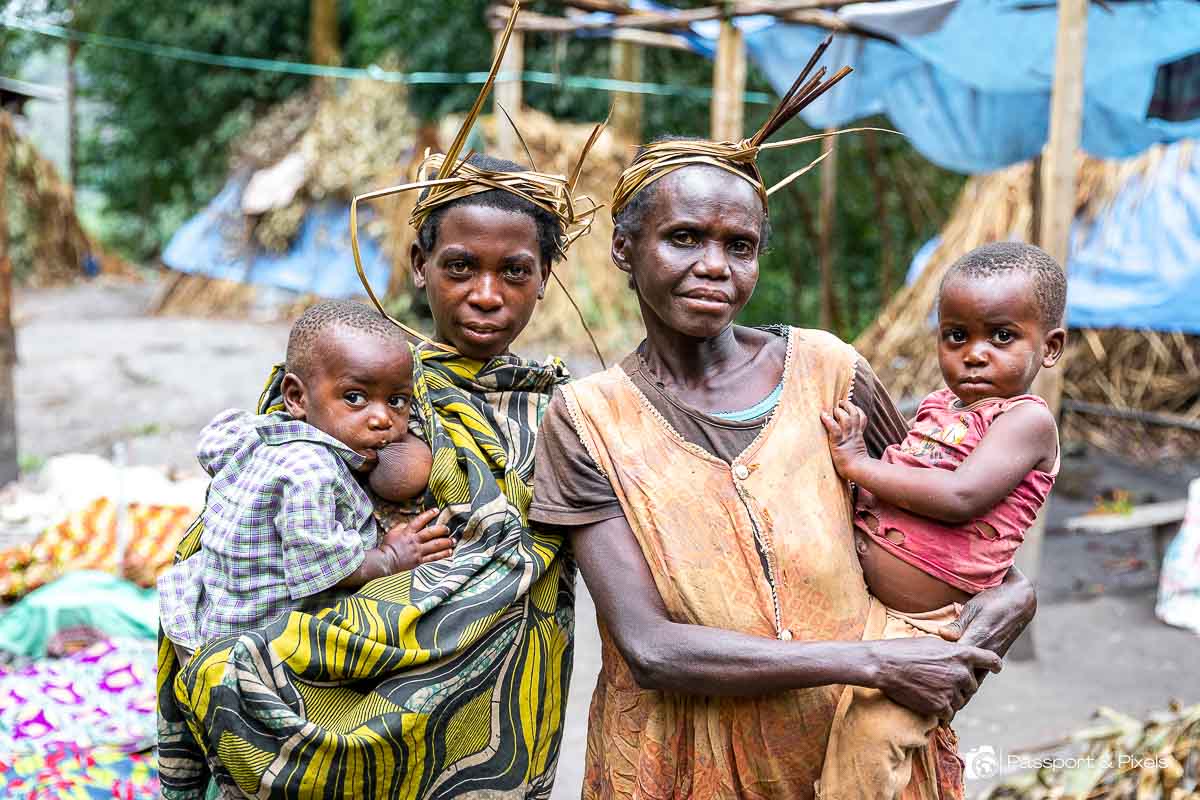
The last few surviving members of the endangered Batwa Pygmy tribe, which once thrived in western Uganda, now live on the outskirts of Bwindi National Park, where you can visit them.
I visited the Batwa as part of my visit to Bwindi National Park, after a morning spent gorilla trekking. I enjoyed the chance to learn about their culture and take photos, and to spend time with a group of Ugandans who are often overlooked.
So read on to find out more about these fascinating Uganda people, and how you can visit them too.

Who are the Batwa people?
The Batwa, a semi-nomadic tribe of so-called ‘pygmies’ for their short stature, lived in the mountainous areas along the borders of western Uganda and the Democratic Republic of Congo for millennia.
Also known as the Twa people of Uganda, they were hunter-gatherers: the men did the hunting, using handmade spears or bows and arrows to catch monkeys, birds, bush pigs and other small forest mammals, while the women did the gathering, fetching wild honey, berries and fruits, and keeping the home.
Their existence depended entirely on the rainforest, where they lived in huts made from branches and grasses and made their clothes from animal hides.

What happened to the Batwa in Uganda?
As modernisation gradually came to Uganda and forests were felled to make way for agricultural land and pastures for livestock, the Batwa found themselves progressively confined to ever-shrinking territories.
Ultimately, in the 1930s, with the forests all but gone, the last remaining forested areas were named as protected reserves. This strategy stopped the devastating deforestation and helped to protect the habitat of the critically endangered gorillas; but at the same time it also erased the Batwa people’s legal claim to the lands they had occupied for generations.
In 1991, the protected reserves were transformed into Mgahinga Gorilla National Park and Bwindi Impenetrable National Park, and humans were banned from occupying the land, which was instead given over to wildlife protection.
While great for conservation, it was terrible for the Batwa. They were forcibly displaced, with no assistance or compensation: abruptly converted by a change in the law into outlaws on their own ancestral soil.
Forced to move with nowhere to go and at risk of being thrown in jail, they settled on the edges of the parks, where they are now still effectively classed as squatters.
Read more: 28 Brilliant Things To Do In Uganda

Life today for the Batwa tribe in Uganda
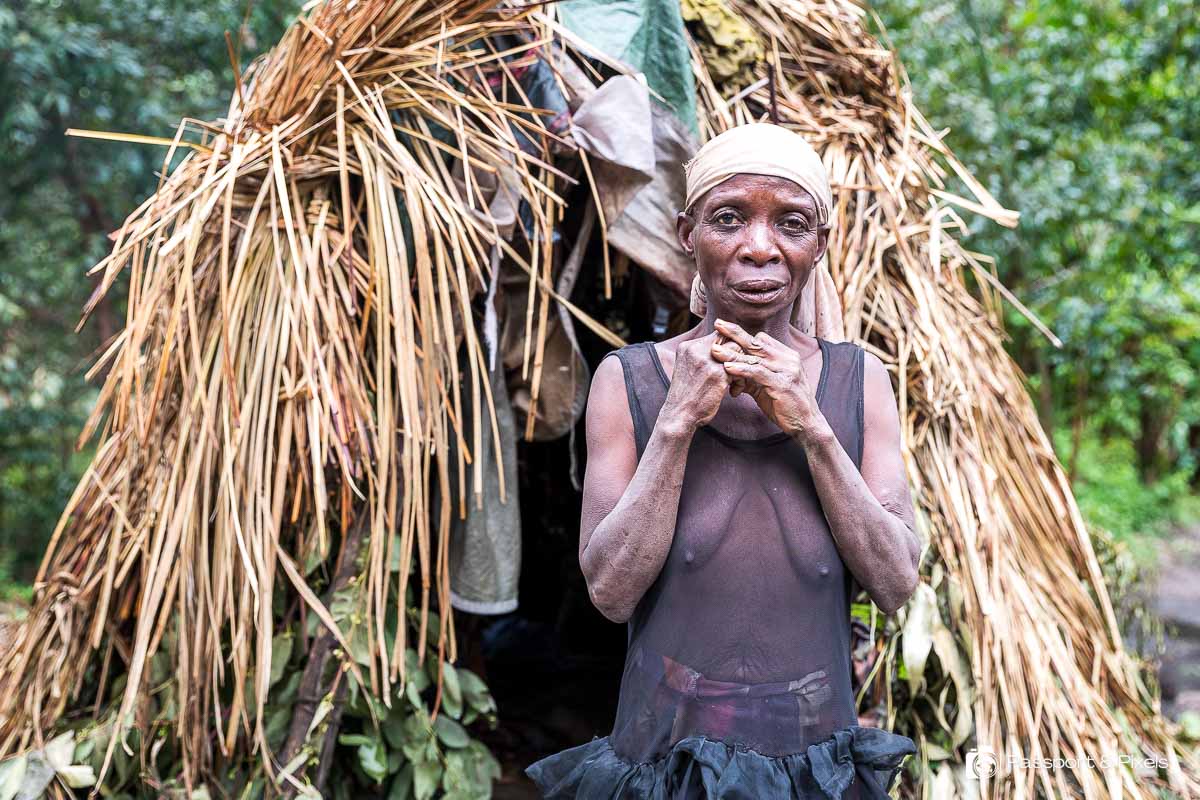
Today only about 3000 Batwa people still remain, existing hand to mouth in terrible conditions of dire poverty. They live in makeshift villages built of grass huts with the constant threat of eviction hanging over them.
As forest dwellers, the Batwa traditionally relied on hunting and gathering for their survival. Displacement from their lands deprived them of this essential way of life, plunging them into poverty and dependence on others.
Languishing on the fringes of society, this marginalised community is completely excluded from the mainstream, with almost no opportunities for employment, education, and healthcare. Adapting to the shifting tides of modernity has proven to be a profound challenge.

Within Ugandan society they are often discriminated against and treated as pariahs, often enduring ostracisation, harassment, or even physical abuse. In the Democratic Republic of Congo, reports exist of brutal attacks by park rangers and soldiers against Batwa communities.
Some conservation efforts, aimed at protecting endangered species like gorillas, have inadvertently contributed to the Batwa’s struggles.exclamation Critics argue that these efforts sometimes prioritise wildlife over the needs and rights of indigenous communities.
While hundreds of tourists visit the nearby Bwindi Impenetrable National Park every year and pay $600 per person to go gorilla tracking, it is disheartening to note that the Uganda Batwa people—displaced from their ancestral lands to make way for conservation efforts—typically don’t see a cent of that money.

Hope for Uganda’s Batwa people
But there is hope for change. In 2000, the Batwa community took a decisive step by establishing the United Organisation for Batwa Development in Uganda (UOBDU).
This organisation is aims to improve conditions for the Batwa people in areas including education, housing, and employment opportunities.
One of their key projects was the creation of immersive cultural experience tours for tourists, allowing visitors to discover the Batwa way of life and learn about how they lived and hunted for centuries in the thick forests of western Uganda.
For the Batwa, this is groundbreaking because it’s the first time they’ve been directly responsible for designing and managing their own tourism initiatives – and, crucially, the first time they’ve been able to benefit directly from the profits.
In the past they were simply exploited by unscrupulous middlemen and treated as tourist attractions; they never saw any benefit from the tour operators who charged visitors to come and see them without ever giving back to the communities they were making money from.
But now they have found a new chance at empowerment. The Batwa are slowly reclaiming control over their lives.

How to visit the Batwa people of Uganda
If you want to visit the Batwa tribe location, you’ll need to head the west of the country, near to Mgahinga and Bwindi National Parks, as well as near Lake Bunyonyi. Here there are several small Batwa settlements, usually home to just a few families each.
If you’re heading to Bwindi National Park to go gorilla trekking, you can complement your morning gorilla excursion with a captivating Batwa Cultural Experience.
On a good day, the search for your gorilla family will take around 3-4 hours at most, allowing you the afternoon free to meet Uganda’s Batwa community.
This cultural experience – which is the one I did – is organised by the local Batwa themselves, and includes demonstrations of hunting and fire-making techniques, performances of traditional music on handmade wooden instruments and animal-skin drums, and learning about how they live.
You’ll also get to see how they build their huts, including the fascinating raised treehouse ‘nests’ they build to safeguard young children from potential threats.
Read more: Gorilla Safaris In Uganda – The Real Inside Story

How to visit the Batwa ethically
When you arrive in Bwindi, you may well encounter ‘guides’ who try to sell you tours of Batwa villages. However, it’s vital to exercise caution with these people, as they are probably unregulated and may well exploit the Batwa.
Instead, speak to your hotel, and only opt for official tours run by Batwa community groups like UOBDU, the Uganda Wildlife Authority, or the Batwa Development Programme. For more information, visit the Batwa craft shop situated near the entrance to Bwindi.
Although the official tours might be a fair bit pricier compared to street-offered alternatives, it’s important to use them because they are overseen by the Batwa themselves, are culturally respectful, and your money directly contributes to the community’s welfare.
Read more: What Happens On A Chimpanzee Trekking Safari In Uganda

Stories of the Batwa in Uganda
During my experience, I also got to talk to several elderly Batwa and hear their stories through a translator. One of them was Grace, 74, who has seven children. She told me that until 1991 she lived entirely in the forest, surviving on food that she foraged; now she survives by subsistence farming.
I also met Oliva, who said she was 93 but looked at least two decades younger – but without any records, who knows for sure?
All the tribe’s elders told me that they had been completely uprooted and had to adapt to bewildering new way of living – the stories they told of the lives they lost and the struggles they have faced make for a sobering experience.

The Batwa tribe’s future
The future remains precarious for the Batwa people. Efforts by NGOs to win compensation for these communities and reinstate their rights are ongoing but seeing very slow progress.
But there have been some wins: Children from Batwa communities are now able to attend school and are gradually integrating into local communities, while efforts to raise awareness of the challenges faced by the Ugandan Batwa people has led to increased attention and support.
Cultural visits for tourists also give the Batwa the opportunity to directly benefit from the continuous stream of visitors who come to Uganda to spend time with the gorillas.
As the Batwa grow confidence in themselves and what visitors might be interested in, and as tourists learn more about the incredible experience on offer, the potential for everyone to benefit is growing.
While it may be small beginnings, it’s better than nothing, and hopefully things will only get better.
It’s important to note that the Batwa are not a monolithic group and their experiences vary depending on their location and circumstances. However, understanding the general issues they face is crucial to raising awareness and supporting efforts to improve their lives.
Spending time with the Batwa community offers more than just an insight into the ancestral forest techniques of this hunter-gatherer society; it’s also a way to help Uganda people whose age-old way of life has been nearly eradicated.

How to visit the Batwa tribe Uganda: some FAQs
Who are the Batwa in Uganda?
The Batwa of Uganda, also known as Twa, were once forest-dwelling hunter-gatherers. They lived for centuries in the Bwindi rainforest, considered its “keepers.” However, in the 1990s, conservation efforts evicted them, leaving them marginalized and struggling. Now, facing poverty, limited rights, and a lost way of life, they fight for recognition and a brighter future.
How old are the Batwa people?
As a cultural group, the Batwa have existed for thousands of years in the forests of Central Africa – possibly more than 60,000 years. While their exact arrival predates written records, archaeological evidence confirms their presence for well over 5,000 years.
What is the oldest tribe in Uganda?
Determining the “oldest” tribe in Uganda is complex, as defining “tribe” and measuring age is challenging. However, the Batwa are often considered among the oldest surviving Indigenous communities in Africa.
What are some other Indigenous communities in Uganda?
Uganda is home to more than 56 tribes, each with distinct customs, languages, and traditions. Here’s are a few:
1. Baganda: The largest tribe, renowned for their rich cultural heritage and historical kingdom centered in the south.
2. Banyankole: Primarily pastoralists inhabiting the southwest, known for their cattle-keeping expertise and traditional dance, the Ekitaale.
3. Banyoro: Closely related to the Banyankole, they reside in the west and hold a deep spiritual connection to their ancestral lands.
4. Acholi: A resilient community in the north, famous for their vibrant beadwork and warrior spirit, reflected in their “Laracha” dance.
5. Karamojong: Nomadic herders in the northeast, known for their intricate body scarification and colorful attire.
Want to see more of my photography or travel writing? Have comments or questions? Come follow me on Instagram, Threads or Bluesky and share your thoughts!
Further Reading
Looking for inspiration for your trip to Uganda? You might enjoy these…
- What to do in Sipi Falls
- A Boat Cruise on the Kazinga Channel
- A safari in Murchison Falls National Park
- A visit to Ziwa Rhino Sanctuary
- The Amazing Animals Of Uganda: A Photo Guide
Buy me a coffee
Did you enjoy this website or find it useful? If you did and fancy showing your appreciation, that would be amazing!
A small token of support helps keep Passport & Pixels going, so I can carry on creating free content for travellers like you. Also, it makes my day! Thank you!
My favourite travel tools and brands
To help you organise your trip, here’s a short list of some of the brands and tools I use over and over again when I’m planning my travels. You can see more on my Travel Resources page.
- Booking.com: A huge range of hotels to choose from, often with free cancellation. If you book hotels regularly you can earn discounts. I’m on Genius Level 3 which gets me 20% off!
- Expedia: Another great place to find hotels and Expedia also sell flights, car hire, and loads more all in one place.
- Skyscanner: The only place I ever go to search for flights and compare prices.
- Flight Centre: Booking a more complicated route? Let Flight Centre organise it for you (and deal with the drama when something goes wrong).
- Priority Pass: I love having access to 1600+ airport lounges when I fly, allowing me to enjoy my time at the airport. Buy through my link and you get up to 20% off!
- Airalo: Say goodbye to ridiculous mobile roaming charges. Did you know you can now buy ane-SIM, install it in your phone before you leave home, and then use data abroad at local prices? Game changer. Get US$3 credit with code BELLA5735.
- TourRadar: If you prefer group travel and organised tours, TourRadar has a huge range of fantastic tours from respected operators. They’re very helpful and have 4.5 stars on TrustPilot.
- Viator: Part of the TripAdvisor brand, Viator is another great place to search for group adventures and day trips.
- GetYourGuide: A great place to find local tours and day trips in your destination.
- Wex Photo Video: The UK’s best camera gear store.
- Ellis Brigham: Looking for good quality backpacks, travel clothes and other gear? Ellis Brigham is where I buy almost all of mine.
- Rentalcars.com: Part of the Booking.com family and the world’s largest online car rental service, with 24/7 customer service.
- World Nomads Travel Insurance: I never ever travel without travel insurance and nor should you!
Liked this post?
Social shares help support my hard work! You can share via the buttons at the bottom, or pin this handy Pinterest Pin. Thank you!

