


Planning your gorilla trek can be a confusing experience – there are tonnes of websites out there offering different or patchy information, a lot of which is out-of-date, AI-generated or factually inaccurate.
When I started researching this post, I quickly discovered all sorts of conflicting advice and got very confused – and I’ve already been gorilla trekking!
I can only imagine how much more confusing it would be if this is your first time looking into it.
So I’ve decided to combine my personal experience with thorough research to answer every question you might have about how to see gorillas in the wild.
Most of this information is focussed on gorilla trekking in Uganda, but a lot of it also applies if you do your gorilla safari in Rwanda as well.

About my gorilla trekking experience
I’ve been gorilla trekking twice, both times in Uganda’s Bwindi Impenetrable Forest.
The first time was in 2018, in the Ruhija sector of the park. I went in April, which is the middle of rainy season. It was a challenging and very muddy hike, and it took us about four hours to find the gorillas.
More recently, I went in October 2025, in the Nkuringo sector. This time it didn’t rain and we reached the gorillas in only about an hour – much easier!
I’ve written about seeing gorillas in Uganda for the Independent and Luxury Travel Australia, and I’ve also written about the similar experience of chimpanzee trekking for Lonely Planet.
As well as basing this post on my own experiences and research, I also consulted my former safari guide Hassan, who runs Uganda safari trips and is fully up to speed on all the latest information about travelling in Uganda.
Every photo in this post was taken by me and every word typed with my own 10 fingers – no AI slop here, I promise!
Prices and population numbers are correct as of February 2026.
Read more: A Gorilla Safari In Uganda’s Rainy Season: My Soggy Story

About gorillas
What type of gorillas can you see?
The gorillas that you see when you go gorilla trekking are mountain gorillas (Gorilla beringei beringei) – one of the most iconic and endangered great apes on Earth.
Great apes are hominids – like us! – and include gorillas, chimpanzees, bonobos, orangutangs and of course humans. Making gorillas among our closest living relatives.
There are two species of gorilla: eastern (divided into mountain gorillas and eastern lowland gorillas) and western (divided into western lowland and cross river gorillas).
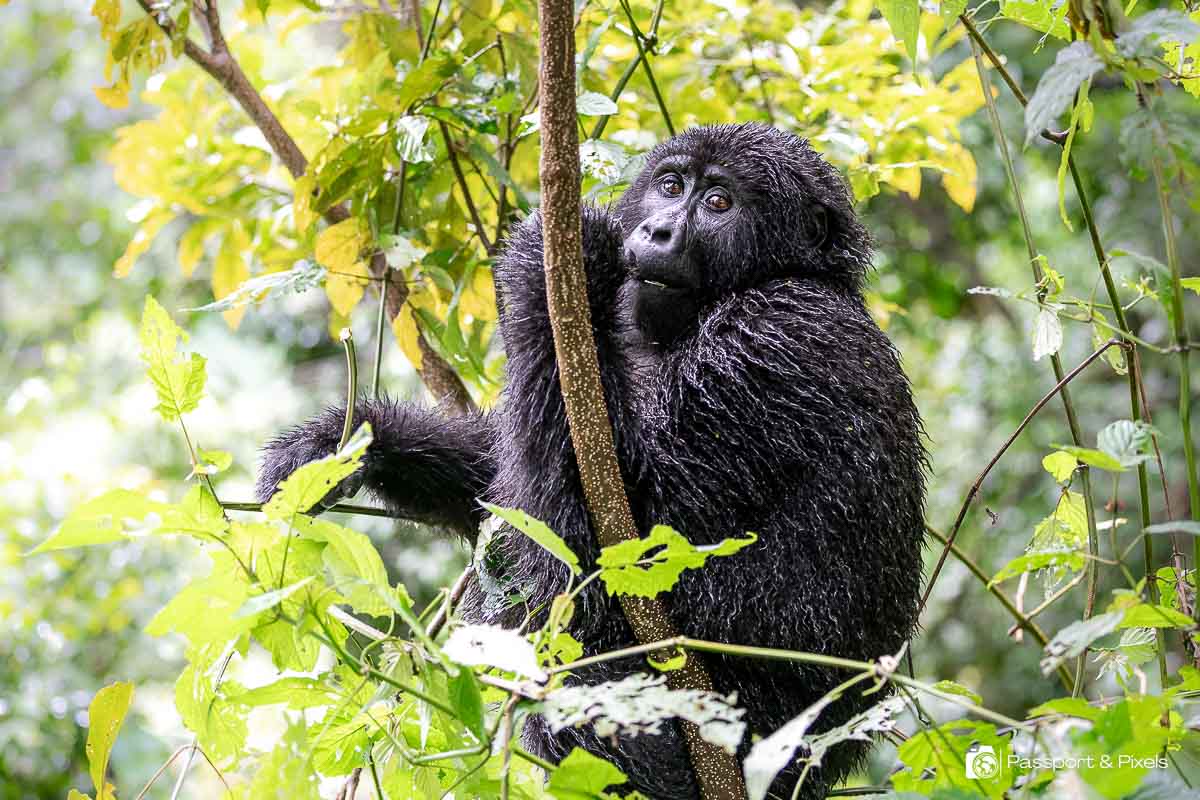
The mountain gorillas that you’ll see on your gorilla safari are larger and hairier than other gorilla subspecies, with thick coats that help them survive in cool, misty mountain forests.
These mostly herbivorous primates live in tight-knit family groups led by a dominant silverback male and spend their time foraging for leaves, shoots, and occasional fruit deep in the highland forests of Central Africa.
While gorillas aren’t part of the (now outdated) Big Five, they’re considered one of the ‘Photography Big Five’ and are definitely worth a visit while you’re in the area.

How many mountain gorillas are there?
At the last census in 2018/19, researchers estimated that there are just over 1000 mountain gorillas left, all living in one area of central Africa spanning Uganda, Rwanda, and the Democratic Republic of Congo (DRC).
About half the population live on the Uganda side in Bwindi Impenetrable National Park with a small group in Mgahinga National Park; the rest live in Rwanda and the DRC.
Their population has grown due to intense conservation efforts, and in 2018 the IUCN upgraded their status from Critically Endangered to Endangered – a rare success story in wildlife protection. Though they are still under threat from climate change, habitat loss and disease.
A new census is underway, and the guides I spoke to are all confident the numbers have increased again.

All about gorilla trekking
Where can you go gorilla trekking?
The two main countries for gorilla trekking are Uganda and Rwanda.
While there are gorillas in Virunga National Park in the DRC, instability and violence makes this area unsafe for tourists. I did visit Virunga back in 2018 to climb the volcano Nyiragongo, but sadly since then the situation has deteriorated.
In Rwanda you can visit the gorillas in Volcanoes National Park, which is beautiful and accessible, but the permits are twice as expensive.
That’s why Uganda – which is home to nearly half of the world’s mountain gorillas – is usually considered the best option in terms of cost, accessibility, and availability.
And of course if you go to Uganda, there are loads of other amazing things to see and do while you’re there, making Uganda a brilliant option for a safari.
Read more: Chimpanzee Trekking In Uganda: A Complete Guide With Photos

Where to see gorillas in Uganda
You can see gorillas in Mgahinga Gorilla National Park, Uganda’s smallest park – but the vast majority of people go to Bwindi Impenetrable National Park, where most of the gorillas live.
The 460-or-so gorillas in Bwindi are divided up into 50 families. Of these, 27 are habituated and can be visited – these are usually the families living around the edges of the forest, while 23 families are still fully wild, living deeper in the centre of the forest.
Bwindi is divided into four trekking sectors (also known as gates):
- Buhoma, in the north, is the oldest and most accessible sector, with good lodges and roads.
- Ruhija, in the east, sits at a higher altitude and is quieter, popular with birdwatchers. This is where I did my first gorilla trek.
- Rushaga, in the south, has the highest number of gorilla permits and is a convenient stop-off if you’re heading to Rwanda as well.
- Nkuringo, in the southwest, is harder to get to but is quieter. This is where I did my second gorilla trek.

What is habituation?
First pioneered by Dian Fossey, habituation is the process by which scientists and researchers spend time with gorillas, getting them used to the presence of humans.
The process usually takes about 2-3 years of daily contact with the family before they are considered fully habituated.
Read more: 32 Best Things To Do In Uganda (By A Safari Addict)

What happens on a gorilla trek?
When you arrive at the ranger station in the morning, you’ll meet the rest of your group – usually up to 8 hikers.
There’s a briefing, where your guide will explain rules and safety, and reveal which habituated gorilla family you’ve been assigned.
Then (after your last non-jungle bathroom trip!) you’ll head into the forest, accompanied by guides, armed rangers – and your porter if you’ve hired one.
Trackers are sent out early in the morning to locate and follow the family, and then share that information with the guides. Your hike can last anywhere from 30 minutes to several hours, depending on where the gorillas are that day.
Once you’ve found them, you get one hour to observe them from a safe distance before heading back.
Depending on how long it takes to find them, the experience may take anything from about three hours to a whole day. On my first visit it took about three hours to find the gorillas; then we had an hour with them and another three-hour walk back. So it was a pretty long day!
On my second trip we found them in about an hour and were back at the lodge by lunchtime.
Read more: My Luxury Uganda Safari Itinerary: Into Africa’s Wild Places


Gorilla habituation experiences
If you really love gorillas and want to learn more about tracking and habituation, you can also do a gorilla habituation experience.
This allows you to follow the guides and researchers as they work to habituate a new family. You’ll follow them as they search for and track a semi-habituated family, and then spend up to four hours with them.
Habituation experiences are more expensive (US$1500 at the time of writing) and more physically demanding, but they offer the chance to spend longer with these magnificent animals and learn more about gorilla behaviour and conservation.
NOTE: You can only do a gorilla habituation experience at Rushaga.
Read more: Uganda Animals: The Amazing Wildlife of Uganda

Planning and permits
How to organise your gorilla safari
The only way to see gorillas in Uganda is to book a safari or tour which includes gorilla trekking.
This could be anything from a 2-3 day trip with pickup and dropoff in Kampala, to an all-inclusive luxury safari that takes in Uganda’s other highlights as well.
Gorilla permits are issued by the Uganda Wildlife Authority (UWA) and must be arranged for you by your tour operator.
Note that it is NOT possible to book your own gorilla permit independently – you have to go through an officially-recognised tour company.
WARNING: There’s LOTS of incorrect information online about this!
UWA used to sell permits from their office in Kampala, and then for a while there was an online booking system, but both of these options are now closed.
On my first visit my permit was booked for me by my independent guide Hassan, who now partners with a local Ugandan tour operator to get the permits.
On my second visit I travelled on a luxury Uganda safari tour and they sorted everything out.
Today you can either choose your own tour operator, or fill out my enquiry form and I will answer your questions and then match you with one of my trusted Uganda contacts.

How do gorilla permits work?
At the time of writing, a Uganda gorilla permit costs US$800 per person for foreign non-residents.
The price includes park entry on the day of your trek, the hike itself, your professional guides, trackers and armed rangers, and one unforgettable hour spent observing a habituated gorilla family in the wild.
If you’re doing a group tour with a pre-set itinerary, you’ll get whichever sector the company gives you.
If you’re booking a bespoke, private trip, you should be able to request which sector you want to visit (assuming there’s availability).
Your tour operator will be able to advise you based on your itinerary, where you want to stay, or simply by what’s still available for your dates.
Read more: 41 Safari Photography Tips For Stunning Wildlife Photos

Can I book my gorilla trek independently?
If you really don’t want to book a whole tour, the only way to get your hands on a permit is to find an operator who will act as a broker and get one for you.
This may be possible if you contact them directly, but you will likely have to pay a commission, sometimes around $20-50.
Also beware of scammers who may claim to get you a permit, take your money, and then disappear! So make sure the company you’re dealing with is reputable, ideally registered with the Uganda Tourism Board and/or the Association of Uganda Tour Operators.
On top of this you’ll then need to organise your own transport, food and accommodation. So for simplicity and peace of mind I personally recommend booking a trusted tour operator.
Read more: My Epic Uganda Itinerary In 2 Weeks (By A Safari Expert)

When should I book my gorilla permit?
As soon as you can! Numbers are strictly limited each day to protect the gorillas, and popular trekking sectors often sell out quickly.
It’s a good idea to book your gorilla permit 3–6 months in advance, especially for gorilla treks in peak dry seasons – from June to September and December to February.
While you might be lucky to snap up a last-minute permit in low season, there are no guarantees.
Can permits be changed or refunded?
Nope. Gorilla permits are non-refundable and non-transferable.
However, if you’ve booked your entire trip through a tour company, they may allow you to change or cancel your trip, but that will depend on their individual policies.
This is one of the many reasons why I always advise getting comprehensive travel insurance that covers cancellations or disruptions.

Can children go gorilla trekking?
Small children are unfortunately not allowed to go gorilla trekking in Uganda. You have to be 15 years or older.
This is because gorilla trekking can be physically demanding, and younger children may struggle to follow strict behaviour rules like keeping quiet.
Teenagers aged 15–17 must be mature enough to handle long hikes and excitement when near the gorillas.
There’s no upper age limit, and many hikers in their 60s, 70s, and beyond successfully complete gorilla treks (with or without the help of porters).

How much does gorilla trekking cost?
The main cost of gorilla trekking in Uganda is the gorilla permit, which currently costs USD 800 per person for foreign non-residents.
You can see the full list of UWA permits and park entry fees here.
On top of that you’ll need accommodation, transport, meals, and tips.
If you stay in budget accommodation, you’ll still spend around USD 1,200–1,500 total, while mid-range and luxury trips can cost significantly more.
Yes it’s expensive, but remember that your fee directly supports conservation, ranger salaries, and community projects. It’s almost entirely thanks to gorilla trekking that these incredible animals have been brought back from the brink of extinction.


Need help booking your gorilla trek?
Permits, prices, sectors, operators… it’s easy to get stuck before you’ve even started.
That’s where I come in.
Using my first-hand experience and trusted contacts in Uganda and Rwanda, I’ll help you cut through the confusion and find the right trip for you – at no cost.
Here’s how it works:
- You fill in my safari enquiry form.
- I review your plans and answer your questions.
- Then I pass your enquiry to up to three of my trusted, handpicked safari partners.
- They contact you directly to provide a free, no-obligation quote.
Get the ball rolling on your dream safari here!
Save time, avoid stress and confusion AND get a great deal by having an expert do the work for you!
What happens on your gorilla trek
What time does the gorilla trek start and end?
Gorilla trekking begins early in the morning. You’ll need to arrive at the park headquarters usually around 7.30-8 am for registration and a briefing before the hike starts around 9 am.
The length of the trek depends on how long it takes to find the gorillas, who may have moved a considerable distance through the forest since their last known position. Once you find them, you’ll get just one hour with them.
What time your trek will end varies: some groups return by late morning, while others finish in the afternoon. The duration depends on how far the gorillas have moved, terrain, weather conditions, and the group’s pace. There is no fixed end time.

Can I do a private gorilla trek?
In theory, yes you can, but only if you buy all the other permits for that session.
So for example, if you are a family of five, you could buy all eight permits for your chosen departure, and then no one else would join your group. But that would work out rather expensive!
Want to see more of my photography or travel writing? Have comments or questions? Come follow me on Instagram, Threads or Bluesky and share your thoughts!
Can I choose which gorilla family I visit?
You can’t guarantee a specific gorilla family, as they’re assigned on the day of the trek.
What you can do, however, is request a preferred trekking sector and difficulty or duration of trek – for example you can request an easier hike or a longer, more involved hike.
Rangers do their best to match trekkers with appropriate groups so that fitter or more adventurous visitors get the more strenuous hikes while the shorter treks go to those who need them.
But requests are not guaranteed and whether you get what you ask for will depend on who else turns up that day!


How many gorillas will I see?
You will visit one habituated gorilla family, which can include anywhere from 5 to more than 20 individuals.
Each family usually has a dominant silverback, adult females, juveniles, and hopefully some adorable babies.
The number you see depends on your family and how many are visible when you find them – the entire family will be nearby, but some may be deeper in the bush.
On my first trek we saw six gorillas, and on the second we saw (I think!) about 10-12 of the 18 members of the family.
Read more: 46 Amazing African Safari Animals – A Photo Guide

What happens if I don’t see gorillas?
While gorilla sightings are not guaranteed, in practice the success rate for seeing gorillas in Uganda is over 95%.
The families visited are habituated and closely monitored by trackers every day, and it’s quite hard to lose a massive family of gorillas!
That said, it does occasionally happen – in which case park authorities may offer a rescheduled trek or partial refund, depending on circumstances.

What happens if I arrive late?
Don’t be late! If you miss the morning briefing, you miss your trek entirely, and you won’t get a refund.
Groups must enter the forest on schedule for safety and tracking reasons, and late arrivals disrupt planning and gorilla monitoring.
To avoid problems, you’re strongly advised to stay overnight near the relevant sector HQ, and get there at least 30 minutes early on trekking day.
Read more: 10 Great (And One Unusual!) Things To Do In Entebbe Uganda

Safety and logistics
How hard is gorilla trekking?
This depends on which sector you’re in, and where the gorillas are on the day of your trek.
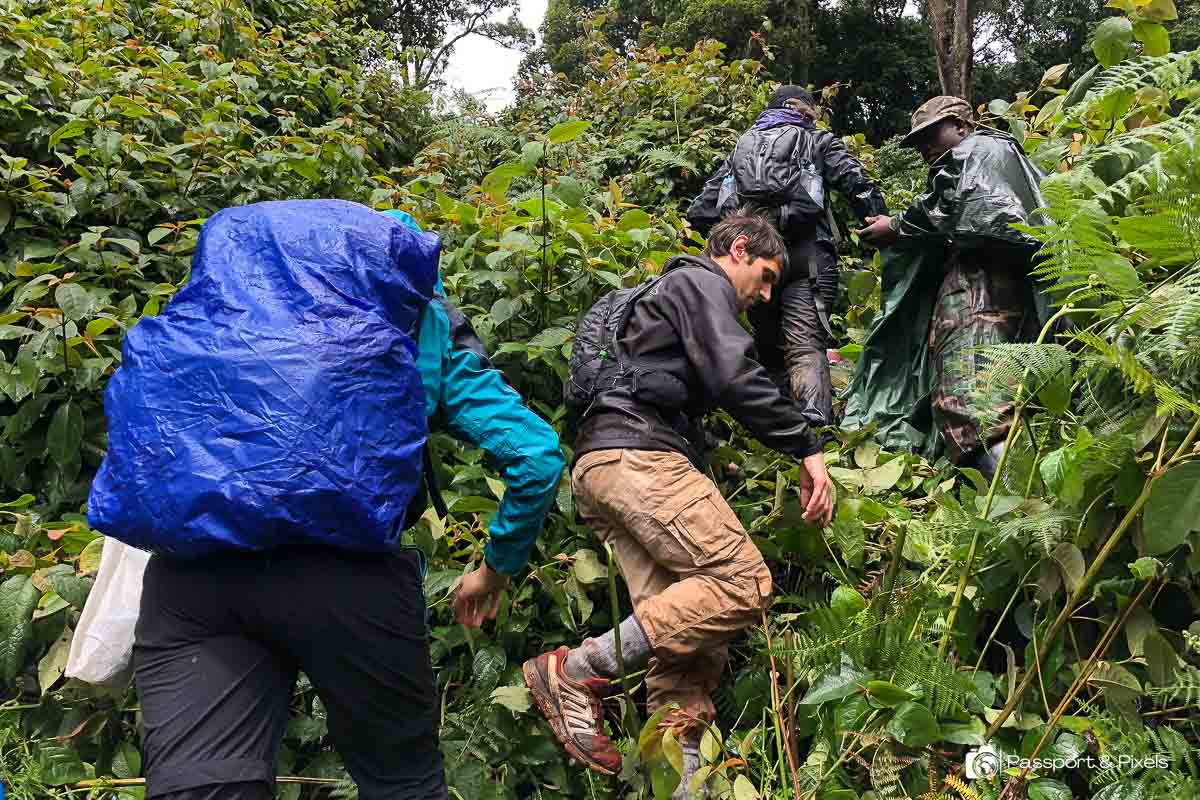
Some people reach the gorillas within an hour on relatively gentle trails, while others hike for several hours through steep, muddy terrain, dense vegetation, and high-altitude forest.
Weather, especially rain, can make conditions more difficult. On my first visit we got completely drenched and the rain turned the ground to muddy rivers, making it much more challenging than I was expecting.
But whatever the weather, you need a decent level of fitness and stamina. Trails can be steep and muddy, and involve lots of up- and down-hill, balancing on slippery logs, stepping stones over streams, or ploughing through dense bushes.
But rangers walk at a manageable pace and take breaks, and porters are available to help, so don’t worry. Make sure you bring water and accept a hand if someone offers it!
Read more: Top 50 African Birds: A Safari Photo Guide

Is gorilla trekking safe?
While gorillas are big, powerful wild animals and can seem scary, gorilla trekking is considered very safe.
The gorilla families are used to human presence and rarely show aggression. Rangers are trained to read gorilla behaviour and manage any situation calmly.
On my recent trip, a couple of the other guests were very nervous about being near the animals, but soon relaxed when they saw how peaceful they were.
Of course you should always follow instructions and not do anything to provoke or upset the animals.
But just in case, you will always be accompanied by armed rangers for security.

Do I need to hire a porter?
You don’t need to, but I strongly recommend it, especially if you have camera gear like I did! I was talked into hiring one on my first gorilla trek, and I was so grateful for his help!
Porters help carry daypacks, cameras, food, and water, and they can assist you on steep or muddy sections of the trail – making the whole thing easier and more enjoyable, especially for less fit trekkers.
Porters come from the local community, and their wages (usually US$20-25 plus a tip) provide important income for families living near the park.
So hire a porter – and that way you’re not only doing yourself a favour, but also directly supporting local people for the price of a few cups of coffee.
Do I need to tip?
Tipping isn’t mandatory, but again, it’s a small way to help support local people.
You might consider tipping something like the following:
- For your head ranger / guide and your porter: USD 10–20 per person.
- For the trackers and support staff: maybe another $20 for the group.
You’ll be invited to tip at the end of the hike so make sure you bring cash – dollars or Ugandan shillings are fine.

What happens if it rains?
If you want the full, warts-and-all story, read A Gorilla Safari In Uganda’s Rainy Season: My Soggy Story.
But for the TL;DR: rain doesn’t stop the gorillas and it doesn’t stop the treks either.
Rain is common in the rainforest (the clue’s in the name; it’s not rocket science!) – and not just in rainy season either.
Treks are not cancelled due to rain unless conditions become properly unsafe – such as big storms.
That’s why waterproof jackets, sturdy hiking boots, and rain covers for backpacks and cameras are essential.
I did one very wet and rainy gorilla trek, and one completely dry one. And while I won’t deny the dry one was more enjoyable, the rain did add an extra element to my photos!
Read more: Botswana Rainy Season: Here’s Why It’s A Great Time To Visit

Can I go gorilla trekking if I’m ill?
No. If you are sick with a cold, flu, cough, or any contagious illness, unfortunately you can’t go.
Mountain gorillas share about 98% of human DNA and are extremely vulnerable to human diseases, even mild ones.
If you turn up to the briefing with a hacking cough, you will probably be turned away.
Apart from anything else, if you’re unwell you really won’t enjoy the trek anyway, so it’s better to stay in bed!

What about altitude sickness?
Bwindi and Mgahinga sit at a relatively high altitude of between 1,200–2,600 metres (3,800–8,550 feet). While this isn’t high enough for serious altitude sickness, you might experience some shortness of breath or fatigue.
I’m pretty fit, but I found myself huffing and puffing on the uphills much more than I was expecting!
Just make sure you take a comfortable pace, stay hydrated, and rest when you need to and you should be fine.
However, If you know you’re sensitive to altitude, let your guides know in advance so you can be assigned you to a less strenuous route if possible.

Ethics and giving back
Is gorilla trekking ethical?
Done right, gorilla trekking can actually be one of the most ethical wildlife experiences out there.
All treks are tightly controlled by Uganda Wildlife Authority and led by experienced rangers.
Only small groups of up to eight people are allowed to visit each gorilla family, visits are limited to one hour per family per day, and trekkers must keep a safe distance to reduce stress and the risk of passing on illnesses.
When choosing your gorilla tour operator, look for companies that follow park regulations and clearly explain trekking rules – and avoid anyone who promises unusually close contact or guaranteed sightings.
You can do your part too: follow instructions, keep your distance, don’t go if you are sick, and definitely never ever try to touch or pet the gorillas!
Read more: Ethical Travel Photography: How To Capture With A Conscience

How close can I get to the gorillas?
The official minimum distance from the gorillas is 7 metres (about 23 feet) – which really isn’t far and is plenty close enough to see and photograph them clearly.
However, gorillas are wild animals and might want to come closer to you! We’ve all seen videos of tourists being touched, sniffed, or even pushed over by a curious gorilla.
If this happens: stay completely still, avoid eye contact or sudden movements, and follow the ranger’s instructions.
Don’t ever try to move closer, block a gorilla’s path, or touch a gorilla, even if it comes to you.
And definitely don’t try to take a selfie, no matter how tempted you may be!

How should I behave around the gorillas?
Here are a few other tips for what to do and what not to do on your gorilla safari in Uganda:
- Follow the guides’ instructions at all times.
- Stick to the paths where possible and stay with the group. Never wander off into the forest by yourself!
- Keep your voice down, talk quietly or whisper, and never shout.
- Running, jumping, pointing directly, beating your chest, or mimicking gorilla sounds is a very bad idea as you may provoke them.
- Eating, drinking, smoking, or coughing near gorillas is also not allowed.
- If you need to cough or sneeze, turn away and cover your mouth.
- You will need to wear a mask during your hour with the gorillas (but not during the hike).
- Avoid wearing perfume or strong scents.


How does my gorilla safari help local communities?
Before gorilla trekking became popular, gorillas were poached as trophies, babies were stolen for zoos, and gorilla habitats were being destroyed for farmland.
Today, the cost of your gorilla permit and trek plays a direct role in protecting these beautiful animals and supporting the communities that surround them.
A large chunk of permit revenue goes to conservation efforts, such as paying park rangers, funding anti-poaching patrols, monitoring gorilla health, and protecting forest habitat.
Near Clouds Mountain Lodge, where I stayed on my second visit, money from guests’ stays helped to fund the purchase of a buffer zone between the forest and the community.
This was planted with tea which provides an income for the villages as well as containing the gorillas within the forest and preventing human-wildlife conflict – gorillas hate tea apparently!

Other projects supported by tourism revenue include schools, health clinics, clean water systems, and road improvements, and gorilla tourism also creates jobs for local people as guides, porters, trackers, lodge staff, and artisans.
By trekking responsibly, your visit helps ensure that the gorillas and their forest habitat are more valuable alive and protected than threatened.
Read more: The Batwa People: How To Visit This Unique Uganda Community

How can I take great photos of gorillas?
I’m so glad you asked! There’ll be a full separate post about that coming soon, but in the meantime, you can pick up loads of tips by reading my 19 Easy Wildlife Photography Tips For Beginners post.
When is the best time to go gorilla trekking?
If you want to reduce the risk of getting drenched (like I did on my first visit), then aim for the dry seasons: June to September and December to February.
However as these are the most popular times, they’re also busier and you’ll need to book further in advance to secure your spot.
Going in the wet season used to be cheaper, but the price is now the same throughout the year. However you’ll still find it easier to book both permits and hotels in the low season.
I went in April (when it was very rainy) and then in October (when it stayed dry). However both times will still had great sightings of the gorillas who don’t care about rain at all.

Is gorilla trekking worth it?
There’s no denying it: gorilla trekking is a lot of money for what usually amounts to a half-day hike with just one hour of excitement.
If your budget is tight, you may not think it’s worth it – and in that case I strongly urge you to go chimpanzee trekking, do a nature hike in Bwindi Forest, or visit some of Uganda’s other amazing national parks instead!
However, if you have the budget, gorilla trekking is an amazing, once-in-a-lifetime experience and well worth the cost.
Standing just metres away from a wild mountain gorilla family, watching their interactions and behaviour, is deeply emotional and unlike any other wildlife encounter.
Safari game drives are brilliant (and I love them!) but you can’t get out of the car. And on most other walking safaris you have to keep a very safe distance from the animals. A gorilla experience is entirely unique.
Plus, it’s incredibly rewarding to know that your visit actively contributes to protecting these rare and beautiful creatures and their habitat.

Where to stay for gorilla trekking
Where you stay depends on which sector of the park you’re doing your gorilla trek in.
Ruhija – Bakiga Lodge
The first time, I went to Ruhija, so we stayed nearby at Bakiga Lodge, an eco-lodge and community project perched on a hillside overlooking the rolling hills of Bwindi.
Bakiga Lodge has twelve spacious cabins, all self-contained with ensuite bathrooms and stunning views over the valley. There’s a also a central bar and restaurant area with a cosy log fire for those chilly mountain evenings.
Bakiga is a non-profit safari lodge, part of the Bakiga Community Project which works across the district to help communities access safer water.
All profits from the lodge are used to finance the water projects, which means that if you stay here not only will you get a cosy room and amazing views, you’re also helping the local community at the same time.


Nkuringo – Clouds Mountain Gorilla Lodge
This is where I stayed on my second visit.
Clouds is a beautiful property perched on top of a ridge with amazing views of the Virunga volcanos. The interior is chic and cosy with log fireplaces in every room, and the food and service were exceptional.
It’s just a short drive from the Nkuringo base for gorilla trekking.

Rushaga – Gorilla Leisure Lodge
Just minutes from the Rushaga gate, Gorilla Leisure Lodge is a four-star property offering spacious rooms with forest views. The lodge focuses on sustainability and provides comfort with excellent service in a beautiful setting. Booking.com score: 9.8
Rushaga Gorilla Lodge
One of my driver Hassan’s recommendations, Rushaga Gorilla Lodge offers a comfortable, mid-range base just minutes from Bwindi’s southern gates of Bwindi Impenetrable Forest. Though not ultra-luxurious, it’s perfectly positioned for early starts on gorilla treks and delivers excellent value for money in an unforgettable setting. Booking.com score 7.7.
Buhoma – Bwindi Forest Lodge
For a budget option in Buhoma, Bwindi Forest Lodge provides comfortable but slightly dated rooms with mountain views. It also has a shared lounge, bar, restaurant and garden. It’s a good option if you’re looking to balance comfort and affordability during your visit to Bwindi. Booking.com score: 8.2.

Packing for your gorilla trek
What should I wear for gorilla trekking?
There’ll be a full Uganda packing list coming soon, but in the meantime, here’s a quick list of must-packs for gorilla trekking:
- Long-sleeved shirt and long trousers to protect you from insects and stinging nettles. I buy all my outdoor and hiking gear from either Cotswold Outdoor or Ellis Brigham.
- Sturdy, waterproof hiking boots or shoes, with good grippy soles and ideally with ankle support. You can wear trainers, but they are far from ideal in muddy conditions. I wore my Gore-Tex trail trainers on my second hike in the dry season and while they were just about OK, I still wished I had my proper waterproof hiking boots!
- Long socks (tuck your trousers into your socks to keep biting ants out)
- Lightweight rain jacket or poncho
- Gloves for grabbing vegetation to steady you on steep or slippery sections
- Hat or cap for sun and rain protection
- Neutral-coloured clothing (greens, browns) to blend into the forest
- Gaiters (optional) for mud and wet conditions
Read more: What To Wear On Safari: My Detailed Safari Packing List With Photos

What to bring for gorilla tracking
In addition to the clothes above, you will also need:
- Gorilla permit and passport (or a copy)
- Small daypack with a waterproof cover. Mine is by Osprey, I have two of their backpacks and I think they’re great!
- At least 1–2 litres of water
- Packed lunch or energy snacks
- Camera or phone (but flash photography is not allowed)
- Dry bag for your electronics
- Sunscreen and insect repellent
- A walking stick if you need one (though these are usually provided at the park)
- Cash for tips and hiring a porter

And that’s it! I hope you’ve found all this information helpful. If you have any questions I haven’t answered, let me know and I’ll add them in.
Have an amazing gorilla adventure!
Need help booking your dream safari?
If you’re ready to start planning your dream African adventure but don’t know where to start, I can help.
I’ve travelled extensively throughout Africa and have a great network of personally-vetted and trusted safari operators.
Now I use those connections to help you plan your perfect trip.
Fill in my safari enquiry form and I’ll:
- Answer your questions personally
- Help you decide which options are right for you
- Match you with up to three trusted partners with decades of experience
- They will provide you with expert advice and FREE personalised, no-obligation quotes.
Simply fill out my safari enquiry form here to get the ball rolling.
Save time, avoid stress AND get a great deal by having an expert do the work for you!
Buy me a coffee
Did you enjoy this website or find it useful? If you did and fancy showing your appreciation, that would be amazing!
A small token of support helps keep Passport & Pixels going, so I can carry on creating free content for travellers like you. Also, it makes my day! Thank you!
WHERE TO NEXT?
Here are some more wildlife and nature posts you might like:
- Wildlife Wonders on an Epic South Georgia Cruise
- A Canadian Safari Review: See Canada’s Big Five In Manitoba
- A Magical Trip Whale Watching in Mirissa, Sri Lanka
- Red Kites In Wales: How To Photograph These Majestic Birds
- How to See and Photograph Puffins in the UK: 20 FAQs
- Birds In Botswana: 40 Stunning Species To See On Safari
My favourite travel tools and brands
To help you organise your trip, here’s a short list of some of the brands and tools I use over and over again when I’m planning my travels. You can see more on my Travel Resources page.
- Booking.com: A huge range of hotels to choose from, often with free cancellation. If you book hotels regularly you can earn discounts. I’m on Genius Level 3 which gets me 20% off!
- Expedia: Another great place to find hotels and Expedia also sell flights, car hire, and loads more all in one place.
- Skyscanner: The only place I ever go to search for flights and compare prices.
- Flight Centre: Booking a more complicated route? Let Flight Centre organise it for you (and deal with the drama when something goes wrong).
- Priority Pass: I love having access to 1600+ airport lounges when I fly, allowing me to enjoy my time at the airport. Buy through my link and you get up to 20% off!
- Airalo: Say goodbye to ridiculous mobile roaming charges. Did you know you can now buy ane-SIM, install it in your phone before you leave home, and then use data abroad at local prices? Game changer. Get US$3 credit with code BELLA5735.
- TourRadar: If you prefer group travel and organised tours, TourRadar has a huge range of fantastic tours from respected operators. They’re very helpful and have 4.5 stars on TrustPilot.
- Viator: Part of the TripAdvisor brand, Viator is another great place to search for group adventures and day trips.
- GetYourGuide: A great place to find local tours and day trips in your destination.
- Wex Photo Video: The UK’s best camera gear store.
- Ellis Brigham: Looking for good quality backpacks, travel clothes and other gear? Ellis Brigham is where I buy almost all of mine.
- Rentalcars.com: Part of the Booking.com family and the world’s largest online car rental service, with 24/7 customer service.
- World Nomads Travel Insurance: I never ever travel without travel insurance and nor should you!
Liked this post?
Social shares help support my hard work! You can share via the buttons at the bottom, or pin this handy Pinterest Pin. Thank you!


